
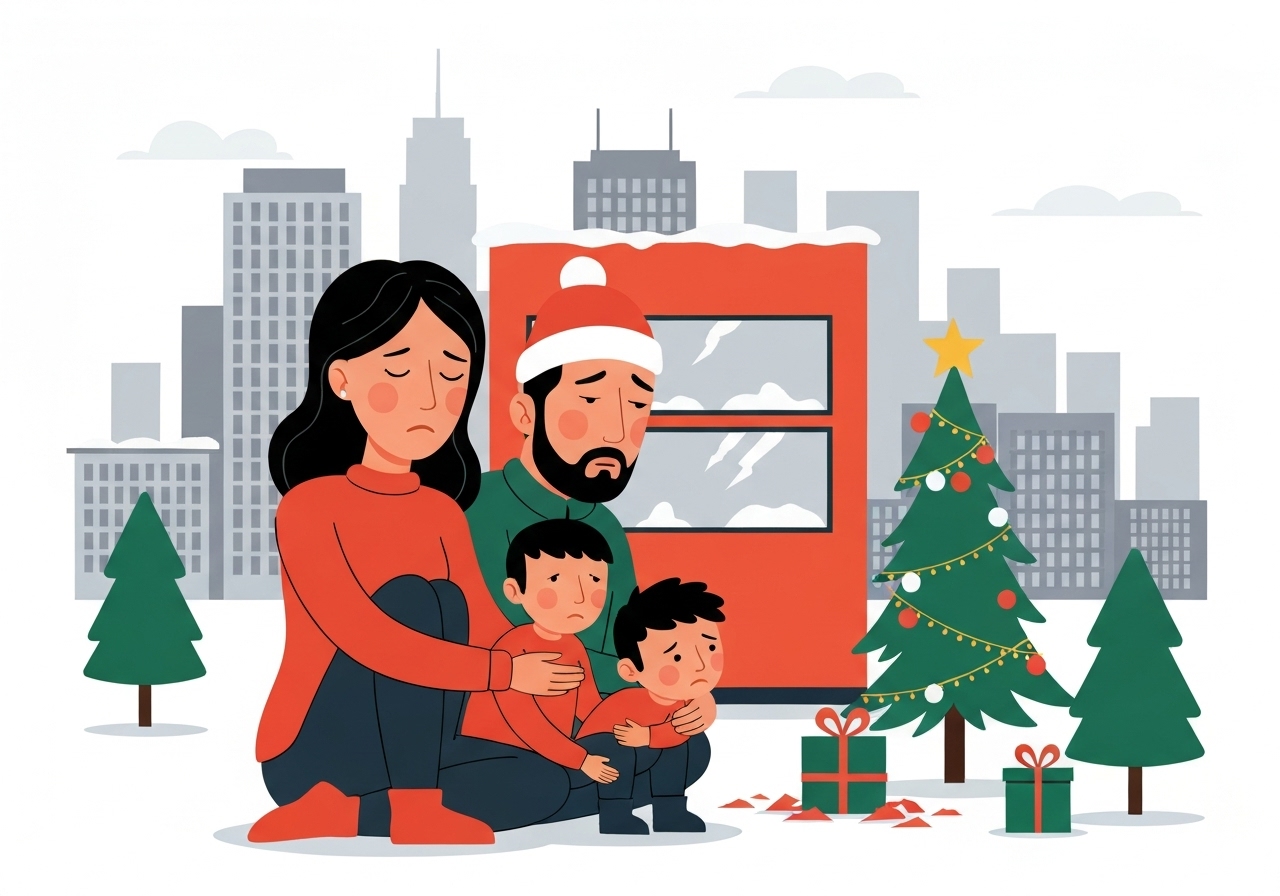
In December at St Peter’s Catholic Church in San Francisco’s Mission District, families gathered for an immigrant-rights mass as one household faced a quiet, constrained holiday: Roxana and her 10-month-old daughter will spend Christmas without the child’s father, Joel, who was detained by federal immigration agents in June. The couple, both from Honduras, lived in San Francisco and worked in maintenance before Joel’s arrest; he has been calling home from a Texas detention center. Community groups and church leaders have mobilized food, legal aid and emotional support as more than 120 people were reported arrested at ICE’s San Francisco office or immigration court since late May. For Roxana the separation has upended home life, strained finances and forced her to rely on a faith-based organizing group that helped raise a $15,000 legal fund donation for families with detained relatives.
- Joel, detained in June, has been appearing on nightly video calls to his family from a Texas detention center; his daughter is 10 months old and recognizes his image.
- More than 120 people were arrested at ICE’s San Francisco office or in the city’s immigration court since late May, according to Mission Local’s tracking of detentions.
- The household’s monthly rent is $3,100, which three adult women now cover through housecleaning work and community donations.
- A donor committed $15,000 to a new legal defense fund after meeting families with detained relatives, organizers said.
- Religious leaders and local activists have organized immigrant-rights masses and protests, including chained demonstrations at an ICE office, amid fears of broader enforcement actions.
- Roxana is pursuing asylum in the U.S.; the family expects deportation for Joel though full case details remain undisclosed to them.
Background
San Francisco’s Mission District has long been a focal point for immigrant communities, combining active congregations, neighborhood nonprofits and local media coverage that track enforcement activity. In 2025, a renewed federal enforcement posture under the administration’s policies led to targeted arrests tied to court dates, check-ins and the city’s immigration court calendar; the local outlet Mission Local has documented more than 120 arrests at ICE’s San Francisco office or in the court since late May. Faith communities—both Catholic and evangelical—have used religious services and feast days such as St Juan Diego’s to mobilize solidarity for families affected by detention.
Many detained people in the Bay Area have longstanding ties to the region: work histories, U.S.-born children, and community networks that now must stretch to cover legal fees and basic living expenses. Nonprofit organizers say removals and detentions have ripple effects across schools, workplaces and rental households. For households already paying high Bay Area rents, a sudden loss of an earner pushes families toward shared housing, greater reliance on donations and intensified efforts to secure pro bono or donated legal representation.
Main Event
Roxana and Joel met after both left Honduras; Roxana arrived recently fleeing gang violence, while Joel first came to the U.S. as a teenager. They settled into a two-bedroom apartment near Lake Merced, where by 2023 the household included Roxana’s teenage children and Joel’s adult daughter; their baby, Briana, was born this year. The family says Joel was stopped by federal immigration agents one morning in June as he walked to his car for work. The household spent three days searching before learning he had been moved to a detention center in Texas.
The family does not have paid legal counsel and expects deportation for Joel, a prospect they attribute to a past arrest for driving under the influence for which he completed court-ordered classes. Since the detention, the home dynamic has shifted: baby Briana clung to a shirt with Joel’s scent, a 15-year-old in the home put up a small Christmas tree, and the adults pooled incomes from cleaning jobs plus community donations to meet the $3,100 rent.
Local organizers from Faith in Action and other groups have offered regular meetings where affected parents share stories and plan collective actions, including fundraising for a legal defense pool. At one meeting a donor pledged $15,000 after hearing personal accounts; organizers said that sum will seed legal support for parents with children in San Francisco schools. Religious services across the state marked immigrant-rights themes on the Feast of St Juan Diego, offering community meals and counsel to families separated by enforcement.
Analysis & Implications
The growing number of detentions in and around San Francisco points to a clash between federal immigration enforcement priorities and local community networks that have long sheltered undocumented residents. Arrests at court appearances and check-ins undercut long-standing expectations that routine compliance with immigration procedures reduces risk of removal. For families with mixed-status members—U.S.-born children, asylum seekers and long-term residents—detention removes not just an individual but also a household’s economic and caregiving capacity.
Financial pressure is immediate: Bay Area rents average well above most household incomes for the workers described in these cases, and losing a second wage or primary caregiver can push families into housing instability. The $15,000 donation is meaningful but insufficient given legal costs for immigration defense commonly ranging from several thousand dollars for forms and hearings to far higher amounts for litigation or appeals. Organizers aim to stretch donations by coordinating pro bono attorneys and clinic support, but resource gaps remain.
Politically, these local enforcement actions resonate beyond individual cases. Activists worry that high-profile enforcement in sanctuary-minded cities could chill reporting to schools and health services, erode trust between immigrant communities and civic institutions, and influence local elections focused on public safety and housing. National debates — including proposals to alter birthright citizenship or expand expedited removals — heighten uncertainty for families like Roxana’s, who are pursuing asylum while caring for U.S.-connected children.
Comparison & Data
| Metric | Detail |
|---|---|
| Reported arrests (SF office & court) | More than 120 since late May (Mission Local) |
| Household rent | $3,100 monthly (family report) |
| Legal fund donation | $15,000 pledged to local defense pool |
| Child | Briana, 10 months old |
| Detention date | Joel detained in June; phone calls from Texas facility |
The table highlights counts and costs at the center of this household’s immediate needs. While local trackers document over 120 arrests associated with San Francisco’s immigration court and ICE office, individual case outcomes—such as the likelihood of deportation or the timeline of hearings—vary widely and often depend on representation, prior records and asylum case particulars.
Reactions & Quotes
Community and faith leaders framed the detentions as both a legal and moral challenge, and organizers described intensified outreach to affected families.
“All of us, in one way or another, are pilgrims on this earth,” Father Moisés Agudo said during a December mass that connected spiritual messaging to immigrant-rights advocacy.
Father Moisés Agudo, St Peter’s Catholic Church (religious leader)
Family members and organizers described the emotional toll and the pragmatic steps they are taking to respond.
“My family isn’t the same this Christmas,” Roxana said. “You could say that it’s broken.”
Roxana (family member, name used by request)
Organizers also stressed the role of community fundraising and legal clinics in plugging gaps left by unaffordable private counsel.
“We decided to raise money for a legal defense fund for immigrants with children in San Francisco schools,” a Faith in Action organizer said, describing collective fundraising priorities.
Faith in Action (community organization)
Unconfirmed
- The family does not have official confirmation of the precise legal basis for Joel’s detention; they suspect a link to a past DUI arrest but court records were not provided to them.
- While the household expects deportation, the final immigration decision and timeline are not publicly confirmed and depend on pending proceedings and potential legal representation.
- Longer-term policy changes (for example, changes to birthright citizenship) are the subject of national debate and remain legally and politically unsettled.
Bottom Line
Roxana’s story is a concrete illustration of how immigration enforcement can split households and shift the economic and emotional burdens onto those left at home. The practical strains—covering $3,100 rent, finding legal counsel, caring for an infant—combine with the intangible costs of disrupted routines and curtailed family life. Community organizers and faith networks are mitigating some harms through fundraising, legal referrals and public advocacy, but organizers and families both say the resources remain inadequate given the scale of need.
For policymakers and local officials, cases like this raise questions about the balance between federal enforcement actions and municipal priorities around housing stability, child welfare and community trust in civic institutions. For the families involved, the immediate horizon is uncertain: legal outcomes, potential deportation, and whether enforcement patterns change will determine whether this Christmas becomes an exception or the start of a prolonged separation.
Sources
- The Guardian (national news report on family experiences and local organizing)
- Mission Local (local news outlet tracking ICE arrests in San Francisco)
- Faith in Action (community organization; organizer statements and local programs)
- U.S. Department of Homeland Security (official information on ICE detention and enforcement policy)