
Lead
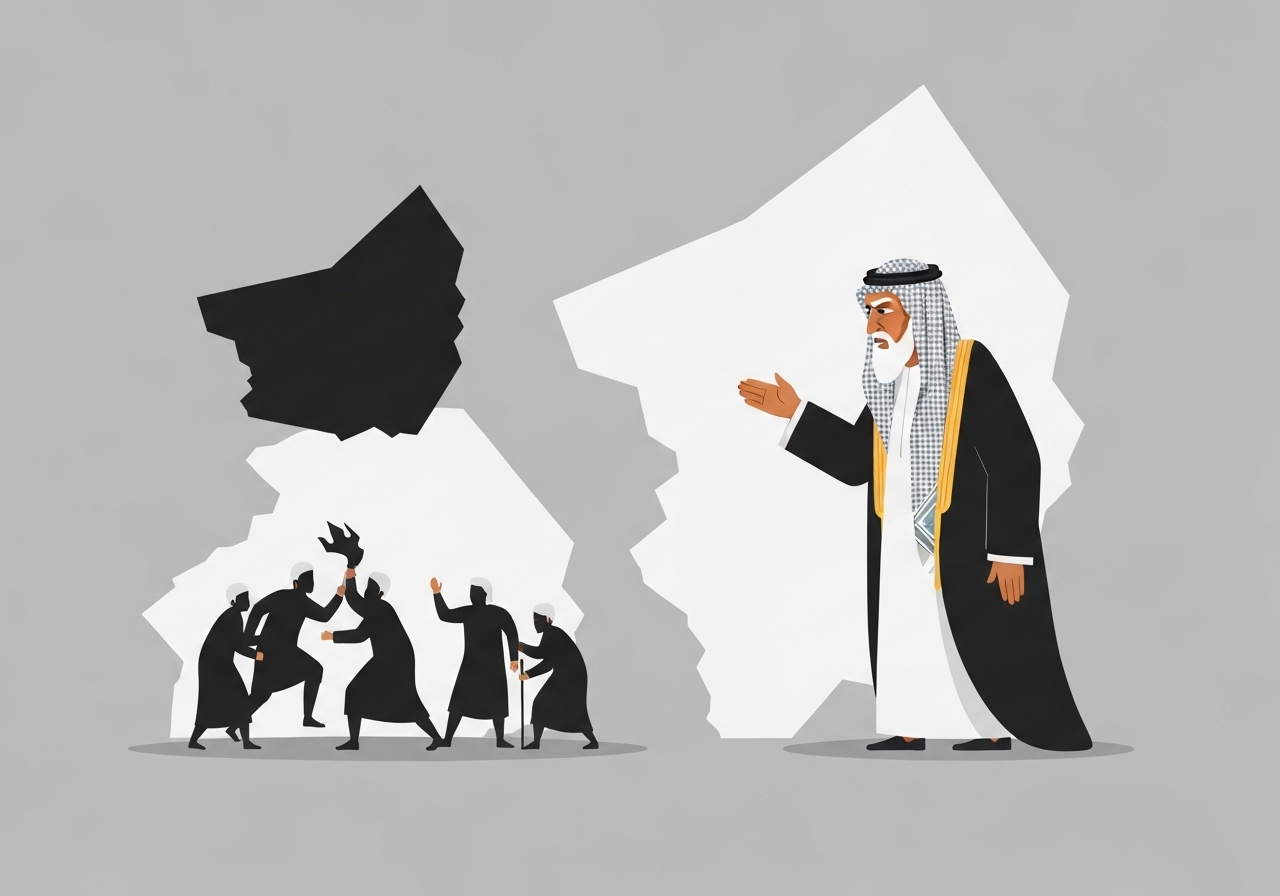
On Thursday morning, Saudi Arabia publicly demanded that Emirati-backed Southern Transitional Council forces withdraw from the Yemeni governorates of Hadramout and Mahra. The appeal, issued by the Saudi Foreign Ministry on Christmas morning, seeks to defuse a move Riyadh called an escalation that threatens the cohesion of the fragile anti-Houthi coalition. Riyadh asked that the camps and positions in those governorates be returned to the National Shield Forces while mediation continues. The demand raises the prospect of an intra-coalition confrontation even as the broader war with the Iran-aligned Houthis persists.
Key Takeaways
- Saudi Arabia called on the Southern Transitional Council (STC) to withdraw from Hadramout and Mahra and hand over camps to the National Shield Forces, according to a Saudi Foreign Ministry statement.
- The statement was issued on Christmas morning and said the STC’s moves produced an “unjustified escalation” that harmed Yemeni interests and the coalition’s efforts.
- The STC, backed by the UAE, has increasingly displayed the former South Yemen flag; demonstrations were called in Aden but their status was unclear after Riyadh’s announcement.
- Riyadh and Abu Dhabi maintain close ties yet have competed for influence in the region; the dispute adds strain to Saudi-UAE relations.
- The broader Yemen war began in 2014–2015; more than 150,000 people have died and the country faces a severe humanitarian crisis.
- The Houthis control Sanaa since September 2014 and have attacked shipping in the Red Sea during the Israel–Hamas war, disrupting trade routes.
- Washington has previously launched strikes against Houthi targets, including reported strikes on senior Houthi figures earlier this year.
Background
The current rupture sits atop a decade of fracturing Yemeni politics. The Houthis captured Sanaa in September 2014, forcing Yemen’s internationally recognized government into exile and prompting a Saudi-led military intervention in March 2015. Over subsequent years external patrons backed distinct local forces: the UAE cultivated the Southern Transitional Council, while Saudi Arabia has subsidized and armed other anti-Houthi factions, including the National Shield Forces.
Southern secessionism is a recurring political current: the former state of South Yemen existed from 1967 to 1990, and symbols of that polity have reappeared as the STC expands influence in southern governorates. At the same time, competition between Riyadh and Abu Dhabi — both Gulf powers and OPEC members — has created tactical misalignments in theaters beyond Yemen, including divergent support in Sudan’s conflict.
Main Event
Saudi Arabia’s Foreign Ministry publicly urged the STC to return to “their previous positions outside of the two governorates and hand over the camps in those areas” to the National Shield Forces, saying mediation efforts were under way. The ministry framed the STC advance as a destabilizing step that undermined the coalition’s broader campaign against the Houthis and harmed the interests of Yemenis across regions.
The STC forces have moved into Hadramout and Mahra in recent days, and elements aligned with the council have been flying the flag of former South Yemen more visibly. Aden, which currently houses the anti-Houthi administration and has served as a seat for exiled officials, was the focus of planned demonstrations by separatist supporters; it was unclear whether those events would proceed after the Saudi announcement.
The dispute has immediate operational implications: Saudi calls for handover to National Shield units presuppose a redeployment of troops and transfer of facilities, a process that could spark skirmishes if resisted. Diplomacy appears to be the primary tool for now, with Riyadh signaling that restraint and cooperation among Yemeni factions are required to avoid wider instability.
Analysis & Implications
The Saudi public rebuke highlights the fragility of the anti-Houthi coalition. Built of ideologically and regionally diverse groups supported by different external patrons, the alliance has long required careful management; the STC’s move threatens to turn tactical rivalry into open confrontation. If unresolved, the dispute could reduce the coalition’s capacity to project power against Houthi-held areas and complicate efforts to protect shipping and coastal routes.
Regionally, the incident exposes tensions between Saudi Arabia and the UAE. Though the two states coordinate on many strategic initiatives, competing economic and political aims have produced periodic rifts. A prolonged disagreement over the STC’s conduct could spill into diplomatic and commercial arenas, and may alter how both countries engage in other theaters such as Sudan or the Red Sea security environment.
For Yemen’s civilians the timing is perilous. Years of war have left basic services collapsed and the population dependent on aid; additional fighting between coalition-aligned forces would likely worsen humanitarian access in southern governorates and complicate relief deliveries. International actors monitoring the Red Sea shipping corridor are also attentive: renewed instability ashore tends to elevate maritime risk perceptions and reroute cargo, with economic costs.
Comparison & Data
| Event or Metric | Date / Figure |
|---|---|
| Houthi capture of Sanaa | September 2014 |
| Saudi-led coalition entry | March 2015 |
| Estimated deaths since conflict escalated | More than 150,000 people |
| STC advances cited in Saudi statement | Hadramout and Mahra governorates (December, reported) |
The table frames key milestones and the human cost that underpin the current dispute. The conflict’s longevity and the scale of civilian suffering are reasons international and regional mediators have repeatedly urged restraint. The STC’s recent advances mark a tactical shift in a theater long defined by shifting front lines and external patronage.
Reactions & Quotes
“The separatists’ actions have resulted in an unjustified escalation that harmed the interests of all segments of Yemeni people, as well as the southern cause and the coalition’s efforts.”
Saudi Foreign Ministry (official statement)
This line from Riyadh framed the move as broadly damaging and justified the public demand for withdrawal. The ministry also emphasized the need for cooperation and restraint to avoid destabilizing consequences.
“These efforts remain in progress to restore the situation to its previous state.”
Saudi Foreign Ministry (official statement)
Saudi officials described mediation as ongoing and said the goal was to return forces to their earlier positions outside Hadramout and Mahra, with camps handed over to National Shield units. The language signaled preference for a negotiated de-escalation rather than immediate forceful eviction.
“A rapid, publicly declared standoff between partners risks deepening political fissures at a time when unified pressure against the Houthis is strategically important.”
Regional analyst (paraphrase)
Analysts warn that visible disagreements among backers could hinder operations against the Houthis and complicate efforts to secure maritime routes that have already been affected by Houthi attacks.
Unconfirmed
- Reports that U.S. forces directly targeted Maj. Gen. Zakaria Hajar earlier this year are described as “reported” and lack public, independently confirmed evidence in open sources.
- Analyst assertions that Hajar received training from Iran’s Quds Force are based on intelligence assessments and battlefield recoveries but are not exhaustively documented in public records.
- Plans for mass demonstrations in Aden in support of southern secession were called but their turnout and organization remain unclear following the Saudi intervention.
Bottom Line
Riyadh’s public demand that the STC pull back from Hadramout and Mahra is a sign that coalition management is fraying under the strain of overlapping local ambitions and external patronage. Mediation is the declared path forward, but the risk of localized clashes remains if transfers and redeployments are contested on the ground. The episode underscores how internal rivalries among anti-Houthi forces can have strategic consequences for the wider campaign and for regional stability.
Watch for three near-term developments: whether the STC complies with Saudi demands and hands over camps; whether demonstrations in Aden proceed and with what scale; and whether the dispute alters coordination between Saudi Arabia and the UAE. Any escalation would not only deepen Yemen’s humanitarian crisis but could also reverberate across Red Sea security and Gulf diplomatic ties.