
Lead
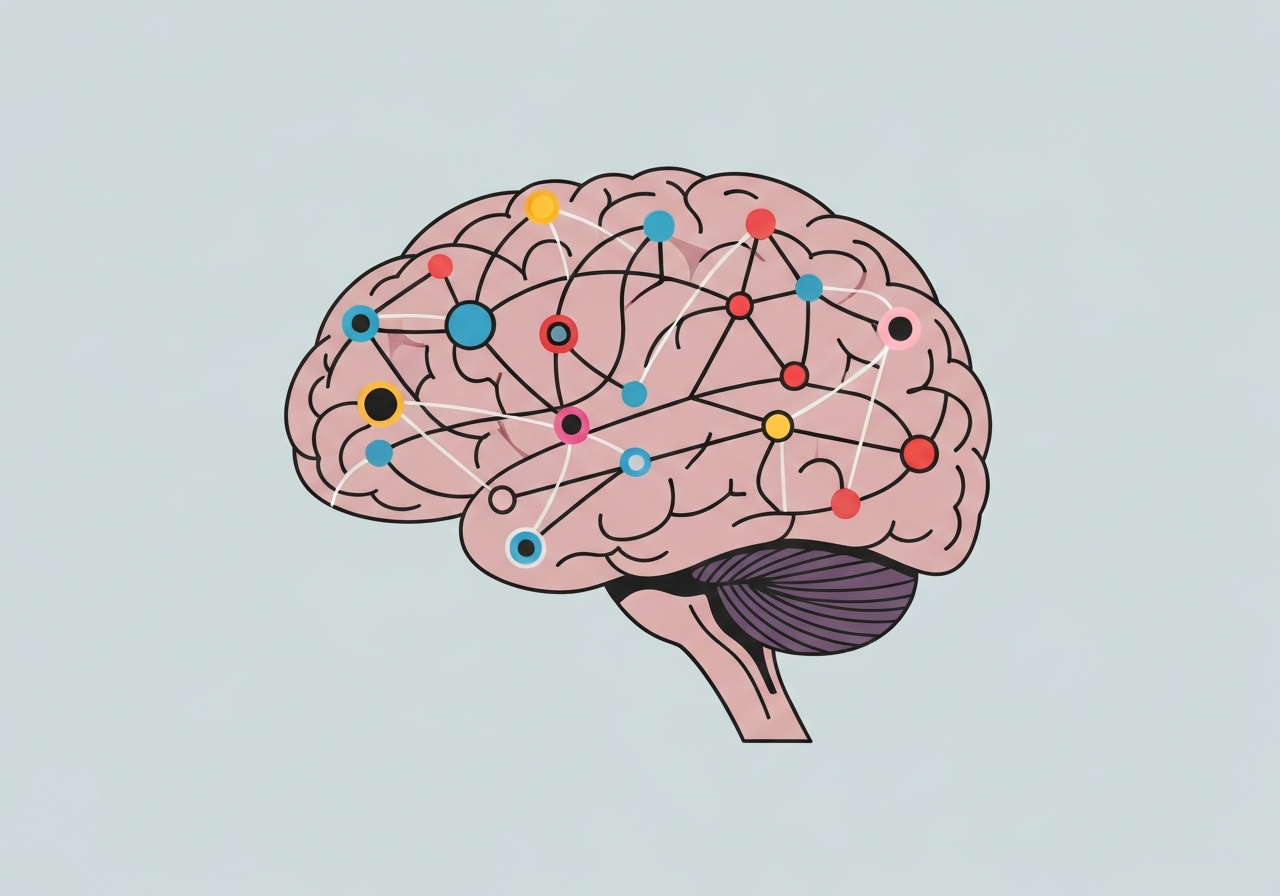
Researchers report in the journal Nature that a distributed brain circuit called the somato-cognitive action network (SCAN) appears disrupted in Parkinson’s disease, offering a unifying explanation for both movement and non-motor symptoms. Using MRI data from more than 800 brains, teams led by investigators at Peking University and WashU Medicine found abnormal SCAN connectivity in people with Parkinson’s. The pattern fits a model in which excessive coupling between SCAN and disease-affected regions creates a bottleneck that impairs normal signaling. Early tests show several effective treatments—deep brain stimulation, levodopa, transcranial magnetic stimulation and focused ultrasound—reduce that abnormal connectivity.
Key takeaways
- The SCAN (somato-cognitive action network) links motor, cognitive and autonomic regions and is implicated in Parkinson’s non-motor symptoms such as sleep, smell and digestion problems.
- Researchers analyzed MRI scans from over 800 individuals, comparing healthy controls with Parkinson’s patients to identify SCAN alterations.
- Patients showed abnormally strong connections between SCAN and brain areas known to be affected in Parkinson’s; investigators describe this as a traffic-jam effect rather than improved signaling.
- Deep brain stimulation (DBS) rapidly lowered SCAN hyperconnectivity when the stimulator was turned on, restoring signal flow in imaging measures.
- Levodopa, transcranial magnetic stimulation, and focused ultrasound produced similar reductions in SCAN connectivity, suggesting convergent mechanisms among current therapies.
- Parkinson’s affects about 1 million people in the United States; recognizing SCAN involvement could broaden therapeutic targets beyond classic motor centers.
- Comparative evidence shows other neurodegenerative diseases affect different networks—Alzheimer’s targets the default mode network while ALS primarily damages the motor network.
Background
Parkinson’s disease has long been framed as a movement disorder, characterized by tremor, rigidity and gait impairment. Over decades clinicians and patients have documented a wide set of additional features—loss of smell, constipation, REM sleep changes, blood pressure instability and cognitive fluctuations—that do not fit neatly into a purely motor circuit model. Those diverse symptoms have led researchers to seek network-level explanations: which distributed circuits could simultaneously influence voluntary movement, autonomic control and higher cognition?
In 2023 investigators at Washington University in St. Louis described a circuit that appears to bridge motor and cognitive domains and named it the somato-cognitive action network (SCAN). That discovery provided a concrete anatomical substrate to test whether Parkinson’s pathology disrupts communication across that bridge. The new study, led in part by Hesheng Liu of Changping Laboratory at Peking University and colleagues, used large MRI cohorts to compare SCAN connectivity in people with and without Parkinson’s.
Main event
Using multimodal MRI on more than 800 subjects, the research team mapped functional coupling patterns across brain regions comprising the SCAN and quantified differences between Parkinson’s patients and controls. They found consistent increases in measured connectivity between SCAN hubs and regions already implicated by Parkinson’s pathology, such as basal ganglia and brainstem autonomic nuclei. Rather than improving throughput, these strengthened links appeared to create a bottleneck: signals failed to propagate normally through the network in task-free imaging and in task contexts tied to movement or cognition.
The team then examined how established therapies influenced SCAN connectivity. When deep brain stimulators were activated in treated patients, MRI measures showed an immediate reduction in SCAN hyperconnectivity, coinciding with clinical improvement in motor signs. Similar connectivity reductions were observed after administration of levodopa, and in small cohorts treated with transcranial magnetic stimulation or focused ultrasound targeting disease-relevant nodes.
Investigators interpret these convergent effects to mean that effective Parkinson’s treatments—whether pharmacologic, electrical or ablative—may work in part by normalizing dysfunctional SCAN signaling. This provides a potential mechanistic link between symptom relief and restored network dynamics, and points toward broader targets for future interventions aimed at non-motor features.
Analysis & implications
Framing Parkinson’s as a network disorder shifts emphasis from isolated nuclei (for example, substantia nigra) to interactions among distributed systems that coordinate movement, autonomic function and cognition. If SCAN disruption explains non-motor symptoms—olfactory loss, gastrointestinal dysmotility, orthostatic hypotension and REM-related sleep disturbances—then therapies aimed at restoring normal network traffic could alleviate a wider symptom set than dopaminergic drugs alone.
The finding that several different therapies converge on SCAN connectivity suggests a common proximal mechanism despite divergent modalities. DBS applies patterned electrical pulses, levodopa restores neurotransmitter levels, and noninvasive stimulation changes cortical excitability—yet all appear to reduce the same imaging signature of hypercoupling. That convergence strengthens the plausibility of SCAN as a treatment-relevant target, and offers an imaging biomarker to evaluate novel interventions.
For clinicians and trial designers, the result argues for outcome measures beyond traditional motor scales. Incorporating autonomic, sleep and cognitive endpoints—and using SCAN connectivity as a surrogate—could improve the assessment of therapies intended to treat Parkinson’s full symptom spectrum. For basic scientists, the study raises new questions about how proteinopathy, inflammation or synaptic changes produce network-level hyperconnectivity.
Comparison & data
| Disease | Primary affected network | Typical connectivity change | Common symptoms |
|---|---|---|---|
| Parkinson’s | Somato-cognitive action network (SCAN) | Abnormally increased coupling → bottleneck | Motor impairment, smell loss, constipation, REM changes |
| Alzheimer’s | Default mode network (DMN) | Reduced connectivity | Memory loss, disorientation, identity changes |
| ALS | Motor system network | Degeneration, reduced motor connectivity | Progressive weakness, paralysis |
The table summarizes how distinct neurodegenerative diseases preferentially impair different large-scale networks, producing different clinical syndromes. The MRI cohort in the new Parkinson’s analysis exceeded 800 scans, providing statistical power to detect network-level shifts and allowing cross-modality comparisons with DBS and pharmacologic treatments.
Reactions & quotes
Experts not involved in the study emphasize its conceptual shift.
“It almost feels like a tunnel is jammed, so no traffic can go normally.”
Hesheng Liu, Changping Laboratory and Peking University (study author)
Liu used the tunnel metaphor to convey how stronger-than-normal connections can paradoxically block effective signaling, producing the patchwork of motor and non-motor symptoms seen in patients.
“In the past, people thought of Parkinson’s disease as the classic movement disorder.”
Peter Strick, University of Pittsburgh (neurobiology, external commentator)
Strick welcomed the network framing, noting that it helps explain autonomic and cognitive features that have long puzzled clinicians and families.
Unconfirmed
- Whether normalizing SCAN connectivity will produce sustained improvement in non-motor symptoms over months to years remains unproven; longitudinal clinical trials are needed.
- The causal sequence—whether molecular pathology first alters SCAN coupling or whether network dysfunction accelerates local degeneration—is not yet resolved.
- Generalizability across all Parkinson’s subtypes and disease stages requires further study; the current MRI cohorts are large but may not capture full clinical heterogeneity.
Bottom line
The SCAN concept reframes Parkinson’s as a disorder of disrupted communication between motor, cognitive and autonomic systems rather than solely a focal motor circuit disease. That reframing helps explain why patients experience a wide and sometimes unpredictable mix of symptoms, from gait freezing to blood pressure drops and REM disturbances.
Practically, the study points to new diagnostic and therapeutic directions: imaging measures of SCAN connectivity could become biomarkers for trials, and interventions—electrical, pharmacologic or noninvasive—might be designed or adjusted to restore network traffic. Confirmatory longitudinal and interventional studies are now needed to translate this network insight into routine clinical advances.