
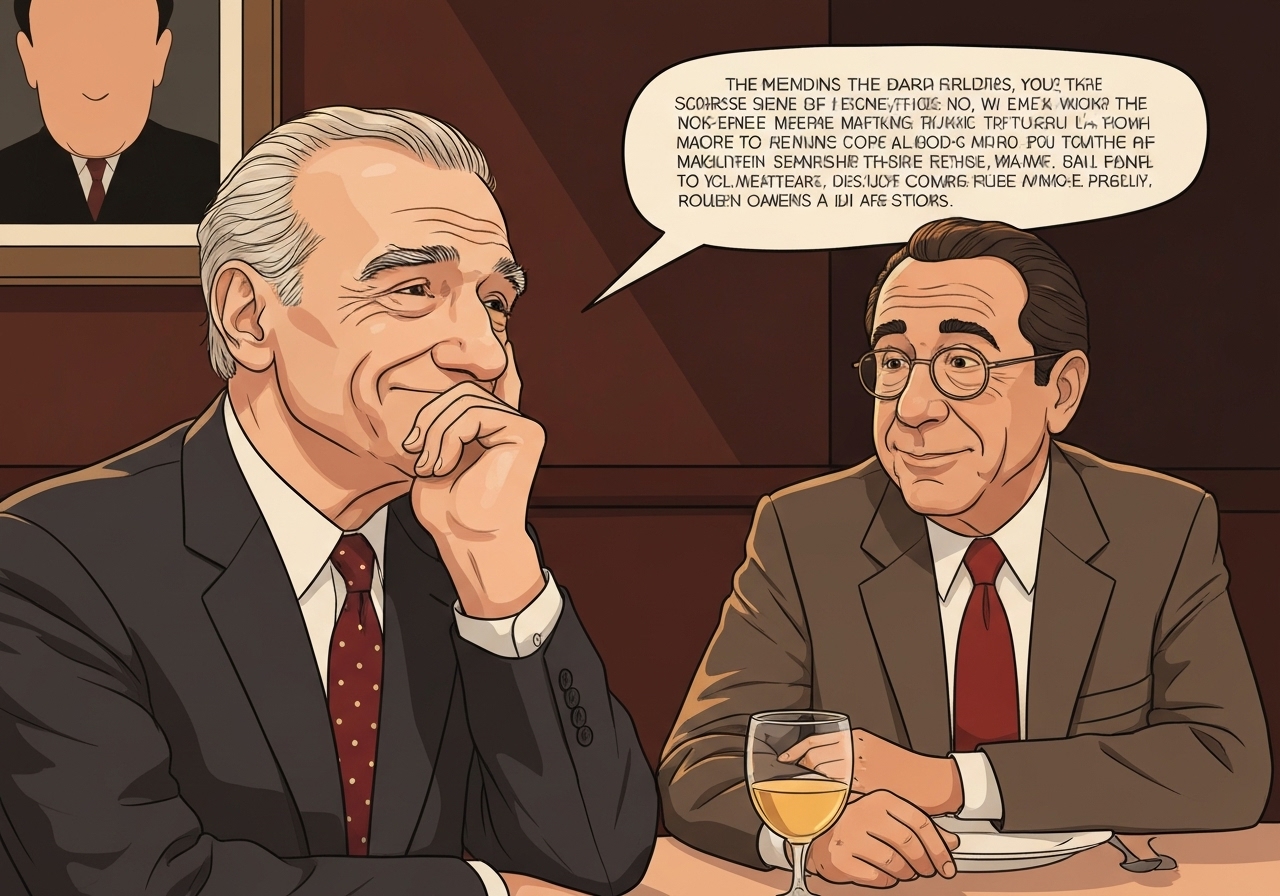
Legendary filmmaker Martin Scorsese wrote an essay in The New York Times mourning the deaths of Rob and Michele Reiner, found dead in their Brentwood home on Dec. 14. Scorsese described Rob Reiner as a close friend and praised his improvisational comedy and warmth, writing that he must now think of them in the past tense. The Reiners were 78 and 70; their 32-year-old son, Nick Reiner, has been arrested and charged with two counts of murder. Scorsese recalled meeting Reiner in Los Angeles in the early 1970s and highlighted key performances that illustrated his range and humanity.
Key Takeaways
- Rob Reiner and his wife Michele were found dead on Dec. 14 in their Brentwood, Los Angeles, home; both sustained knife wounds and were 78 and 70 years old.
- Their son, Nick Reiner, 32, was arrested and is charged with two counts of murder; the case is in active criminal proceedings.
- Scorsese’s remembrance appeared as an essay in The New York Times and describes a decades-long friendship dating to the early 1970s.
- Scorsese singled out Reiner’s performances in Misery (1990) and This Is Spinal Tap (1984), and praised his work in The Wolf of Wall Street (2013).
- Scorsese praised Reiner’s “beautiful sense of uninhibited freedom” and his improvisational gifts, noting a deep personal and artistic affinity.
- The essay frames the deaths as a devastating personal loss and expresses Scorsese’s struggle to accept the violence that took them.
Background
Rob Reiner, an actor-turned-director and the son of entertainers Carl and Estelle Reiner, built a long career spanning acting, directing and producing. He first came to public attention as an actor before directing acclaimed films that ranged from sharp comedies to intense dramas. Michele Reiner was his partner for decades; the family was long-established in Hollywood circles.
Martin Scorsese and Reiner met in Los Angeles after Scorsese moved west in the early 1970s, frequenting gatherings of actors and comedians hosted by friends such as George Memmoli. Both were East Coast transplants in a burgeoning L.A. scene, and Scorsese wrote that they found common cultural ground in New York–rooted humor and sensibilities.
Their social and professional circles overlapped across generations of performers and filmmakers. Reiner’s work—whether in front of the camera in This Is Spinal Tap or behind it in films like Misery—earned him respect across genres and among peers, making the recent deaths a shock to the industry and the public.
Main Event
On Dec. 14, emergency responders discovered Rob and Michele Reiner deceased at their Brentwood residence. Authorities later reported knife wounds as the cause of death and arrested the couple’s son, 32-year-old Nick Reiner, who faces two counts of murder. Law enforcement has characterized the case as active and under investigation.
Scorsese’s essay, published in The New York Times, blends personal memory with cinematic appraisal. He opens by noting the shift from present to past tense when speaking of the Reiners and emphasizes the depth of his sadness; he then recounts early encounters and social gatherings that produced a lasting friendship and mutual admiration.
Throughout the piece Scorsese highlights moments that reveal Reiner’s temperament: his comic timing, improvisational skill and an exuberant laugh that filled rooms. He cites specific scenes—such as a sequence from The Wolf of Wall Street—in which Reiner’s facial expressions conveyed a father’s complicated mixture of pride and bewilderment.
Scorsese also lists films he admires, calling This Is Spinal Tap “in a class of its own” and naming Misery among Reiner’s finest directed works. He reflects on Reiner’s ability to move between comedy and drama, and on how that versatility informed both his friendships and his screen performances.
Analysis & Implications
The deaths of Rob and Michele Reiner mark a rare and violent rupture in a high-profile Hollywood family, and Scorsese’s public mourning draws attention to how closely personal and professional lives are intertwined in the film community. Public testimonials from prominent peers can shape how an episode is perceived, framing it as both a human tragedy and a loss to the arts.
Legally, the arrest and murder charges against the couple’s son set a criminal process in motion that will determine charges, possible plea negotiations and, if it reaches trial, a public court record. Prosecutorial timelines, forensic results and defense filings will control the pace of disclosure and influence how much new factual detail becomes available to journalists and historians.
Artistically, Scorsese’s appraisal reinforces Reiner’s dual identity as comedian and serious director. That framing may influence retrospective assessments of Reiner’s body of work, prompting critics and scholars to reassess films like This Is Spinal Tap and Misery within the arc of his career and his collaborations with peers.
For the industry, the episode raises questions about privacy, media coverage and the responsibilities of outlets when reporting intimate family tragedies. How the press balances public interest with compassion, and how studios and colleagues respond, will affect long-term reputational outcomes for those involved.
Comparison & Data
| Film | Year | Reiner’s Role / Note |
|---|---|---|
| This Is Spinal Tap | 1984 | Actor; landmark comedy, co-creator |
| Misery | 1990 | Director; praised for performances and tension |
| The Wolf of Wall Street | 2013 | Actor; played the protagonist’s father |
The table above highlights three career milestones Scorsese emphasized. Each title illustrates a different facet of Reiner’s craft—broad improvisational comedy, controlled dramatic direction and nuanced character acting—which Scorsese used to explain why Reiner mattered both personally and artistically.
Reactions & Quotes
“Rob Reiner was my friend, and so was Michele.”
Martin Scorsese / The New York Times (essay)
Scorsese opens his remembrance by naming friendship as the core relationship affected by the deaths and uses that bond to contextualize his grief. He then recounts shared social circles and artistic encounters to explain why the loss feels irreparable.
“What happened to Rob and Michele is an obscenity, an abyss in lived reality.”
Martin Scorsese / The New York Times (essay)
Later in the essay, Scorsese uses stark language to describe the violence and its emotional impact, while also urging time and memory as partial routes to acceptance. His words have been widely cited across industry coverage and social media responses.
Unconfirmed
- Motives behind the killings: investigators have not publicly confirmed a motive and no definitive explanation has been released.
- Detailed forensic findings: full autopsy results and forensic summaries have not been disclosed publicly at this time.
- Circumstances leading up to the incident: specific events in the hours or days before Dec. 14 remain under investigation and unverified in public records.
Bottom Line
Martin Scorsese’s essay frames the deaths of Rob and Michele Reiner as an intimate loss that resonates across the film community, combining personal remembrance with an appraisal of Reiner’s artistic gifts. The arrests and charges mean that legal proceedings will unfold in public, producing new facts that reporters and historians will need to track carefully.
For audiences and colleagues, the immediate takeaway is twofold: a grieving of the personal connection described by Scorsese, and an impending legal process that will determine responsibility and fill factual gaps. In the weeks and months ahead, court filings, forensic reports and statements from family or attorneys will be the primary sources to watch for verified details.
Sources
- Variety — Entertainment news report (original account of Scorsese’s essay and case details)
- The New York Times — Opinion/essay (Scorsese’s published remembrance)
- Los Angeles Police Department — Official (law enforcement statements and case status)