
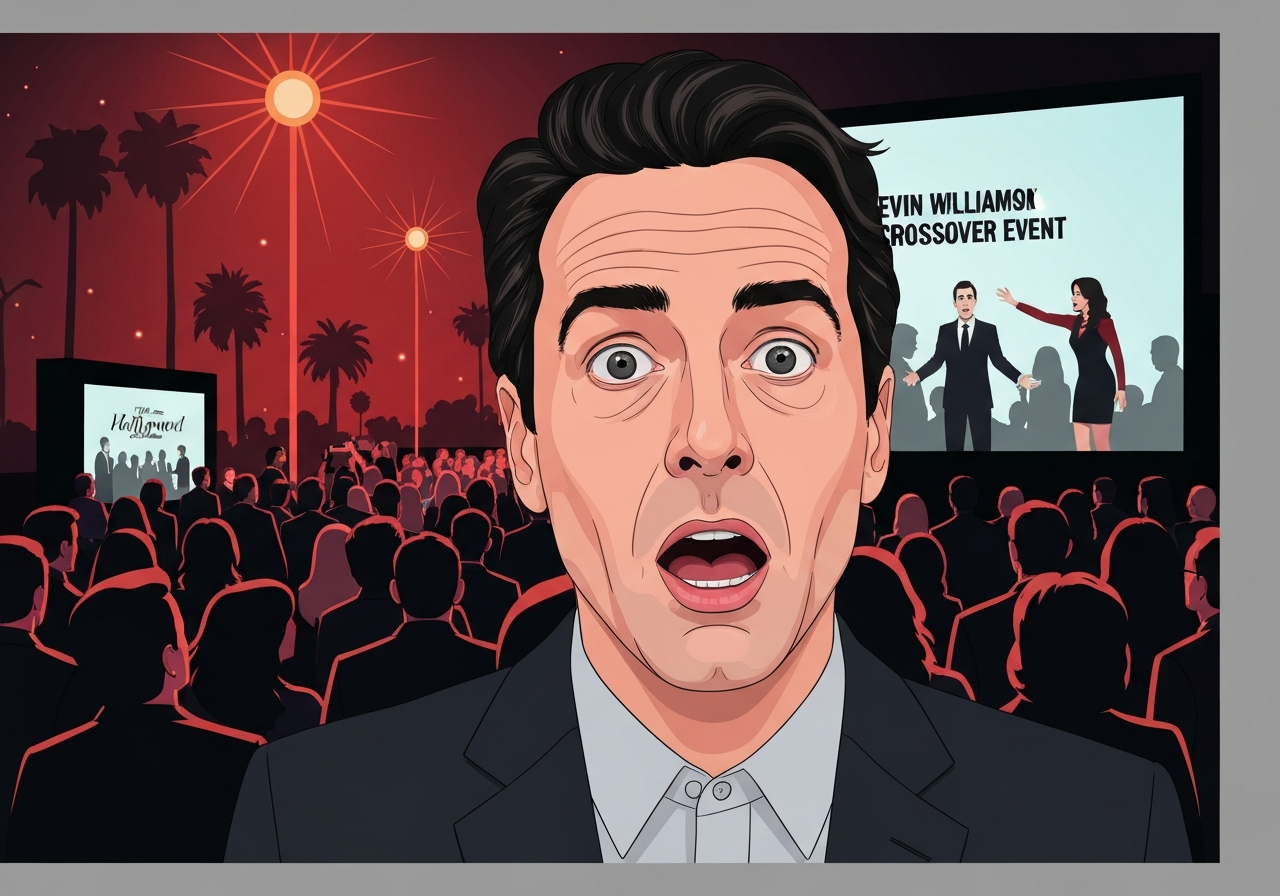
On Wednesday night, Feb. 26, 2026, roughly 30 pro-Palestine demonstrators gathered outside the Paramount Studios lot during the Los Angeles premiere of Scream 7, calling for a boycott ahead of the film’s Feb. 27 release. Protesters waved Palestinian flags, beat drums and blew horns while chanting slogans such as “Boycott Scream 7” and “Free, free, free Palestine,” though their voices were only faintly audible on the red carpet where principal cast members posed for photos. Director Kevin Williamson said he saw the crowd and affirmed the right to protest, adding he supports that freedom of expression. Organizers tied the action to prior controversy involving Melissa Barrera and broader industry concerns about silencing pro-Palestinian voices.
Key Takeaways
- About 30 protesters assembled outside the Paramount Studios lot during the Scream 7 premiere on Feb. 26, 2026, according to on-scene reports and social posts.
- Demonstrators were organized by Entertainment Labor for Palestine, CODEPINK LA and Jewish Voice for Peace-Los Angeles and carried signs reading “Cancel Paramount+” and “Stand For Free Speech Boycott Scream 7.”
- The demonstration cited Melissa Barrera’s firing in November 2023 as a motivating incident and urged audiences to avoid the film when it releases Feb. 27.
- Kevin Williamson told reporters he observed the protest and emphasized that protest is a protected right in the U.S.; he said he stands by that principle.
- Spyglass Media Group has previously said it has “zero tolerance for antisemitism” and cautioned against hate speech; that statement came when Barrera was dismissed in Nov. 2023.
- Organizers framed the march as a response to what they called industry censorship and alleged whitewashing of the Gaza conflict; the groups described the action as part of a broader Boycott Scream 7 campaign.
- Paramount and Spyglass had not provided new comments to reporters by the time of publication.
Background
The immediate context of the protest ties back to the October 2023 Hamas invasion of Israel and the contentious public debate that followed. In November 2023, actress Melissa Barrera was removed from Scream 7 after posting supportive comments about Palestine on social media, drawing industry scrutiny and statements from the film’s producers. Spyglass Media Group issued a public response at that time rejecting antisemitism and any incitement to hate, framing the dismissal as enforcement of company policy around hate speech. Advocacy groups and some fans have since argued that Barrera’s removal amounted to censorship and a pattern of silencing pro-Palestinian perspectives within entertainment.
Hollywood premieres have occasionally become focal points for political protest; the Scream 7 demonstration follows that pattern in which visible industry events are used to amplify causes. The groups behind Wednesday’s action—Entertainment Labor for Palestine, CODEPINK LA and Jewish Voice for Peace-Los Angeles—are established activist organizations that have previously targeted film industry practices and talent decisions. Their stated objectives include pressuring studios and drawing public attention to what they describe as unequal treatment of artists who voice support for Palestine.
Main Event
The protest began outside the Paramount Studios lot on the evening of Feb. 26, with marchers clustered along the perimeter as attendees arrived for the premiere. Witnesses described drums, horns and chanting; visible placards included messages urging viewers to cancel Paramount+ and to boycott the franchise. Though the demonstration was loud at the street level, red carpet activity inside the studio complex remained largely uninterrupted, and the premiere continued as scheduled with stars like Neve Campbell and Courteney Cox photographed on the carpet.
Organizers framed the gathering as a peaceful but pointed demonstration meant to inform potential viewers about the Boycott Scream 7 campaign. A CODEPINK LA news release said the action aimed to “call attention to the industry’s widespread silencing of pro-Palestinian voices and its whitewashing of Israel’s ongoing genocide in Gaza,” language that reflects the group’s longstanding criticism of mainstream coverage and entertainment-industry responses. The demonstrators also invoked the Barrera firing from November 2023 as a central grievance.
When approached by The Hollywood Reporter, director Kevin Williamson said he had noticed the protesters and paused upon seeing them. He affirmed the right to protest in the United States and expressed solidarity with the principle that people should be heard, saying succinctly that he supports that right. THR reached out to Paramount and Spyglass for comment on the Feb. 26 protest but had not received new statements by the time of publication.
Analysis & Implications
The protest at the Scream 7 premiere underscores how entertainment-industry events continue to serve as high-visibility platforms for political expression, particularly on issues that intersect with public debate about free speech and corporate accountability. For studios, red-carpet demonstrations present a dilemma: balancing access for audiences and talent while managing reputational risk and stakeholder concerns. Paramount and Spyglass must weigh responses that neither amplify nor dismiss protester grievances, a challenge complicated by polarized public discourse around the Israel–Gaza conflict.
For talent and creatives, the incident highlights ongoing tensions about what constitutes permissible expression and where companies draw lines on social-media speech. The Barrera case from Nov. 2023 remains a reference point; its aftereffects continue to shape both fan mobilization and industry policy conversations. Activist campaigns that target box office and streaming subscriptions aim to translate symbolic protest into measurable commercial pressure, which could have downstream effects on distribution strategies and studio risk assessments.
Politically, the demonstration may deepen scrutiny of how Hollywood handles geopolitical controversies—whether through formal policy updates, public statements, or behind-the-scenes personnel decisions. If boycott efforts gain traction among viewers, studios could face short-term revenue impacts on titles associated with controversy and longer-term pressure to adopt clearer, consistently applied guidelines on employee expression. Internationally, visible protests at U.S. premieres can amplify global media coverage and influence public opinion beyond the domestic market.
Comparison & Data
| Date | Event | Note |
|---|---|---|
| Oct. 2023 | Hamas invasion of Israel | Triggered worldwide protests and debate |
| Nov. 2023 | Melissa Barrera fired from Scream 7 | Studio cited policy on hate speech |
| Feb. 26, 2026 | Scream 7 L.A. premiere protest | ~30 demonstrators; groups called for boycott |
| Feb. 27, 2026 | Scream 7 theatrical/streaming release | Release date scheduled following premiere |
The timeline above places the premiere protest in a sequence of public events that connect geopolitical developments, talent decisions and organized activism. While the immediate demonstration involved only a few dozen participants, organizers aim to scale awareness through social campaigns and media coverage. Studios historically respond to sustained consumer pressure rather than single-night demonstrations, but clustered actions and persistent online campaigns can alter public perception and influence corporate decisions.
Reactions & Quotes
“I saw them and my heart just sort of stopped. We live in America. Everyone has a right to protest and everyone should be heard…I support that 100 percent.”
Kevin Williamson, Scream 7 director (to The Hollywood Reporter)
Williamson’s remarks acknowledged the presence of protesters while emphasizing constitutional protections for demonstrators. His brief response framed the event as an exercise of civic rights rather than a disruption of the premiere itself.
“We refuse to let the franchise we love be used as propaganda for a genocide. We reject Hollywood’s racist blacklisting and censorship of any person who advocates for a free Palestine.”
Nino Testa, Boycott Scream 7 organizer (statement)
Organizers like Testa cast the protest as both a defense of Barrera and a broader critique of studio behavior. Their messaging aims to connect a single personnel decision to systemic industry practices that they view as discriminatory.
Unconfirmed
- No independent tally has verified the exact number of demonstrators beyond on-site reports that put the figure at about 30; crowd size estimates vary by source.
- Reports link the boycott effort to potential box-office impact, but whether the demonstration will materially affect Scream 7 ticket sales or streaming subscriptions is not yet established.
Bottom Line
The Scream 7 premiere protest is significant less for its size than for its symbolism: it ties a high-profile entertainment release to ongoing geopolitical controversy and to lingering questions about how studios handle employee speech. Kevin Williamson’s quick public defense of the right to protest underscores how industry figures often try to strike a neutral, rights-based tone in the face of polarizing events.
For Paramount and Spyglass, the immediate tactical question is whether and how to engage—with a single statement, new guidelines, or no response at all. Longer term, repeated demonstrations and coordinated social campaigns could prompt studios to clarify social-media and employment policies, or to develop new engagement strategies to address activist concerns without escalating conflict.
Sources
- The Hollywood Reporter — Entertainment news (original report and quotes)
- Borys Kit on X (Twitter) — Reporter social post with on-scene video (social media)
- CODEPINK — Activist organization (press release/organizational statement)