
Lead
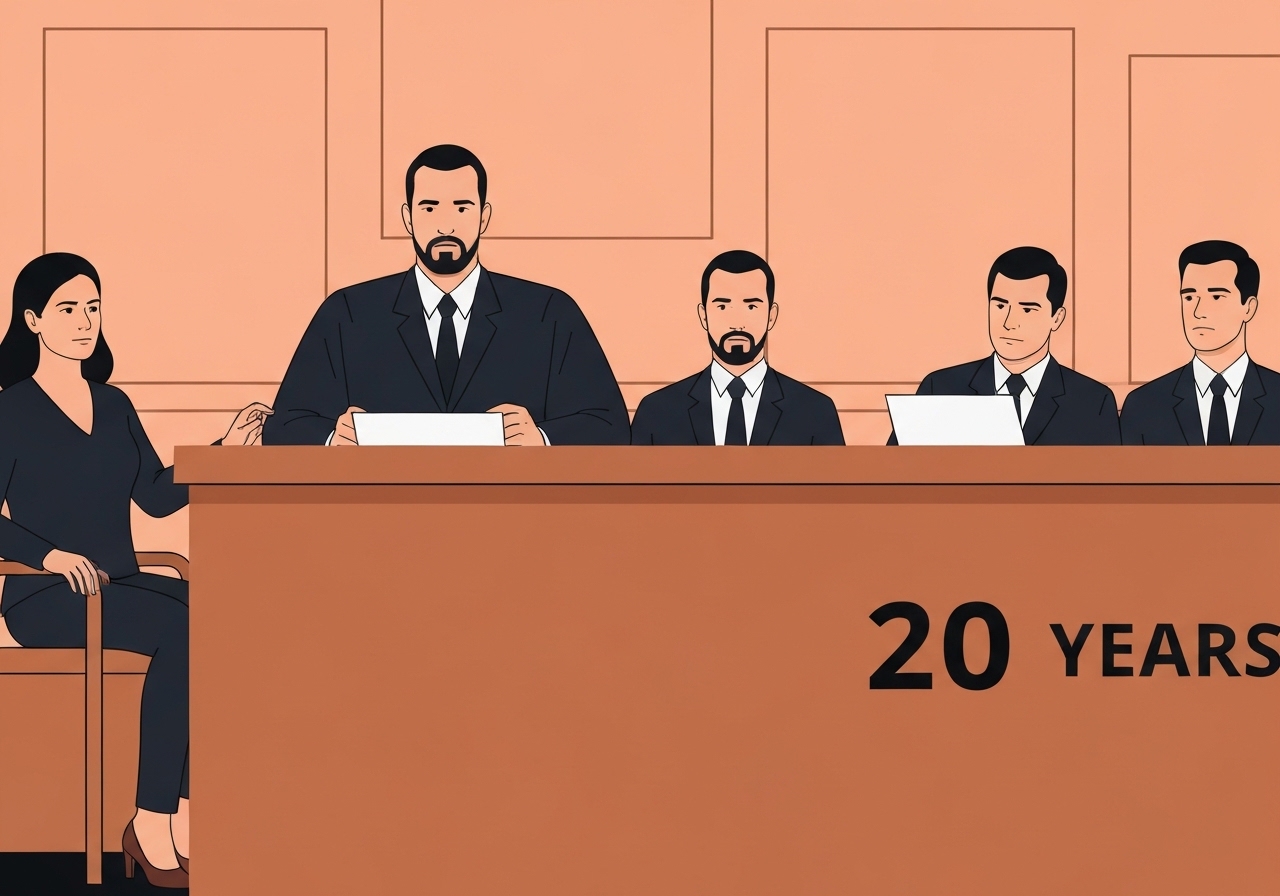
Former Sangamon County deputy Sean Grayson was sentenced on Thursday to 20 years in prison after a jury convicted him in October 2025 of second-degree murder for the July 6, 2024, fatal shooting of Sonya Massey in Springfield, Illinois. Judge Ryan Cadagin ordered a two-year mandatory supervised release and credited Grayson for time already served. The victim, Sonya Massey, had called 911 to report a possible intruder at her home; the shooting and subsequent trial drew local and national attention. Family members who spoke at the hearing said the sentence—while the maximum available—did not fully answer their loss.
Key Takeaways
- Sean Grayson, a former Sangamon County sheriff’s deputy, received a 20-year prison sentence after a second-degree murder conviction in October 2025.
- The shooting occurred on July 6, 2024, in Springfield, Illinois, after Sonya Massey called 911 about a possible intruder at her home.
- Judge Ryan Cadagin added a mandatory two-year supervised release and credited Grayson for time served; prosecutors had sought a sentence within a 4–20 year range or probation.
- Body-camera footage played a central role in the trial, showing interactions inside Massey’s home and the moments leading to the shooting.
- Family members, including Massey’s daughter Summer (15 at the time of the shooting) and son Malachi, delivered victim impact statements describing emotional and practical loss.
- Grayson’s request for a new trial, filed December 2, 2025, alleging multiple trial errors, was denied prior to sentencing.
- Sangamon County State’s Attorney John Milhiser opposed the new-trial motion and defended the prosecution’s handling of evidence.
Background
The encounter began July 6, 2024, when Sonya Massey placed a 911 call reporting a possible intruder at her Springfield home. Grayson, then a deputy with the Sangamon County Sheriff’s Office, entered the residence that night; body-camera footage later released by Illinois authorities documents the interaction. Tensions escalated inside the kitchen area, where a pot of boiling water was visible on the stove and exchanges recorded on video culminated in the fatal shooting.
Grayson was initially booked on three charges related to Massey’s death: first-degree murder, aggravated battery with a firearm and official misconduct. He pleaded not guilty; after a seven-day trial in October 2025 the jury convicted him of second-degree murder, the lesser included offense offered to jurors. The case prompted scrutiny of police conduct, courtroom procedures and how evidence—including body camera video—should be weighed in officer-involved shootings.
Main Event
During the recorded encounter, Grayson can be seen pointing to a pot of boiling water and warning Massey to move away from it. The video shows Massey pouring water into the sink, repeating language attributed to Grayson, and saying, “I rebuke you in the name of Jesus,” before the confrontation intensified. He allegedly threatened to shoot her; Massey apologized, ducked behind a counter and covered her face with what appears to be an oven mitt. As she briefly rose, Grayson fired three shots to her face, according to released footage.
At trial Grayson told jurors he believed Massey intended to throw scalding water on him and that he was afraid. The prosecution countered that her hands were raised or that her movements did not justify lethal force. The jury weighed those competing accounts and convicted Grayson of second-degree murder in October 2025. Sentencing took place the following month, with the judge setting the maximum under the sentencing range prosecutors had cited.
Family members provided impact statements before sentencing. Donna Massey, Sonya’s mother, said she is now afraid to call police, expressing a loss of trust in law enforcement. Summer Massey, Sonya’s daughter who was 15 at the time of the shooting, said she was grateful the court imposed the maximum term but added that 20 years is insufficient. Malachi Massey recounted having to assume adult responsibilities at 17 after his mother’s death.
Analysis & Implications
The conviction and sentence highlight ongoing national debates about use of force, particularly in situations involving civilians who contact police from inside their homes. That a jury convicted a former deputy signals prosecutors met the burden of proving criminal culpability beyond reasonable doubt for a second-degree murder charge. The verdict may influence how prosecutors frame similar cases and how departments train officers for interior calls and high-stress interactions in confined spaces.
Body-worn camera footage was pivotal in this case. Prosecutors relied on the recording to establish sequence and demeanor; defense attorneys challenged its admission and argued the footage was misinterpreted or that rulings at trial prejudiced Grayson. The judge’s refusal to grant a new trial suggests judicial deference to the original evidentiary decisions in this instance, but appeals or collateral challenges may follow.
Beyond legal consequences for Grayson, the case is likely to affect public trust in local policing in Sangamon County and beyond. Donna Massey’s statement about fear of calling police underscores a broader community concern: when contact with law enforcement can end in death, some residents may hesitate to seek help. Policy repercussions could include renewed review of training on de-escalation, domestic/interior response protocols and the interpretation of perceived threats.
Comparison & Data
| Charge | Initial Count | Trial Outcome | Sentence Range |
|---|---|---|---|
| First-degree murder | Yes | Conviction reduced (jury chose lesser) | — |
| Second-degree murder | No (alternate) | Guilty (Oct 2025) | 4–20 years (sentence: 20 years) |
| Aggravated battery with a firearm | Yes | Not convicted at that level | — |
| Official misconduct | Yes | Not convicted at that level | — |
The table above summarizes charges, trial outcomes and sentencing ranges. The jury’s choice to convict on second-degree murder rather than first-degree indicates they found culpability but not necessarily premeditation at the level required for first-degree. The imposed 20-year term equals the upper bound of the statutory range prosecutors cited during sentencing.
Reactions & Quotes
Local officials and the victim’s family responded publicly after the sentence. Sangamon County State’s Attorney John Milhiser, who prosecuted the case, filed the motion opposing a new trial and maintained the prosecution’s evidence warranted the conviction.
“We sought justice on behalf of Sonya and her family and opposed a new trial,”
Sangamon County State’s Attorney John Milhiser (official statement to ABC News)
Family statements at sentencing conveyed grief and a loss of trust in law enforcement. Donna Massey used words her daughter spoke before she was shot and said the family now fears interacting with police.
“Today, I’m afraid to call the police in fear that I might end up like Sonya,”
Donna Massey (victim’s mother, victim impact statement)
Grayson apologized in court and accepted some responsibility for his actions that night, telling the judge he “made a lot of mistakes” and that he froze at points. Defense counsel sought a new trial, asserting trial errors and contesting the admissibility of body-camera footage; the judge denied that motion before sentencing.
“I wish there was something I could do to bring her back… I am very sorry,”
Sean Grayson (statement in court, as reported)
Unconfirmed
- No official public timeline has been released showing every pre-trial evidentiary ruling; specific claims about alleged “incorrect” judicial focus referenced in the defense motion remain the defense’s contention pending appellate review.
- Claims about Grayson’s exact mental state or subjective motivations beyond his courtroom statements are not independently verifiable and remain matters of interpretation rather than established fact.
Bottom Line
The 20-year sentence imposed on Sean Grayson concludes the trial-level criminal process for this case but may not be the final legal chapter. The denial of a new trial closes one immediate avenue for the defense, though appeals or post-conviction motions remain possible. For the Massey family and the Springfield community, the verdict and sentence offer a measure of accountability while leaving unanswered questions about broader policing practices and community trust.
Practically, the case underscores the evidentiary power of body-worn cameras and the legal complexities when officers confront perceived threats inside a civilian’s home. Policymakers, law enforcement agencies and prosecutors may treat this outcome as a data point in ongoing reviews of training, de-escalation and how interior calls are managed to reduce the likelihood of similar tragedies.
Sources
- ABC News — National news outlet reporting on trial, sentencing and court filings (primary report).
- WICS (Springfield ABC affiliate) — Local affiliate coverage, courtroom presence and reporting of victim impact statements (local news).
- Illinois State Police — Official state police (source of released body-camera footage and official materials).