
Lead
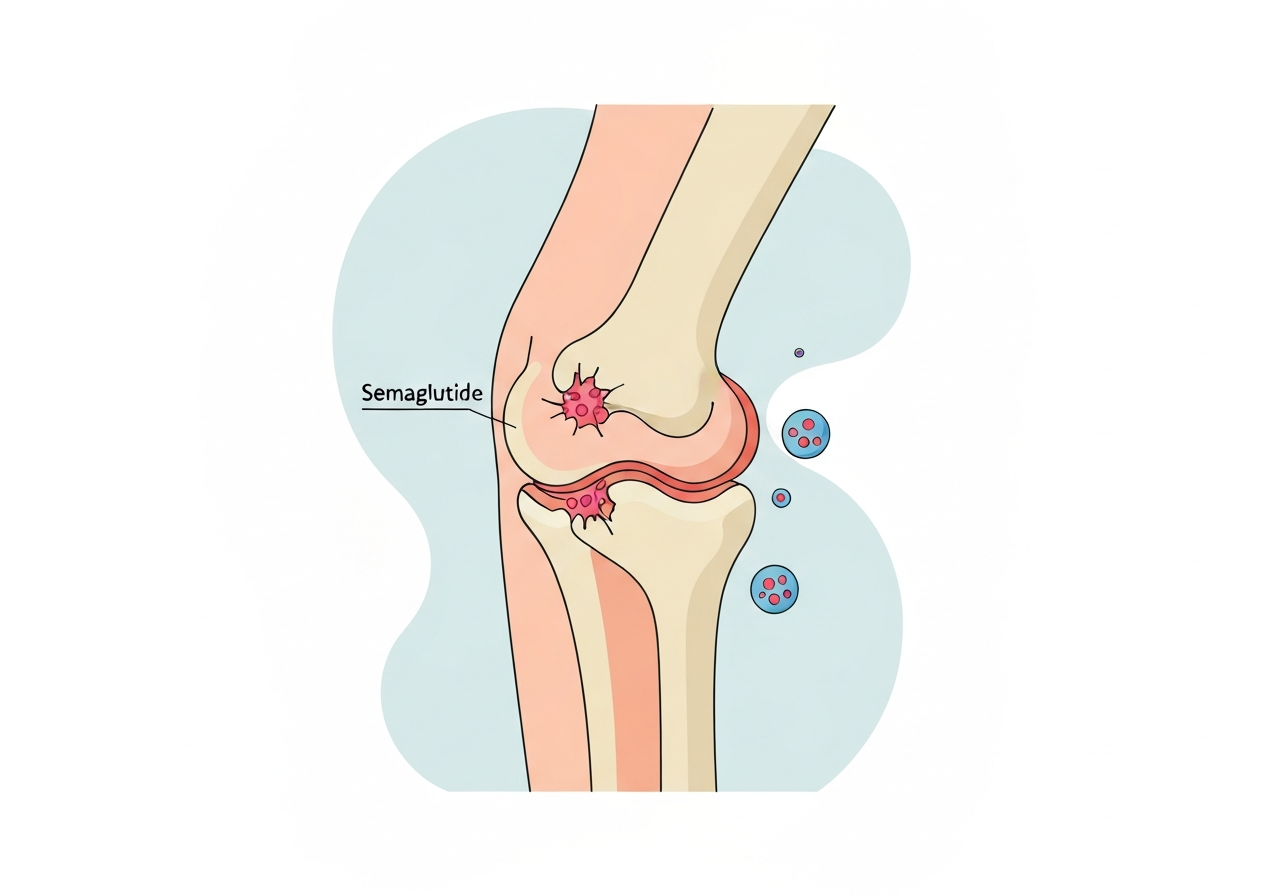
Researchers report that semaglutide—the active ingredient in drugs such as Ozempic and Wegovy—appears to protect and even regenerate joint tissue affected by osteoarthritis in preclinical models and a small human trial. The work, published in Cell Metabolism, combined mouse experiments with a randomized 24-week trial of 20 people aged 50–75 who had obesity and knee osteoarthritis. Treated animals showed reduced cartilage loss, fewer bone spurs and milder synovial lesions; the human cohort receiving semaglutide plus intra-articular sodium hyaluronate had lower pain scores and thicker cartilage on MRI. The findings point to a weight-loss-independent metabolic mechanism that reprograms chondrocyte energy production.
Key Takeaways
- Study combines mouse models and a randomized 24-week human trial of 20 participants aged 50–75 with obesity and knee osteoarthritis.
- Semaglutide treatment shifted chondrocyte metabolism from glycolysis to oxidative phosphorylation, increasing ATP yield from ~2 to as many as ~36 ATP per glucose molecule in affected cells.
- Mice treated with semaglutide showed reduced cartilage degeneration, fewer osteophytes (bone spurs) and milder synovial lesions compared with untreated controls.
- A pair-feeding control matched food intake and weight change to treated animals but did not replicate cartilage protection, suggesting effects beyond reduced joint loading.
- Proteomics comparison detected altered expression in approximately 8,300 proteins between treated and untreated cartilage samples.
- In the 24-week human trial, the group receiving semaglutide plus sodium hyaluronate reported lower pain scores and demonstrated MRI evidence of thicker cartilage in weight-bearing regions.
- Authors identify the GLP-1R–AMPK–PFKFB3 signaling axis as a key pathway mediating metabolic reprogramming in chondrocytes.
Background
Osteoarthritis (OA) is the world’s most common arthritis, currently affecting about 600 million people and projected to reach roughly one billion by 2050. The condition is characterized by progressive degradation of articular cartilage, changes in subchondral bone, and inflammation of the synovium, producing pain and reduced mobility. Major risk factors include age, prior joint injury, mechanical overload and metabolic comorbidities such as obesity and type 2 diabetes; these metabolic conditions can alter tissue biology systemically and within joints.
Semaglutide is a long-acting glucagon-like peptide-1 (GLP-1) receptor agonist marketed for type 2 diabetes and weight management (branded as Ozempic, Wegovy and others). Its primary actions are to potentiate insulin secretion and reduce appetite via central nervous system pathways; weight loss has been assumed to underlie many downstream improvements in load-related joint symptoms. Historically, OA treatments have been largely symptomatic—analgesics, anti-inflammatories, and viscosupplementation—without clear regenerative effects on cartilage.
Main Event
The research team performed parallel studies in mice and humans to test whether semaglutide has direct protective effects on joint tissues distinct from weight reduction. In mice with experimentally induced OA, semaglutide treatment led to measurable reductions in cartilage erosion, fewer osteophytes and less synovial membrane damage. Histology and imaging documented tissue-level improvements versus untreated animals.
To separate weight-loss effects from direct tissue actions, investigators included a pair-feeding control that consumed the same amount of food as the semaglutide-treated group. Despite similar body-weight trajectories, the pair-fed animals did not exhibit the same cartilage preservation, indicating a weight-loss-independent mechanism operating within the joint. Proteomic analysis of cartilage found approximately 8,300 proteins with differential expression after semaglutide exposure, implicating broad metabolic remodeling.
At the cellular level, treated chondrocytes showed a metabolic switch: previously glycolysis-dominant cells increased oxidative phosphorylation (OXPHOS) activity. Glycolysis yields roughly 2 net ATP per glucose molecule and predominates under low-oxygen or high-stress conditions; OXPHOS, which depends on oxygen, can produce up to about 36 ATP per glucose. The transition toward OXPHOS was linked mechanistically to activation of the GLP-1R–AMPK–PFKFB3 axis, a signaling cascade that favors mitochondrial energy production and cellular resilience.
Translating these findings, the randomized human component enrolled 20 adults with obesity and knee OA, randomized to intra-articular sodium hyaluronate (HA) alone or HA plus semaglutide systemically. After 24 weeks the HA+semaglutide group reported reduced pain and improved knee function; MRI readings indicated thicker cartilage in inner weight-bearing regions and signs consistent with recent cartilage formation compared with HA alone.
Analysis & Implications
If confirmed in larger, longer trials, these results suggest GLP-1 agonists could be repurposed or inspire new agents that target joint metabolism rather than only reducing mechanical load. A shift from glycolysis to OXPHOS in chondrocytes may improve cellular energy availability, enhance matrix synthesis and reduce cell death, all of which could slow or reverse structural damage. That mechanistic insight opens avenues for therapies that modify disease biology rather than only palliate symptoms.
The translational implications are substantial: OA already affects hundreds of millions globally and causes long-term disability and healthcare costs. A metabolic therapy that preserves or regenerates cartilage could change clinical management, reduce joint replacement needs, and affect public-health strategies for populations with metabolic comorbidities. However, clinical benefit must be demonstrated on larger scales, and any risk–benefit profile needs careful evaluation, given known side effects of GLP-1 agonists.
From a physiological viewpoint, altering chondrocyte metabolism raises questions about tissue oxygenation, mitochondrial health and the long-term stability of newly formed cartilage. OXPHOS-dependent cells require adequate oxygen and mitochondrial function; OA joints often have altered microenvironments, so the durability of metabolic reprogramming deserves targeted study. There is also interest in whether local delivery approaches or combination therapies (metabolic agents plus biologics or rehabilitation) could amplify benefits while minimizing systemic exposure.
Comparison & Data
| Feature | Glycolysis (OA baseline) | Oxidative Phosphorylation (post-treatment) |
|---|---|---|
| ATP yield per glucose | ~2 ATP | Up to ~36 ATP |
| Dominant context | Low oxygen / stress | Oxygen-available / mitochondrial function |
| Chondrocyte outcome | Lower energy, higher cell stress | Higher energy, improved survival |
| Study observations | Cartilage loss, osteophytes, synovial lesions | Thicker cartilage, fewer osteophytes, milder lesions |
The table summarizes key metabolic differences and the study’s observed tissue-level responses. While the proteomics signal (≈8,300 proteins changed) suggests broad remodeling, the GLP-1R–AMPK–PFKFB3 axis emerged as a principal pathway in the authors’ mechanistic evaluation. Quantitative imaging (MRI) provided structural corroboration in the 24-week human arm, but sample size was small and follow-up short.
Reactions & Quotes
Researchers framed the results cautiously while noting the novel mechanism linking systemic GLP-1 signaling to joint metabolism and repair.
We observed metabolic reprogramming in chondrocytes that correlated with reduced tissue degeneration and improved structural signs in both mice and a small human cohort.
Study authors (paraphrased)
Independent clinicians urged careful interpretation pending larger trials and longer follow-up to confirm durability and safety.
These early results are encouraging but preliminary; larger randomized studies are required to confirm whether semaglutide delivers meaningful, lasting joint protection in people with OA.
Independent rheumatology expert (paraphrased commentary)
Unconfirmed
- Whether the cartilage-thickening seen on 24-week MRI in 10 semaglutide-treated humans persists or translates into long-term functional benefit is not yet established.
- The optimal dosing strategy and whether systemically delivered semaglutide or a joint-targeted metabolic agent is superior remain untested.
- Potential long-term adverse effects on joint tissues or systemic risks specific to OA populations have not been characterized in large clinical trials.
Bottom Line
The study offers compelling preclinical and early clinical evidence that semaglutide can reprogram chondrocyte metabolism and produce structural improvements in osteoarthritis that are not solely a consequence of weight loss. Mechanistic data implicate the GLP-1R–AMPK–PFKFB3 axis and a shift from glycolysis to oxidative phosphorylation as central to tissue protection and repair.
Despite the promise, findings are preliminary: the human component involved 20 participants over 24 weeks, and mouse-to-human translation is not guaranteed. Larger, longer randomized trials are required to confirm efficacy, define safety, and determine whether GLP-1–based interventions will change standard care for osteoarthritis.
Sources
- ScienceAlert (news report summarizing the published study)
- Cell Metabolism (peer-reviewed journal; original research published in this journal)