
Lead
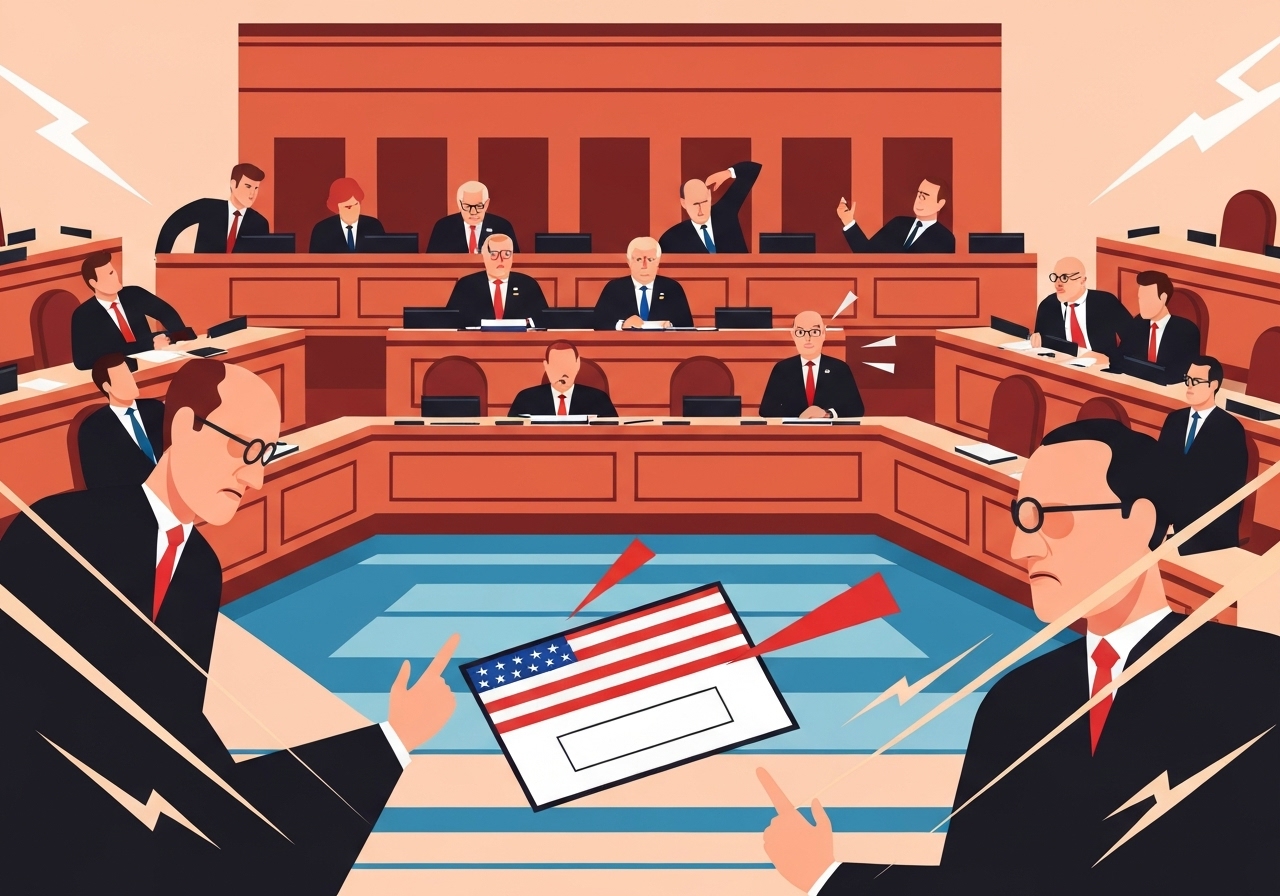
On Thursday, 6 November 2025, the US Senate voted 49-51 to block a Democratic war powers resolution that would have required President Donald Trump to seek congressional authorization before conducting strikes in Venezuela. The narrow, mostly party-line defeat preserves the administration’s current latitude to target suspected drug-trafficking vessels and consider land strikes without an additional vote of Congress. The measure followed an earlier failed effort, and senators used the roll call to record their objections to an expanding US military campaign in the Caribbean and off Venezuela’s coast.
Key Takeaways
- The Senate voted 49-51 on 6 November 2025 to reject a Democratic war-powers resolution aimed at forcing presidential consultation or approval for strikes related to Venezuela.
- A prior attempt to constrain the campaign failed 48-51; both votes were mostly along party lines with only two Republicans crossing over this week.
- Republicans Rand Paul and Lisa Murkowski supported the resolution; Senators Susan Collins and Thom Tillis voted against it despite earlier reservations.
- The administration has escalated a military campaign since early September, deploying a forward aircraft carrier to the Caribbean and announcing strikes beginning 2 September 2025.
- President Trump publicly said on 23 October 2025 that lethal force would be used against those bringing drugs into the US; the administration has also authorized CIA “covert action,” confirmed on 15 October 2025.
- The Justice Department’s Office of Legal Counsel (OLC) has been central to the legal rationale; officials say an updated OLC memo has not yet been issued and that existing memos are being relied upon.
Background
The vote is the latest flashpoint in a broader US effort to disrupt drug-trafficking groups operating in and around Venezuelan waters and to apply pressure on Nicolás Maduro’s government. For months the administration has characterized certain cartel-linked vessels as legitimate military targets, an approach that departs from more conventional counter-narcotics operations. Congress, which holds the power to declare war and to approve prolonged hostilities, has repeatedly asked for fuller legal and operational briefings as the campaign widened.
Past practice under the War Powers Resolution of 1973 constrains extended hostilities without congressional authorization; the administration disputes that recent strikes meet the statute’s threshold of “hostilities.” That legal distinction underpins much of the debate in both houses of Congress and among international law experts. The White House and Pentagon have framed the actions as necessary for US national security and public safety, while critics argue they risk entangling the United States in a larger conflict.
Main Event
The Senate debate on 6 November 2025 followed classified briefings for congressional leaders in which defense and state department officials outlined the campaign’s legal and operational logic. Lawmakers were told the administration remains reliant on an OLC memo that treats dozens of cartel groups as legitimate targets, enabling lethal strikes on designated vessels. The resolution that failed on Thursday had been narrowed to address GOP concerns but still failed to attract enough cross-party support to pass.
Senators who backed the measure pressed for statutory clarity about the circumstances under which the president may authorize strikes beyond international waters. Opponents argued that the resolution was unnecessary and could tie the military’s hands amid a fluid operational environment. Two Republican senators — Rand Paul and Lisa Murkowski — voted with Democrats; Susan Collins and Thom Tillis, despite earlier unease, ultimately voted to oppose the resolution.
Administration officials have announced multiple strikes since an initial attack on 2 September 2025, releasing limited details beyond casualty counts and assertions that targeted boats were carrying drugs. According to people familiar with internal deliberations, Trump’s aides have sought additional guidance from the Justice Department that might broaden the legal basis for striking land targets as well as vessels at sea. The White House has not yet circulated a final updated OLC opinion to Congress.
Analysis & Implications
The Senate’s refusal to constrain the president has immediate legal and political consequences. Legally, it leaves the administration’s operational window open while the Justice Department’s internal reviews continue; politically, it signals that a simple majority in the upper chamber is insufficient to compel restraint when party-line dynamics hold. For Congress, the vote highlights the limits of oversight when the executive frames actions as urgent security measures.
Strategically, continued strikes risk broadening the mission from counter-narcotics to targeted pressure on the Maduro government, raising questions about mission creep and escalation. Military deployment of an aircraft carrier to the Caribbean increases the stakes and could prompt responses from regional actors and adversaries monitoring US force posture. Diplomatically, allies and regional partners will be watching for clarity on objectives, rules of engagement and civilian-protection safeguards.
Economically and operationally, an expanded campaign could require additional resources for intelligence, logistics and legal advising; it also places new demands on interagency coordination, including a larger role for the Central Intelligence Agency. The administration’s reliance on classified legal memoranda to justify action complicates Congress’s ability to evaluate and, if needed, constrain the campaign publicly. Without transparent legal foundations and clear strategic goals, the US risks domestic blowback and international criticism.
Comparison & Data
| Item | Date | Result |
|---|---|---|
| Senate vote on war-powers resolution | 6 Nov 2025 | 49–51 (failed) |
| Earlier Senate effort | ~Oct 2025 | 48–51 (failed) |
| First announced strike | 2 Sep 2025 | Administration-released video; limited details |
The table shows the recent voting pattern and timeline: two consecutive near-party-line defeats in the Senate and a campaign that began in early September 2025. Those numeric margins illustrate how narrow bipartisan defections could have changed the outcome. The close tallies also demonstrate why senators sought to use the floor vote to make positions and concerns a matter of public record.
Reactions & Quotes
Leading Senate Democrats framed the vote as a constitutional test about Congress’s role in decisions that might escalate into broader hostilities.
If the administration intends to escalate towards conflict with Venezuela, Congress has a constitutional duty to declare and authorize such action. We cannot sleepwalk into another war.
Senator Jack Reed (top Democrat, Senate Armed Services Committee)
The president’s public remarks have been stark and were cited during the debate as evidence of a hardline approach to suspected traffickers.
I think we’re just going to kill people that are bringing drugs into our country, OK? We’re going to kill them, you know. They’re going to be, like, dead.
President Donald Trump, White House remarks, 23 October 2025
Justice Department officials have defended the legal framework used to date; they told senators the strikes do not meet the War Powers Resolution threshold for “hostilities,” a point that remains contested by some lawmakers and outside experts.
The strikes have been assessed under the Office of Legal Counsel guidance and are characterized as falling short of hostilities as defined under the 1973 statute.
Justice Department / OLC (summary of briefing to Congress)
Unconfirmed
- The administration has not released publicly verifiable evidence that the individuals killed in the boat strikes were actively smuggling drugs to the United States; that claim has not been independently corroborated.
- Reports that Justice Department lawyers are preparing a memo that would expand strike authorities remain unconfirmed until an updated OLC opinion is issued publicly or to Congress.
- Specific operational plans to remove Venezuelan president Nicolás Maduro have been described in some reporting, but definitive confirmation of such a targeted removal plan by the administration is not yet available.
Bottom Line
The Senate vote on 6 November 2025 leaves the executive branch with continued freedom to prosecute a stepped-up campaign against suspected drug-trafficking vessels near Venezuela and to contemplate broader strikes, at least until Congress can secure clearer legal justifications or pass new constraints. Narrow vote margins show how pivotal just two or three defections could be in shifting oversight outcomes.
Moving forward, Congress faces a choice between pressing for more transparent legal and operational briefings or deferring to the administration’s security judgments. For policymakers and the public, the crucial questions are what the campaign aims to achieve, how “victory” would be defined, and what safeguards will be put in place to prevent unintended escalation or civilian harm.
Sources
- The Guardian (News report on the Senate vote and administration actions)
- The Wall Street Journal (News reporting and analysis referenced in congressional briefings)
- The White House (Official statements and press remarks)
- U.S. Department of Justice — Office of Legal Counsel (Official legal guidance and memos)