
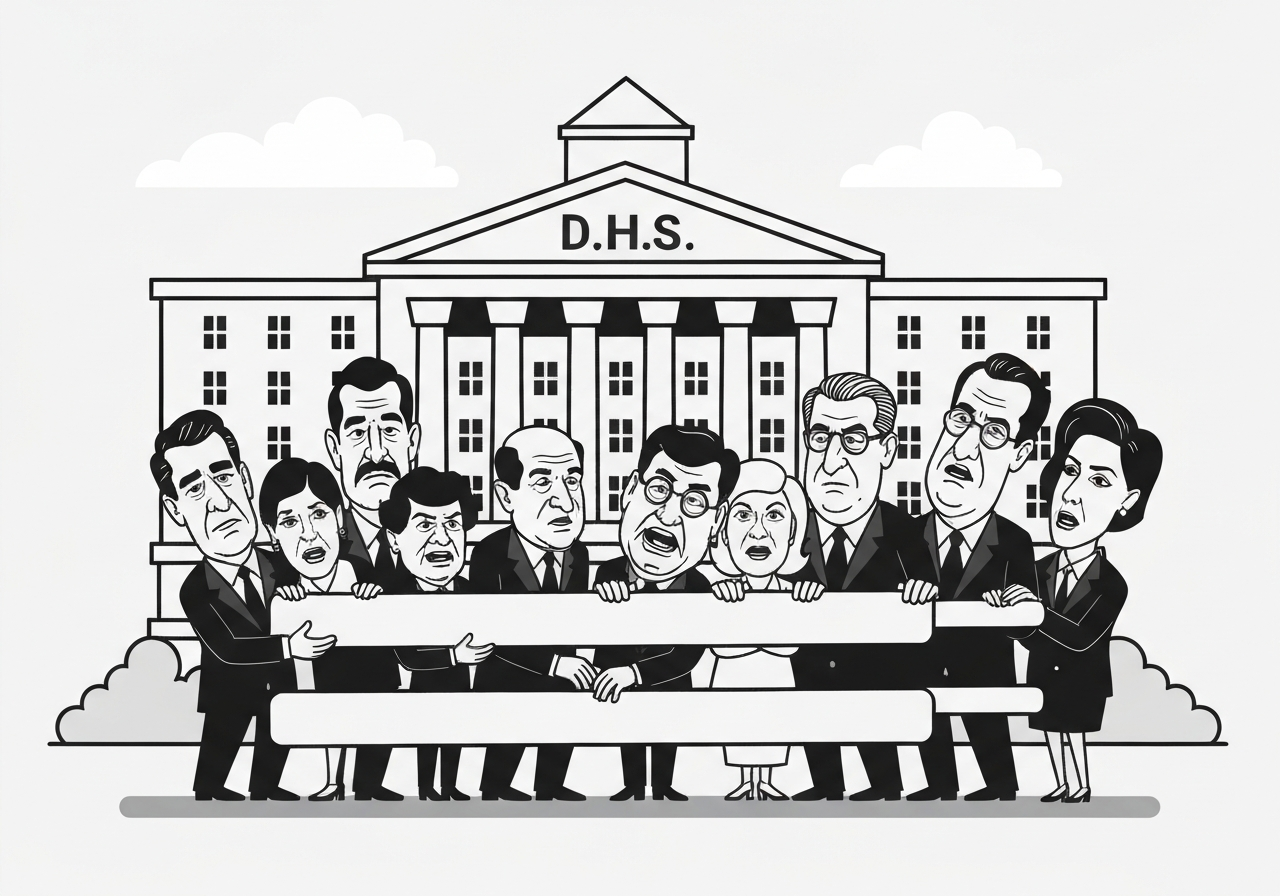
Senate Democrats on March 5, 2026, blocked for the third time a stopgap spending measure intended to reopen the Department of Homeland Security, insisting they would not approve funding without new limits on immigration enforcement. The procedural vote fell 51–45, short of the 60 votes needed to advance the bill. Democrats sought visible-identification rules for federal immigration officers, a ban on masks for agents, and tightened use-of-force policies while Republicans pushed funding amid security concerns tied to President Trump’s war in Iran. Twenty days after DHS funding lapsed, negotiations remain at an impasse as Democrats pressed both policy changes and selective funding proposals.
Key Takeaways
- The Senate vote on March 5, 2026, was 51–45 in opposition to the Republican-led DHS funding motion, failing to reach the 60-vote threshold required for cloture.
- This was the third unsuccessful attempt to pass a bill to restore DHS funding after appropriations expired 20 days earlier.
- Democratic demands include visible identification for immigration officers, a prohibition on mask-wearing by agents, and stricter use-of-force standards for ICE and CBP.
- Senator John Fetterman of Pennsylvania was the only Democrat to support the Republican measure; all other Senate Democrats opposed it.
- Republicans argued that unfunded DHS components — including TSA and the Secret Service — face operational gaps amid the administration’s military actions in Iran.
- Democrats offered an alternative to fund DHS programs except for ICE, Customs and Border Protection, and the office of Kristi Noem, who was removed from the department by the president on Thursday.
- Senator Patty Murray pushed to fund agencies such as TSA and FEMA by unanimous consent while continuing talks on enforcement guardrails, but Republicans objected to that path.
Background
The dispute centers on short-term appropriations that keep DHS operations running. When Congress fails to pass full-year spending bills, leaders typically turn to stopgap measures to avoid agency shutdowns; in this case, those measures have repeatedly stalled. Immigration enforcement has become a sticking point: Democrats want specific constraints on how federal agents operate during deportation and border-enforcement activities, while Republicans have resisted attaching new statutory limits to funding bills.
Political dynamics are intensified by foreign-policy events. Republican proponents argued that staffing gaps at agencies like the Transportation Security Administration and the Secret Service pose additional risk amid President Trump’s military campaign in Iran. Democrats counter that oversight and standardized conduct for immigration agents are essential to civil liberties and public trust, and they have used funding leverage to press for written guardrails. Past attempts to reconcile those priorities have failed, producing the third blocked cloture vote this week.
Main Event
On the Senate floor, Republican leaders brought forward a funding motion to reopen DHS operations without enacting the enforcement limitations Democrats demanded. The motion needed 60 votes to proceed under Senate rules. Senator John Thune, the majority leader, emphasized operational shortfalls in homeland security components and urged swift action to restore funding, citing disruptions to vulnerability checks and staffing at cybersecurity and infrastructure agencies.
Democrats responded by withholding support until language requiring immigration agents to display visible identification, banning masks worn by agents during operations, and tightening use-of-force protocols was accepted. In a tactical move, Senate Democrats offered a separate package to fund most DHS functions while explicitly excluding Immigration and Customs Enforcement, Customs and Border Protection, and the office of Kristi Noem, who had been removed from DHS leadership by the president that day. They asked for unanimous consent to pass that narrower funding bill without debate.
Republicans objected to the unanimous-consent request and opposed the amendment that would carve out ICE and CBP funding, meaning the chamber returned to stalemate. The 51–45 procedural tally — with Senator John Fetterman the sole Democratic vote in favor — left the GOP short of the 60 votes required to advance the Republican plan. Senate leaders signaled further negotiation but gave no immediate timeline for a resolution.
Analysis & Implications
The standoff highlights the leverage a minority caucus can wield in the evenly divided Senate, particularly on issues that intersect policy and appropriations. Democrats are using short-term funding pressure to extract statutory changes to immigration enforcement — a strategy that risks prolonging operational disruptions to security agencies. If the impasse continues, services such as TSA screening and infrastructure vulnerability checks could face sustained strain, with potential knock-on effects for travel and critical infrastructure reliability.
Politically, Democrats’ posture reflects both policy priorities and messaging: demanding concrete protections and accountability for agents conducting deportations and border operations. For Republicans, prioritizing unfettered funding aligns with a narrative of national security urgency, especially given the administration’s military campaign in Iran. The conflict therefore ties domestic enforcement oversight to broader national-security debates, complicating compromise.
Practically, carving out ICE and CBP from a DHS funding bill — as Democrats proposed — would be an unprecedented maneuver with legal and operational consequences. Funding separations could create management friction across DHS components that routinely coordinate on border security, emergency response, and cybersecurity. Short-term fixes may push difficult questions about long-term policy and personnel reforms into future appropriations cycles or litigation.
Comparison & Data
| Metric | Value |
|---|---|
| Senate cloture vote (March 5, 2026) | 51–45 (failed; 60 required) |
| Days since DHS funding lapsed | 20 days |
| CISA staffing reported on duty (per floor remarks) | Less than 50% |
The table summarizes the immediate numeric context for the impasse. The 51–45 tally is far below the 60-vote threshold required to overcome a filibuster or procedural blockage, underscoring how a small number of defections can determine the outcome. Twenty days without full appropriations elevate operational risk at several DHS components and increase pressure on negotiators to reach some form of interim agreement.
Reactions & Quotes
Senate Republican leaders focused on operational readiness and the perceived urgency of restoring funding for security agencies:
“Less than half of the Americans who work for the cybersecurity and infrastructure security agency are on the job,”
Senator John Thune, Senate Majority Leader
Thune used staffing and program interruptions to argue that funding should proceed without added enforcement restrictions, saying agency furloughs have forced cancellations of important vulnerability checks.
Top Senate Democrats framed their position as seeking basic standards for federal immigration officers while trying to protect other DHS missions:
“If Republicans keep refusing to ensure ICE and Border Patrol follow the same basic standards that police departments across America already follow, then we should at least fund T.S.A. and FEMA while we press on with negotiations,”
Senator Patty Murray, Appropriations Committee Democrat
Murray described the Democratic offer to fund many DHS functions while continuing talks on enforcement guardrails and stressed the desire to avoid a do-nothing outcome for critical agencies.
Unconfirmed
- Precise operational impacts across all DHS components have not been independently verified; reported cancellations of specific vulnerability checks were cited on the floor but lack a public, agency-published tally.
- The long-term administrative implications of excluding ICE and CBP from a funding bill are subject to interpretation and would depend on subsequent legal and managerial steps.
- Attribution of specific security risks directly to the funding lapse (versus routine staffing fluctuations) remains to be confirmed by agency reports.
Bottom Line
The March 5, 2026 Senate vote underscores a high-stakes negotiation where Democrats are leveraging short-term appropriations to secure enforceable limits on immigration agents, while Republicans stress immediate funding for homeland security amid international tensions. With the chamber divided and the 60-vote threshold unmet, the stalemate is likely to continue until negotiators find language both sides can accept or until political pressure forces concessions.
For the public, the most immediate consequences are operational: continued uncertainty for TSA staffing, CISA vulnerability checks, and other DHS functions that rely on uninterrupted appropriations. Policymakers face a choice between extending purely financial support now or tying funds to policy changes that could reshape how federal immigration enforcement is conducted going forward.
Sources
- The New York Times — national news (media)