
Lead
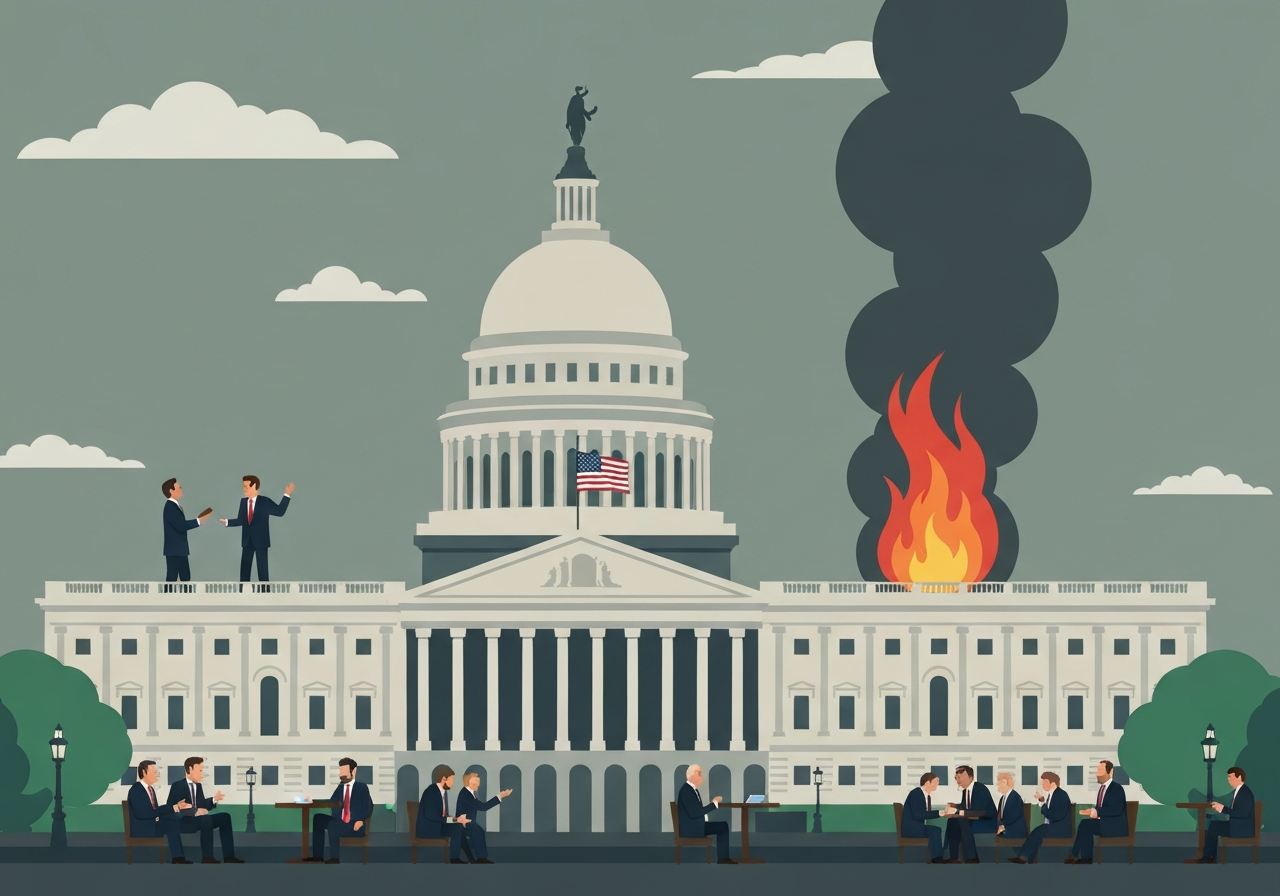
The Senate on Thursday again could not pass a funding measure to reopen the Department of Homeland Security (DHS), prolonging a partial shutdown that has lasted nearly a month. Lawmakers voted 51-46 along largely partisan lines, falling short of the 60 votes needed after senators deadlocked over tighter guardrails on federal immigration enforcement. Only one Democrat, Senator John Fetterman, broke with his party to support the appropriations bill that would have funded DHS through September, marking the fourth failed attempt this year to clear the 60-vote threshold.
Key Takeaways
- The Senate vote was 51-46; 60 votes are required to overcome a filibuster and advance most appropriations measures.
- Only one Democrat, Senator John Fetterman, voted with Republicans to advance the DHS appropriation; this session marks the fourth time the chamber has failed to reach 60 votes this year.
- DHS funding lapsed on 14 February 2026, triggering a partial shutdown that has affected some TSA operations and temporarily halted parts of Global Entry until limited reactivation on 11 March 2026.
- The upper chamber did pass the 21st Century ROAD to Housing Act 89-10, a bipartisan housing package authored by Senators Elizabeth Warren and Tim Scott.
- Separately, U.S. defense officials reported a war cost of over $11.3bn in the first six days of operations, per multiple media reports from closed briefings.
- Energy and security developments — including disruptions in the Strait of Hormuz — contributed to volatile oil prices that briefly jumped nearly 10% above $100 a barrel before settling near $98.
- Other headline events during the day included a shooting at Temple Israel in West Bloomfield, Michigan, where local officials reported the suspect was killed and no other casualties were confirmed.
Background
The current impasse stems from disagreements over immigration enforcement guardrails that have divided senators for months. Republicans have sought stronger restrictions and oversight on federal immigration actions; many Democrats insist the proposed measures would undermine due process and humanitarian protections. Those competing priorities prevented negotiators from writing language both parties could accept as part of a DHS funding vehicle.
Appropriations for DHS are typically advanced as part of regular spending bills, but political fights over border policy have repeatedly derailed progress this year. When DHS lost funding on 14 February 2026, the agency began operating under a partial shutdown: some programs continued on fee revenue or statutory authority, while other functions — notably staffing at certain ports of entry and some administrative services — were curtailed. Travel programs and checkpoint staffing have been among the most visible pain points for travelers.
Main Event
On Thursday the Senate took up an appropriations amendment that would have funded DHS through the end of the fiscal year in September, but senators were unable to reach the 60-vote cloture threshold required to advance debate. The final roll call was 51 in favor and 46 opposed; procedural rules and party-line dynamics meant the measure collapsed despite last-minute outreach by leadership on both sides.
Senators argued on the floor about the scope and enforcement of new immigration provisions tied to the bill. Republican leaders emphasized border security and stricter enforcement as non-negotiable, while Democrats framed the dispute as a fight over civil rights and asylum protections. Senator John Fetterman of Pennsylvania was the only Democrat to back the measure; his vote underscored fractures within the caucus but was insufficient to change the outcome.
Beyond the DHS fight, the Senate approved a major bipartisan housing package, the 21st Century ROAD to Housing Act, in an 89-10 vote. That bill bundles incentives for new construction, grants for home repairs, limits on large corporate purchases of single-family homes, and other measures aimed at expanding supply and lowering housing costs. The housing measure now moves to the House, where its prospects are uncertain.
Analysis & Implications
Politically, the continued failure to fund DHS elevates border policy as a defining issue ahead of congressional campaigns. Democrats risk being portrayed as soft on immigration if high-profile services remain disrupted; Republicans risk voter backlash if essential homeland functions are perceived to be politicized. The standoff increases pressure on both parties to strike a compromise or pass a short-term continuing resolution to restore core DHS operations.
Operationally, prolonged partial funding affects frontline workers and travelers. TSA staffing shortages have contributed to long lines at some airports, and limited Global Entry operations have added friction for frequent international travelers. While some programs self-fund via user fees (Global Entry collects $120 per user), many public-facing services rely on appropriations or on staff paid from appropriated accounts.
There are broader security and economic ripple effects. Military and diplomatic costs connected to recent U.S.-Iran confrontations are substantial — reports put initial war costs at more than $11.3bn in the early days — and instability in the Strait of Hormuz has raised concerns about oil supply. Energy price swings feed into inflationary pressures that compound the political stakes of any prolonged funding impasse.
Comparison & Data
| Measure | Votes For | Votes Against | Cloture/Threshold |
|---|---|---|---|
| DHS funding amendment (current) | 51 | 46 | 60 (cloture) |
| 21st Century ROAD to Housing Act | 89 | 10 | Simple majority to pass; 60 typical to advance in practice |
Those vote totals illustrate a recurring dynamic: measures with cross-party policy appeal can clear the chamber, while proposals tied to hot-button issues such as immigration struggle to meet the filibuster threshold.
Reactions & Quotes
“We do not yet have the votes to proceed to debate; this is a function of math and policy differences that remain unresolved.”
Sen. John Thune (Senate Republican Leader)
Thune framed the failure as a procedural reality rooted in ideological division rather than leadership intransigence. He also signaled plans to bring other priority legislation, including a voter ID measure, to the floor in coming days.
“There are tankers coming through now and we have not seen the strait mined, but escorting vessels will depend on having control of the skies and degrading missile capabilities.”
Scott Bessent (Treasury Secretary)
Bessent offered a conditional timeline for naval escorts in the Strait of Hormuz, tying any operational change to military and intelligence assessments rather than a fixed calendar.
“Security guards engaged the individual as he approached the building; at the moment there are no confirmed other injuries.”
Michael Bouchard (Oakland County Sheriff)
Sheriff Bouchard provided an initial account of a shooting at Temple Israel in West Bloomfield, Michigan; investigators continue to piece together the sequence of events and who fired the fatal shot.
Unconfirmed
- Preliminary news reports that attribute the deadly strike on an Iranian girls’ school to U.S. forces remain under review and have not been officially confirmed by the Pentagon or independent investigators.
- Details about who fired the fatal shot at the Michigan synagogue have not been definitively established in publicly released reports.
- An internal law enforcement alert reportedly circulated about possible Iranian drone threats to the U.S. West Coast remains disputed; officials have described the tip as unverified.
Bottom Line
The Senate’s fourth failure to clear a DHS funding bill keeps a partial department shutdown in place and reinforces the centrality of immigration policy to current congressional gridlock. Practical consequences — from travel delays to constraints on certain DHS functions — mean the impasse has immediate effects on the public and on frontline workers at ports and checkpoints.
Politically, both parties face risks if the stalemate endures. Lawmakers could be forced into last-minute compromises, short-term continuing resolutions, or face public backlash ahead of upcoming elections. Watch for renewed negotiations, targeted amendments that try to bridge immigration concerns, and possible House-level responses that may reshape the available policy options in the coming days.