
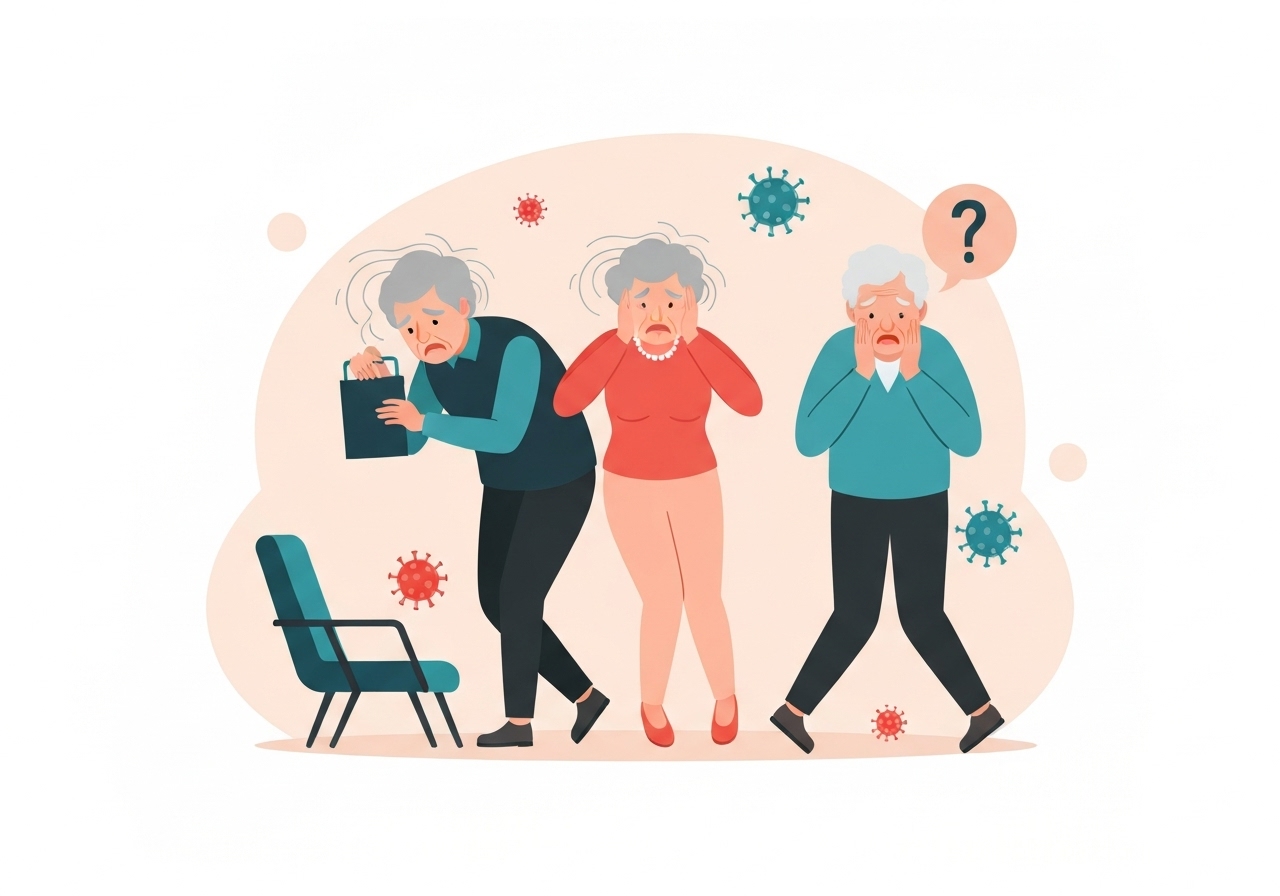
On Sept. 6, 2025, during a late‑summer rise in COVID‑19 activity across parts of the U.S., some older adults and people with underlying conditions reported being turned away or asked for prescriptions when attempting to get updated COVID vaccines at retail pharmacies, leaving eligible — and in some cases high‑risk — people frustrated and uncertain about access.
Key Takeaways
- Federal guidance currently limits full FDA “approval” of updated COVID vaccines to people aged 65+ and younger people with qualifying health conditions.
- Some pharmacies in multiple states are requiring either a prescription or an attestation of eligibility for non‑65 adults seeking vaccination.
- Patients and caregivers in New York, California and other states reported being asked for prescriptions or probing eligibility questions at pharmacy counters.
- Public‑health indicators show a late‑summer increase: 14 states reported “very high” wastewater viral levels and test positivity and hospital admissions are rising in parts of California.
- State responses include an interstate West Coast Health Alliance offering science‑based guidance as an alternative to federal recommendations.
- Uncertainty about federal CDC guidance and internal agency changes has contributed to confusion at the point of care.
Verified Facts
Several firsthand accounts describe obstacles at pharmacies. Matthew D’Amico, 67, of New York City said a Walgreens declined to vaccinate him and his 75‑year‑old wife because staff said a prescription was required. In Orange County, 34‑year‑old Alex Benson — who takes an immunosuppressive medicine — said CVS staff asked why he believed he was eligible before vaccinating him; the visit ended with a staffer accepting his verbal attestation and administering the shot.
Federal authorization status has changed who is considered automatically eligible: the Food and Drug Administration has given full approval for updated COVID vaccines only for people aged 65 and older and for younger people with underlying conditions. That has left adults under 65 who want the vaccine required, in many places, to either obtain a prescription from a health care provider or to attest to an underlying condition at a pharmacy.
| Metric | Most recent | Earlier comparison |
|---|---|---|
| California test positivity (week ending Aug. 30) | 12.83% | 7.05% (week ending Aug. 2) |
| Los Angeles County positivity (week ending Aug. 30) | 14.83% | 9.33% (week ending Aug. 2) |
| CA COVID hospital admissions | 3.93 per 100,000 | 2.38 per 100,000 |
Wastewater monitoring flagged very high coronavirus levels in 14 states and the District of Columbia, including California, Texas and Florida; such data are used by health authorities as an early signal of community transmission. Officials at Kaiser Permanente Southern California reported increases in outpatient COVID cases and some hospitalizations, while local wastewater and testing patterns show mixed regional trends.
Context & Impact
The change in who can receive COVID vaccines without a prescription has coincided with leadership shifts and policy changes at federal public‑health agencies. Reported staff turnover and reorganizations at the Centers for Disease Control and Prevention have left some clinicians and pharmacies awaiting clear, unified federal instructions on vaccine administration.
Retail chains have adjusted state‑by‑state operations. As of early September, CVS stated prescription requirements or age‑based rules were in effect in a number of states, and some retail locations were offering vaccines only at separate clinic sites. These operational shifts can slow access for people who rely on walk‑in pharmacy services, particularly older adults and those with mobility or transportation limits.
Public‑health experts warn that reduced or confusing access to vaccines during a period of rising case counts may lower uptake among people who would benefit most, potentially increasing the risk of preventable hospitalizations in the months ahead. Conversely, some wastewater and testing indicators may be peaking in parts of the country, suggesting local trends could vary over the coming weeks.
States on the U.S. West Coast — California, Oregon, Washington and, later, Hawaii — created the West Coast Health Alliance to offer consistent, science‑based immunization guidance in the absence of federal recommendations, aiming to reduce confusion for clinicians and the public.
“Right now, all patients in all states need to attest to being eligible for the vaccine in order to schedule an appointment online,” a CVS spokesperson said, noting some state regulatory differences as pharmacies adjust operations.
CVS spokesperson Amy Thibault
Official Statements
“These states will provide evidence‑based immunization guidance rooted in safety, efficacy, and transparency — ensuring residents receive credible information free from political interference,” a statement from California’s governor noted upon formation of the West Coast Health Alliance.
Governor Gavin Newsom’s office (state statement)
Unconfirmed
- Whether the instances reported so far represent widespread, systemic denial of vaccines to all eligible seniors nationwide — further data are needed.
- Whether short‑term pharmacy requirements will persist beyond the immediate weeks while state and federal guidance is reconciled.
- The long‑term effect of recent agency personnel changes on practical access to vaccines at retail sites.
Bottom Line
As COVID‑19 indicators rise in parts of the U.S., regulatory and operational changes have made access to updated vaccines less straightforward for some people under 65 and, in isolated cases, for older adults at the point of care. Clear, consistent public‑health guidance and retailer procedures — combined with outreach to seniors and high‑risk groups — will be important to reduce confusion and keep vaccine access timely during this seasonal surge.