
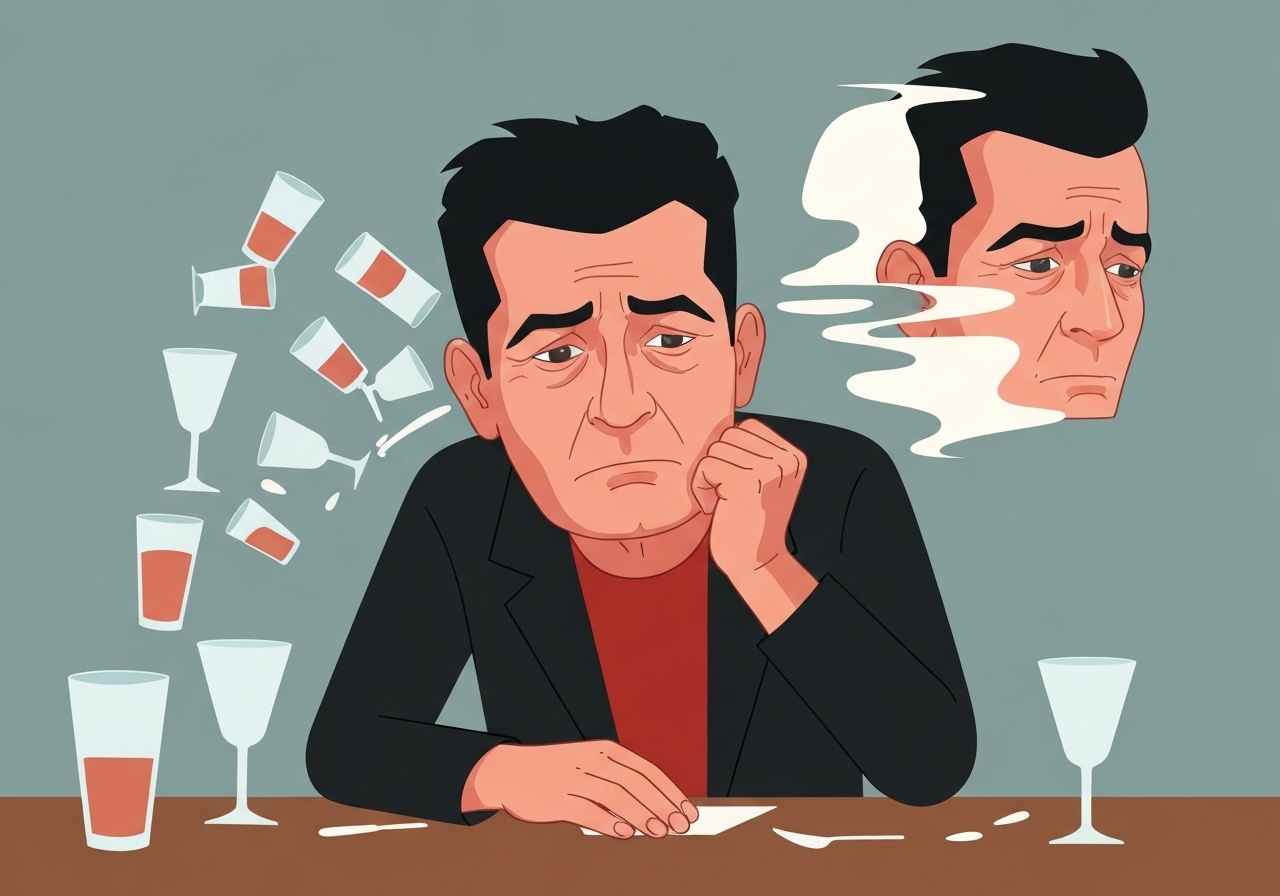
Lead: In a Good Morning America interview ahead of his memoir release, actor Charlie Sheen linked a lifelong stutter to his early alcohol use and a decades-long addiction cycle. He described drinking as a way to ease speech anxiety and recounted rehab stints beginning in 1990 and a later relapse while starring on Two and a Half Men. Sheen says he quit alcohol in 2017 and is sober today, and his memoir The Book of Sheen arrives Sept 9, 2025 alongside a Netflix docuseries exploring his life. The disclosures recast familiar headlines through the lens of an untreated speech disorder and long-term recovery efforts.
Key Takeaways
- Charlie Sheen stated in a Sept 8, 2025 interview that a lifelong stutter led him to begin drinking as a coping mechanism.
- Sheen reports his first formal rehab stay occurred in 1990 at age 24 after a family intervention.
- He says he first tried crack cocaine in 1992 and later developed prescription pill problems during Two and a Half Men.
- On the sitcom Spin City in 2000 he publicly acknowledged his stutter to colleagues, which he describes as liberating.
- The series was put on hiatus in 2011 while Sheen entered rehab; he was later removed from the show.
- Sheen says he stopped drinking in 2017 and has remained sober since that year.
- His memoir The Book of Sheen is published Sept 9, 2025, and the Netflix docuseries AKA Charlie Sheen features interviews with people close to him.
Background
Charlie Sheen grew up in an acting family that includes father Martin Sheen and brother Emilio Estevez, and his public life has long mixed professional success with highly visible personal struggles. Speech disorders such as stuttering can emerge in childhood and persist into adulthood, often producing social anxiety; for some individuals, substance use becomes a maladaptive way to self-medicate. Sheen first entered rehab in 1990 after family intervention, a pattern that recurred across the 1990s and 2000s as legal problems and public incidents drew attention. The entertainment industry environment, with close schedules and performance pressure, has been cited by experts as a setting where substance misuse can escalate if untreated vulnerabilities exist.
By the late 1990s Sheen reports another family intervention tied to probation violations; he describes that intervention as painful at the time but later as an act of love. In 2000 he worked on Spin City and made a public admission about his stutter to cast and crew that he says felt freeing. During the 2000s his career continued with major roles, but he also reports cycles of relapse, including a documented hiatus from Two and a Half Men in 2011 to enter treatment. Public narratives about Sheen often focused on sensational incidents, while his new memoir and the accompanying documentary aim to center the interplay of a speech disorder and addiction across decades.
Main Event
In the Sept 8, 2025 Good Morning America interview promoting The Book of Sheen, Sheen described how drinking initially felt like a solution to speech-related anxiety. He told the program that alcohol softened the edges of his stutter and gave him a sense of ease in speaking during early career years. Sheen traced his substance history to a first rehab stay in 1990 and the first use of crack cocaine in 1992, then described later dependence on prescription pills while working on Two and a Half Men.
The actor recalled that when he received his first Spin City script in 2000 he realized certain lines would trigger stuttering and chose to reveal his condition to colleagues. He framed that openness as a turning point that reduced shame and enabled him to ask for help more directly. Sheen also recounted family interventions, including one in the late 1990s when his father reported probation violations, an episode he initially felt betrayed by but later interpreted as parental concern.
Sheen says that despite multiple treatment episodes he relapsed through the 2000s and into the early 2010s, culminating in the 2011 hiatus and eventual dismissal from Two and a Half Men. He reports quitting alcohol in 2017 and maintaining sobriety since then while working to repair relationships and pursue writing. His memoir and the Netflix documentary present these events alongside interviews with former co-stars, friends, ex-wives and children to offer both personal testimony and external perspective.
Analysis & Implications
Sheen framing stuttering as a primary driver for his early drinking highlights the often-overlooked role of untreated communication disorders in pathways to substance use. Clinically, co-occurrence of speech disorders and anxiety can increase risk for self-medication, which in turn complicates treatment planning. For public audiences, this account may shift the narrative from moral failing to a more nuanced view that foregrounds underlying vulnerability and the need for integrated care.
From an industry perspective, the disclosure raises questions about workplace supports for performers with neurodevelopmental or neurological differences, and whether production schedules and stigma deter early intervention. It also affects reputational recovery: Sheen’s efforts to frame his past through health and recovery lenses could influence how audiences and colleagues receive his forthcoming book and film. Policy and practice implications extend to better screening, stigma reduction campaigns, and access to combined speech and addiction services.
At a broader level, celebrity disclosures like this can destigmatize help seeking if coupled with accurate clinical messaging, but they also risk oversimplifying complex causes when presented without caveats. Media coverage that pairs personal testimony with expert context can improve public understanding and encourage people with similar struggles to seek evidence-based care. For Sheen specifically, this reframing may change how his career legacy is discussed, particularly if the memoir and docuseries generate renewed public and clinical interest.
Comparison & Data
| Year | Event | Age |
|---|---|---|
| 1990 | First reported rehab stay after family intervention | 24 |
| 1992 | First reported use of crack cocaine | 26 |
| 2000 | Acknowledged stutter on Spin City set | 34 |
| 2011 | Hiatus from Two and a Half Men to enter rehab | 45 |
| 2017 | Quit alcohol and reports sustained sobriety | 51 |
| 2025 | Memoir release and Netflix doc launch | 59 |
The timeline above condenses key milestones Sheen has attributed to his recovery arc. Placing those dates side by side underscores recurring cycles of treatment and relapse over nearly three decades, a pattern commonly observed in long-term substance use disorders. It also clarifies that his public admissions about speech difficulties and help seeking accelerated after 2000, suggesting a later-stage openness that followed many early private struggles.
Reactions & Quotes
Public reaction to Sheen’s disclosures has been mixed, with some commentators praising his candor and others urging caution in generalizing one actor’s experience to broader clinical practice. Below are direct lines Sheen offered in the televised interview, presented with context rather than editorializing.
Drinking softened the edges and gave me a sense of freedom in speech
Charlie Sheen, interview on Good Morning America
This remark was offered as a description of why alcohol initially felt like a remedy for speech-related anxiety, not as clinical advice. Sheen used the line to explain the immediate subjective relief that contributed to years of substance misuse.
When in doubt, be human enough to be vulnerable and know it is okay to ask for help
Charlie Sheen, reflecting on revealing his stutter
Sheen framed public acknowledgment of his stutter on the Spin City set as a pivotal act that reduced shame and enabled subsequent help seeking. That sentiment was presented as personal guidance rather than a universal prescription.
Unconfirmed
- Details about the full extent and timing of every rehabilitation episode beyond the 1990 and 2011 admissions are described in Sheen’s memoir and are not independently verified in this report.
- Claims made by third parties in the upcoming Netflix docuseries have not been verified by independent reporting and remain subject to confirmation.
Bottom Line
Charlie Sheen’s account links a lifelong stutter to the onset of drinking and an extended pattern of substance use, reframing familiar headlines through a health-focused lens. The memoir and documentary are likely to revive public discussion about how untreated communication disorders, anxiety and workplace pressures can intersect with addiction risk. Readers should note that personal testimony adds important perspective but does not substitute for clinical research; integrated care and specialist evaluation remain the standard for diagnosis and treatment.
For policymakers and industry leaders, the episode underscores the value of early access to speech and mental health services and the potential benefits of reducing stigma around disclosure. For individuals with similar histories, Sheen’s narrative may encourage seeking help, while clinicians and advocates should ensure public messaging links personal stories to evidence-based resources.
Sources
- Good Morning America interview and ABC News coverage — broadcast news and media report
- AKA Charlie Sheen on Netflix — streaming documentary page (streaming platform)
- ABC News — news organization reporting and original article summary (news media)