
Lead
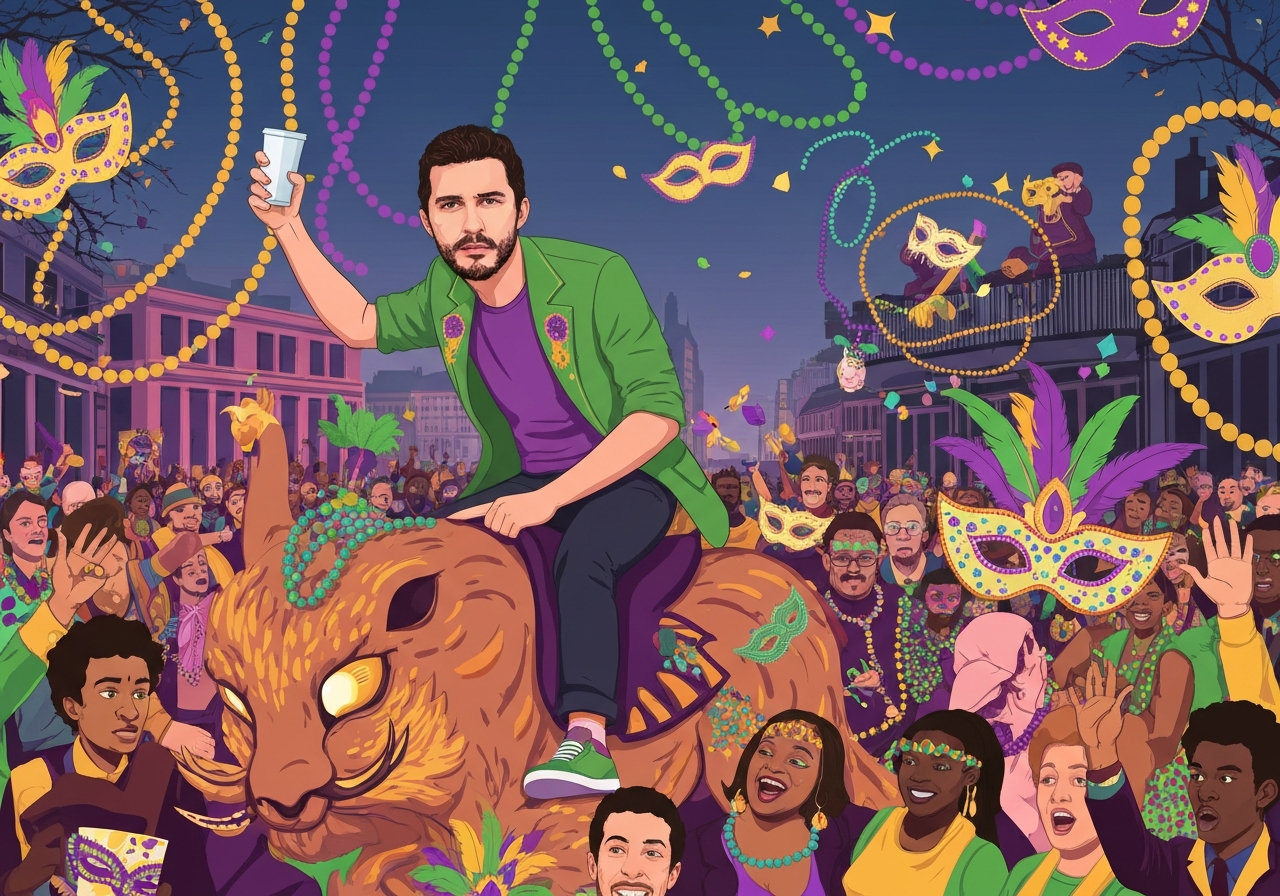
As Mardi Gras festivities approached Fat Tuesday in Uptown New Orleans, actor Shia LaBeouf spent an extended weekend visiting multiple bars, according to staff and patrons at several drinking establishments. Witnesses say his weekend began on Thursday and included stops at Ms Mae’s, Dos Jefes, 45 Tchoup and Brothers III Lounge; one encounter at Ms Mae’s on Sunday night drew staff intervention but no arrest. Those who interacted with him described alternating cordial and disruptive behavior; LaBeouf’s representatives did not respond to requests for comment.
Key Takeaways
- LaBeouf was seen in Uptown New Orleans from Thursday through Sunday during Mardi Gras lead-up events, with multiple bar visits reported by staff and patrons.
- At Ms Mae’s on Sunday night he reportedly arrived shirtless and without cash, prompted staff to ask him to leave after an attempted bid to act behind the bar.
- Witnesses described his Sunday state as inebriated and at times belligerent; staff asked him to put on a shirt and to leave, and he complied without police involvement.
- Other stops documented include Dos Jefes (cigar bar/live-jazz), 45 Tchoup (where a 20% gratuity was added after a card was dipped but not signed) and Brothers III Lounge.
- LaBeouf is publicly married to actress Mia Goth and has previously discussed sobriety and past alcoholism, and has been connected in reporting to prior abusive behavior allegations involving ex-partner FKA Twigs.
- The encounters happened amid large Bacchus parade crowds on St. Charles Avenue where many revelers carried go-cups and collected parade “throws.”
- Staff and patrons offered mixed impressions—some called his earlier behavior pleasant, others said it disrupted staff and other guests.
Background
Mardi Gras in New Orleans is one of the largest annual carnival celebrations in the United States, with major parades such as the Bacchus krewe rolling along St. Charles Avenue and attracting thousands of visitors to Uptown neighborhoods. Bacchus parades typically draw dense, boisterous crowds who often carry open containers and line the parade route to catch beads and other “throws.” Bars along these routes regularly serve a mix of locals and high-profile visitors during the carnival period.
Shia LaBeouf is an established actor known for films including Transformers and Holes (2003), and in recent years he has been publicly linked to discussions about sobriety. Reporting and lawsuits have previously tied him to allegations of abusive conduct toward ex-partners; LaBeouf has at times attributed past behavior to alcohol issues. He is married to actress Mia Goth, and the weekend sightings were reported to have occurred while he was staying in a luxury short-term rental in Uptown.
Main Event
The series of encounters began on Thursday evening with patrons and staff saying LaBeouf appeared sociable at some venues and more disruptive at others. He was observed at Dos Jefes, a cigar bar with live jazz, where a patron said he was louder than other customers and offered acting directions to someone at the bar. At 45 Tchoup staff said he visited twice over consecutive weekends and used a card without signing, prompting an automatic 20% gratuity.
On Sunday night, Ms Mae’s staff reported that LaBeouf arrived shirtless and without cash as the Bacchus parade rolled by nearby St. Charles Avenue. Doorman accounts describe an inebriated, somewhat confrontational presence; after staff asked him to put a shirt on and to stop attempting to take on bartender duties, he dressed and left when asked. There was no police involvement and no reported physical altercation.
Multiple bartenders and employees who interacted with him over several days gave varied recollections: some praised a polite exchange earlier in the weekend, while others said later interactions were taxing on staff and other patrons. One staff member referenced LaBeouf’s Hollywood past in a retort when he repeatedly inquired about using a card at a cash-only bar. Other witnesses placed him at Brothers III Lounge and at parade-adjacent spots along Magazine Street.
Analysis & Implications
Celebrity presence during major public celebrations often creates tensions between venues seeking to welcome notable guests and staff who must enforce house rules for all customers. In this case, venues faced the usual Mardi Gras pressures—crowded sidewalks, open containers and heightened demand—while also managing an intermittently recognizable, high-profile patron. That dynamic can strain employees and raise reputational questions for both the establishment and the individual involved.
For LaBeouf, these episodes could revive media attention on prior personal controversies, particularly because he has previously publicly discussed alcohol-related problems and has been the subject of abuse allegations. Even where incidents do not rise to legal infractions, repeated public disruptions can feed narratives that affect casting and promotional opportunities in a film industry that carefully manages public image.
From a public-safety perspective, the situation illustrates how large-scale festivals amplify minor incidents: a celebrity’s conduct can become a focal point for crowd reaction and social media amplification. Although no arrests were reported, repeated disruptive encounters increase the chances of escalation and can consume venue staff time and local enforcement resources during a busy festival period.
Comparison & Data
| Venue | Reported Visit(s) | Noted Behavior |
|---|---|---|
| Ms Mae’s (Napoleon & Magazine) | Sunday night | Arrived shirtless, no cash, asked to bartend, asked to leave |
| Dos Jefes | Thursday evening | Boisterous; gave directions to a patron |
| 45 Tchoup | Friday & prior weekend | Card dipped, left unsigned; 20% gratuity added |
| Brothers III Lounge | During weekend | Seen by staff; no formal incident |
The table above summarizes venue reports gathered from staff and witnesses. While some venues described cordial interactions earlier in the visit sequence, others said later stops required staff intervention. No venue reported contacting law enforcement or pressing charges.
Reactions & Quotes
Venue staff and patrons gave mixed appraisals of LaBeouf’s behavior across the weekend. Ms Mae’s doorman described the moment LaBeouf arrived as one that required staff judgment amid a large crowd.
He came in looking intoxicated and pushed into the door area; we asked him to follow the house rules and he eventually left.
Ms Mae’s doorman (staff account)
A bartender who served LaBeouf earlier in the weekend said his demeanor could shift from friendly to burdensome depending on the night and the bar’s tolerance for disruptions.
On Thursday he was pleasant and easygoing, but by Sunday staff were trying to keep the room under control and he became a problem for service.
Ms Mae’s bartender (staff account)
At 45 Tchoup, co-owner Deb Shatz confirmed LaBeouf visited multiple times and explained the venue’s workaround when a card transaction was incomplete.
He came in more than once; we processed a card and added a standard gratuity when it wasn’t finalized at the register.
Deb Shatz, co-owner, 45 Tchoup
Unconfirmed
- Whether LaBeouf was legally intoxicated (breath or blood-alcohol measurement) at any point is unverified.
- The exact Uptown short-term rental address where he was reportedly staying has not been independently confirmed.
- There is no public record confirming that any venue filed formal complaints or civil claims related to these encounters.
Bottom Line
The weekend’s accounts portray a high-profile visitor whose behavior ranged from amicable to disruptive across several Uptown New Orleans bars during Mardi Gras buildup. Staff interventions were reported but did not result in arrests or documented legal actions; the incidents were handled internally by venues or resolved when LaBeouf departed.
Given LaBeouf’s public history discussing sobriety and prior allegations of abusive behavior, these encounters are likely to attract media and industry attention. Absent confirmation of criminal conduct, the primary consequences remain reputational and managerial for venues and the individual, and the situation underscores the challenges bars face in policing behavior during major public events.
Sources
- The Hollywood Reporter — entertainment news report summarizing staff and patron accounts
- Mardi Gras New Orleans — official event information and parade context