
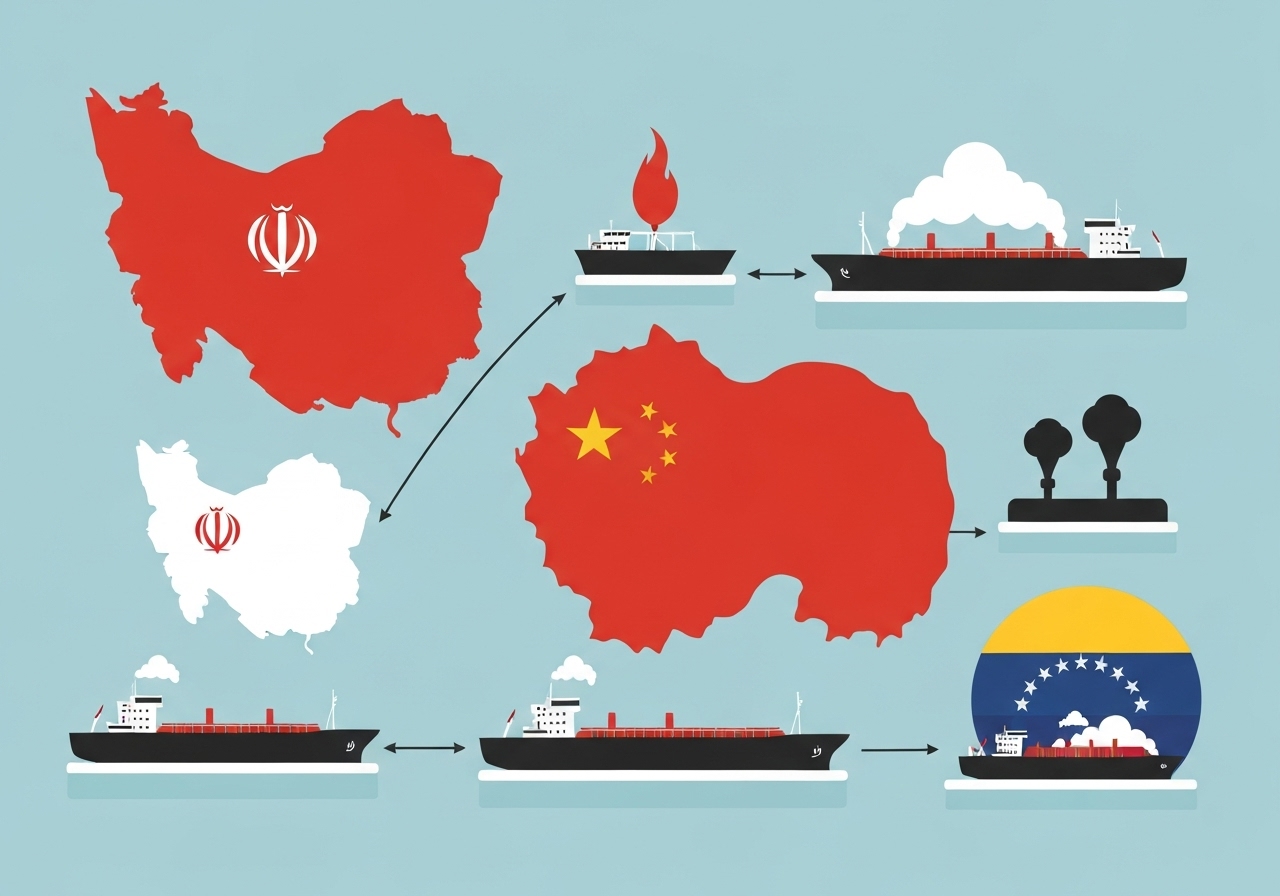
The US military seized an oil tanker identified as the Skipper in a helicopter-launched raid off Venezuela on Wednesday evening, after analysts flagged months of misleading tracking data. Public ship trackers and satellite imagery show the 20-year-old vessel alternated between declared positions and extended gaps in reporting, with its AIS last declared on 7 November and briefly reappearing on 10 December after the raid. Maritime analytics firms including Kpler and independent monitors such as TankerTrackers.com linked the tanker’s movements to suspected ship-to-ship transfers and large crude loads tied to Venezuela and Iran. US officials say the vessel had been sanctioned in 2022 and accused of taking part in a wider sanctions-evasion network.
Key takeaways
- US forces boarded and seized the tanker Skipper near Venezuela on Wednesday evening, identifying the vessel from imagery and a sign matched by TankerTrackers.com.
- The Skipper, a 20-year-old tanker once named Adisa, was first sanctioned by the US Treasury in 2022 for alleged links to an international oil smuggling network.
- Public AIS tracking shows the Skipper last declaring position on 7 November and not broadcasting again until 10 December, suggesting deliberate gaps or tampering.
- Kpler analysts report the ship loaded at least 1.1 million barrels of Merey crude by 16 November and recorded ship-to-ship transfers in August and again around 7 December.
- Satellite imagery and independent monitors placed the Skipper in Venezuela’s Port of Jose on 18 November despite no AIS signal at that time.
- Ownership listings show beneficial owner Thomarose Global Ventures Ltd (Nigeria) and registered owner Triton Navigation Corp (Marshall Islands); US authorities previously tied Triton to sanctioned actor Viktor Artemov.
- The vessel sailed through ports including Soroosh in Iran on 9 July and, according to tracking records, appeared near Basrah on 7-8 July though terminal logs show no berthing there.
- Guyana’s government stated the Skipper was falsely flying its flag and not registered in Guyana.
Background
Since the US imposed sanctions on Venezuelan oil exports in 2019, a subset of tankers dubbed the ‘dark fleet’ has been accused of obscuring identities and routes to move sanctioned crude. Ship tracking relies on Automatic Identification System or AIS transponders, required under UN maritime rules for vessels above certain tonnage. AIS broadcasts vessel identity, course and position to other ships and public aggregators such as MarineTraffic, but the system can be turned off, manipulated or spoofed, producing gaps or misleading records.
Iran and Venezuela have deepened energy and logistics ties in recent years, with analysts noting transfers of Venezuelan crude to Iran for processing and, in some cases, onward delivery to third countries. That web of transfers, opaque registrations and frequent flag changes complicates enforcement of sanctions and makes attribution of cargoes to particular buyers harder. Naval and intelligence services have increasingly relied on satellite imagery, private vessel trackers and port documentation to fill in AIS gaps.
Main event
The US said its forces executed a helicopter-launched boarding of a tanker near Venezuela on Wednesday evening and later identified the vessel as the Skipper. BBC Verify matched a sign visible in US-released footage to a reference photograph supplied by TankerTrackers.com to confirm the ship’s identity. According to public aggregators, the Skipper had not broadcast an AIS position since 7 November, several miles off Guyana, until its transmitter returned on 10 December after the raid.
Kpler’s maritime analysis suggests the Skipper loaded crude at Kharg Island in Iran after apparent misleading AIS entries that suggested a call at Iraq’s Basrah Oil Terminal on 7 and 8 July despite no terminal records of the visit. Tracking data and satellite imagery also indicate the vessel was present in Venezuela’s Port of Jose on 18 November while it was not appearing on public trackers, a pattern consistent with deliberate concealment during loading operations.
Analysts say satellite imagery and AIS crosschecks show ship-to-ship transfers involving the Skipper between 11 and 13 August and again around 7 December off Venezuela’s coast near Barcelona. Kpler reports at least one large offload to a receiving vessel and that some of the cargo later arrived in China with customs descriptions that the firm characterised as ‘falsely declared’. US officials framed the seizure as action against a tanker used to move sanctioned oil from Venezuela and Iran.
Analysis & implications
The incident illustrates how a mix of technology and human analysis is used to pierce the opacity of sanction-evasion networks. AIS remains a valuable safety and monitoring tool, but its voluntary and overrideable nature means that satellite imagery, port logs and private analytics are now essential to build a reliable chronology. Firms such as Kpler and TankerTrackers.com combine multiple data sources to spot inconsistencies, for example when AIS shows a vessel at a terminal but terminal records show no call.
For enforcement agencies, seizures like this create pressure to refine legal doctrines around extraterritorial action, evidence collection at sea and subsequent prosecution. The presence of alleged transfers to China highlights how ship-to-ship operations can route sanctioned cargoes through intermediaries and relabelling steps, complicating sanctions’ deterrent effect. If private and public monitoring improves and enforcement actions increase, some ship operators may adopt more sophisticated concealment, raising costs and risks for all parties involved.
There are economic and diplomatic ripple effects as well. Large, irregular flows of discounted crude can affect regional oil-price dynamics and fuel smuggling incentives. Diplomatically, the seizure may heighten tensions between the US and nations whose companies or ports are implicated in receiving or reclassifying cargoes. It may also prompt tighter vetting by insurers and commercial counterparties, increasing the cost of operating amid sanctions.
Comparison & data
| Date/event | Reported detail | Source |
|---|---|---|
| 7-8 July | AIS shows Basrah; terminal logs show no call | Kpler |
| 9 July | Port call recorded at Soroosh, Iran | MarineTraffic |
| 11-13 Aug | Reported ship-to-ship transfer | Kpler |
| 18 Nov | Satellite imagery places Skipper at Port of Jose, Venezuela | TankerTrackers/BBC Verify |
| 16 Nov | Reported loading of at least 1.1m barrels of Merey crude | Kpler |
| 7 Dec | Satellite image suggests transfer off Venezuelan coast | Kpler |
| 10 Dec | AIS signal reappeared after US raid | Public trackers/US officials |
The table synthesises dates and the best-available public claims from maritime analysts and satellite monitors. While AIS entries are machine-produced, terminal logs and satellite imagery provide independent corroboration; discrepancies between these sources are the primary evidence for alleged spoofing or deliberate AIS gaps. Analysts rely on chained evidence to reconstruct likely cargo paths when any single source is incomplete or misleading.
Reactions & quotes
US officials described the vessel in operational briefings and in a public statement, framing the action within broader sanctions enforcement. The Attorney General highlighted the vessel’s alleged role in moving sanctioned crude.
the vessel was a crude oil tanker used to transport sanctioned oil from Venezuela and Iran
Pam Bondi, US Attorney General
Maritime analysts underscored that while ship-to-ship transfers are lawful in many contexts, a pattern of transfers combined with AIS gaps is a strong indicator of sanction-evasion intent.
such transfers are extremely uncommon and typically signal efforts to obscure cargo identity or ownership
Frederik Van Lokeren, former Belgian naval lieutenant and analyst
Kpler, the maritime analytics firm, described its reconstruction of the Skipper’s movements and its assessment of loading volumes and false declarations to customs.
our analysis indicates at least 1.1 million barrels of Merey crude were loaded and later misdeclared on arrival in China
Kpler analyst (summary)
Unconfirmed
- Precise buyer identities in China for the shipments allegedly relabelled as other crude grades remain unconfirmed by customs or corporate disclosures.
- Some AIS entries that appear misleading have not been independently verified by terminal operators or government port logs in all cases.
- The complete ownership chain and beneficial control linking every listed corporate entry to sanctioned individuals is under investigation and not fully established in public records.
Bottom line
The Skipper seizure encapsulates modern maritime enforcement challenges: a patchwork of voluntary electronic reporting, persistent incentives to conceal sanctioned cargoes, and growing reliance on commercial analytics and satellite imagery to reconstruct vessel behaviour. Public trackers provide a starting point but can be incomplete or misleading when AIS is turned off or spoofed; corroborating imagery and port documentation are therefore essential to build an evidentiary case.
Enforcers will likely intensify scrutiny of ship-to-ship transfers, opaque ownership structures and suspicious reporting patterns, but traders seeking to move sanctioned crude may adapt with more elaborate concealment tactics. For policymakers, the episode reinforces the need for coordinated international responses that combine intelligence, legal tools and private-sector monitoring to deter and disrupt sanction-evasion networks.
Sources
- BBC News — media report and BBC Verify analysis
- TankerTrackers.com — independent maritime monitoring and satellite imagery
- MarineTraffic — public AIS aggregator
- Kpler — maritime analytics firm
- US Department of the Treasury — official sanctions and 2022 designation materials