
Lead
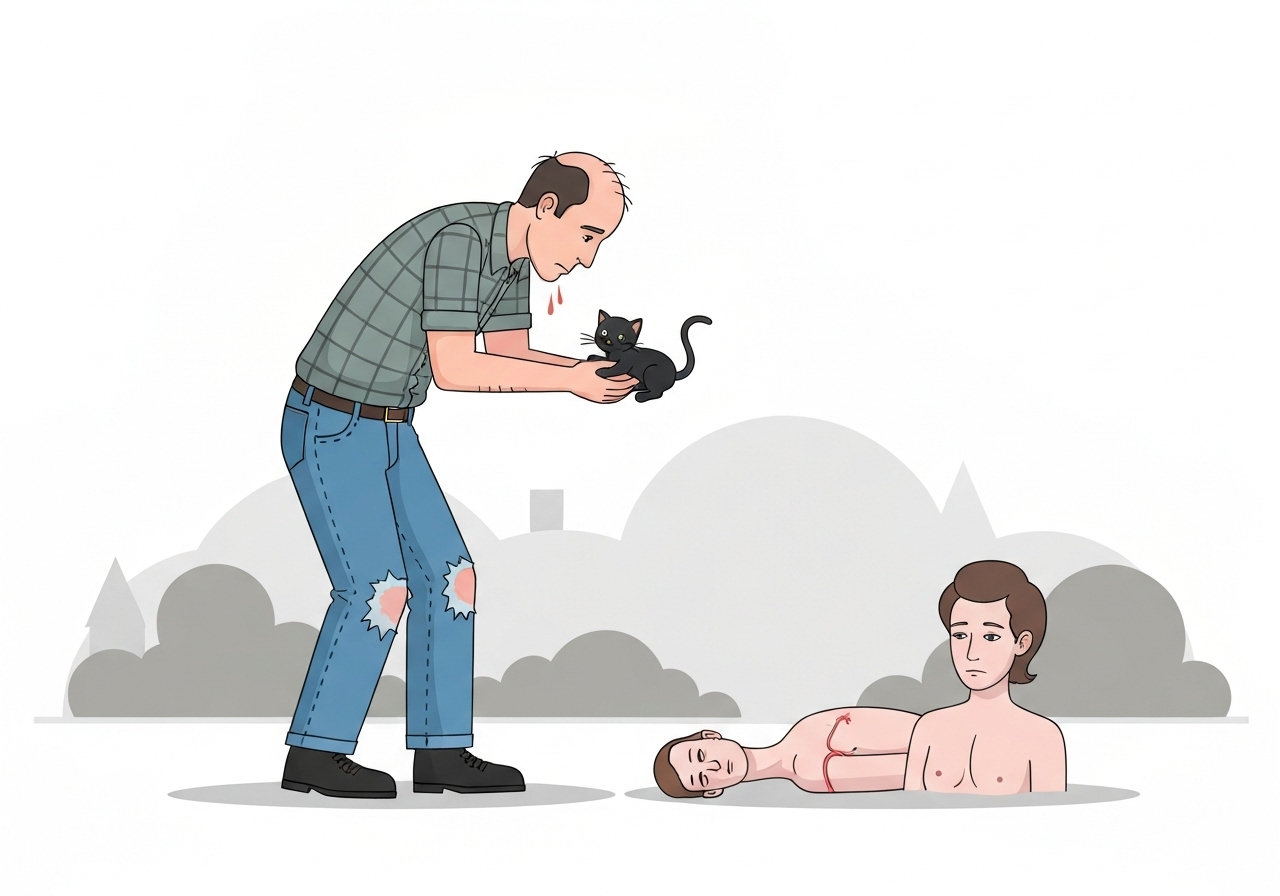
A Michigan man who received a kidney transplant in December 2024 died after developing rabies that investigators traced to the organ donor, officials reported. The donor, from Idaho, had been scratched by a skunk while defending a kitten in October and later became critically ill and brain dead; several organs were recovered. Postmortem testing of the donor’s kidney tissue identified a rabies strain consistent with a silver-haired bat lineage, and the recipient developed symptoms about five weeks after transplant and subsequently died. Authorities describe the chain of transmission as exceptionally rare, and immediate public-health steps were taken for other recipients.
Key Takeaways
- The kidney transplant occurred at an Ohio hospital in December 2024 and the Michigan recipient developed neurologic symptoms about five weeks later, was ventilated and died after testing confirmed rabies.
- The donor, an Idaho resident, reported a skunk scratch in October while intervening to protect a kitten; he later became confused, developed neurologic decline and was declared brain dead after being hospitalized.
- Initial laboratory tests on some donor samples were negative, but biopsy tissue from the donor’s kidneys contained rabies virus matching a silver-haired bat lineage, suggesting a multi-step transmission chain.
- CDC investigators described the likely chain as bat → skunk → donor → transplant recipient, and called the event extremely rare; it is the fourth reported transplant‑transmitted rabies event in the U.S. since 1978.
- Rabies is not routinely screened in organ donors in the U.S. because human cases are rare and diagnostic testing is complex; family-provided exposure histories are often relied on in donor assessments.
Background
Rabies is a viral infection that affects the central nervous system and is almost always fatal once clinical symptoms develop. In the United States, human rabies cases are uncommon; most sporadic infections have wildlife origins, including bats, raccoons and skunks. Because human cases are rare, standard donor infectious-disease screening does not routinely include rabies testing, and assessments typically rely on medical records and family interviews of exposure risks.
Organ procurement processes include the Donor Risk Assessment Interview (DRAI), in which relatives or other informants answer questions about recent exposures and health history. Those responses can be incomplete or delayed, particularly when symptoms are attributed to chronic conditions or when aggressive animal encounters are not recognized as potential rabies exposures. Prior transplant‑transmitted rabies events in the U.S. have been documented but remain exceptionally uncommon.
Main Event
The chain began in October when the Idaho donor encountered a skunk while holding a kitten in a shed on his rural property. According to family accounts provided to clinicians, the donor fought off a skunk that displayed predatory aggression toward the kitten and sustained a bleeding scratch to his shin; he did not report thinking he had been bitten. Weeks later the donor developed confusion, difficulty walking and swallowing, hallucinations and a stiff neck.
Two days after neurologic decline began, the donor was found unresponsive; he was resuscitated and hospitalized but never regained consciousness. After several days of critical care he was declared brain dead and removed from life support. Several of his organs, including his left kidney and corneas, were recovered and allocated to transplant recipients.
In December 2024 the left kidney was transplanted into a patient at an Ohio hospital who later returned home to Michigan. Approximately five weeks after the transplant that recipient developed tremors, lower-extremity weakness, confusion and urinary incontinence; he required hospitalization, mechanical ventilation and later died. Postmortem testing of the recipient confirmed rabies infection, prompting investigators to re-examine the donor’s history and stored samples.
Laboratory testing initially reported negative results on some donor samples, but targeted biopsy of kidney tissue detected rabies virus consistent with a silver‑haired bat strain. That finding led investigators to reconstruct a likely three-step chain: a bat infected a skunk, the skunk infected the donor, and the donor’s infected organ transmitted rabies to the transplant recipient.
Analysis & Implications
The case highlights a rare but serious vulnerability in transplant safety where highly lethal but uncommon pathogens can evade routine screening. Because rabies is so rare in humans and laboratory diagnosis requires specialized tests, it is not part of routine donor pathogen panels in the U.S. Relying on family-provided exposure histories can miss cryptic transmissions—especially when clinicians attribute early neurologic signs to chronic comorbidities rather than an infectious cause.
Transplant-transmitted infections present difficult trade-offs: urgent clinical need for organs versus the low-probability risk of rare pathogens. Adding broad, routine testing for extremely rare agents would increase costs, delay decisions and could reduce the organ supply. Public-health agencies therefore target surveillance, rapid investigation and prophylaxis when an event is suspected rather than universal screening for every conceivable pathogen.
Clinically, this incident reinforces the importance of detailed exposure histories and heightened suspicion when unexplained encephalitis or acute neurologic decline occurs in a potential donor. For recipients, rapid recognition can enable interventions for other exposed graft recipients—here, cornea recipients received PEP promptly after the donor link was identified, which likely reduced their risk of developing disease.
Comparison & Data
| Metric | Value |
|---|---|
| Reported U.S. transplant-transmitted rabies events since 1978 | 4 (including this case) |
| Time from transplant to recipient symptom onset | ≈5 weeks |
| Donor exposure timeline | Skunk scratch in October → organ donation in December 2024 |
While the overall count of documented transplant-transmitted rabies events in the U.S. is very small, each event prompts urgent reviews of screening protocols and donor assessment practices. The temporal details—weeks between exposure, symptom onset, donation and recipient illness—are consistent with known variability in rabies incubation periods and with previous transplant-associated infections.
Reactions & Quotes
“This is an exceptionally rare event, and overall the risk is exceptionally small.”
Dr Lara Danziger-Isakov, Cincinnati Children’s Hospital Medical Center
Dr. Danziger-Isakov emphasized that organ transplantation remains safe in the vast majority of cases, and that public-health responses to suspected donor-derived infections are designed to contain risk quickly.
“When a transplant recipient tests positive for an unexpected pathogen, we re‑examine donor records, stored samples and interview families to identify possible exposures.”
Centers for Disease Control and Prevention (CDC)
The CDC framed the event as an unusually complex transmission chain and stressed that immediate actions—removal of corneal grafts and administration of PEP—are standard containment measures.
Unconfirmed
- Exact source of the silver‑haired bat rabies strain infecting the skunk is inferential; direct bat-to-skunk transmission was not observed and relies on genomic and epidemiologic interpretation.
- Some initial donor lab samples were negative while kidney biopsy tissue was positive; the reasons for this discrepancy remain under investigation and may relate to sampling site or test sensitivity.
- Full genomic sequencing linking the donor and recipient viruses to a single animal source has not been publicly released; the chain is described as the most likely scenario based on available evidence.
Bottom Line
This incident is a stark reminder that extremely rare zoonotic events can have outsized consequences in the context of organ transplantation. While the risk of transplant-transmitted rabies is very low, the severity of rabies infection means that even rare occurrences trigger intensive investigation, immediate prophylaxis for other recipients and reviews of donor-screening practices.
For clinicians and transplant programs, the practical takeaways are to maintain vigilance for unexplained encephalitis in potential donors, to probe family exposure histories carefully, and to coordinate rapidly with public-health authorities when unexpected infections are identified. For the public, the case underscores that interventions—like PEP—work when applied swiftly and that transplant medicine remains overwhelmingly beneficial despite these exceptional events.
Sources
- The Guardian — news report summarizing CDC findings and interviews (media).
- Centers for Disease Control and Prevention (CDC) — official rabies information and guidance (official public health).
- The New York Times — cited interview with infectious‑disease specialist (media).