
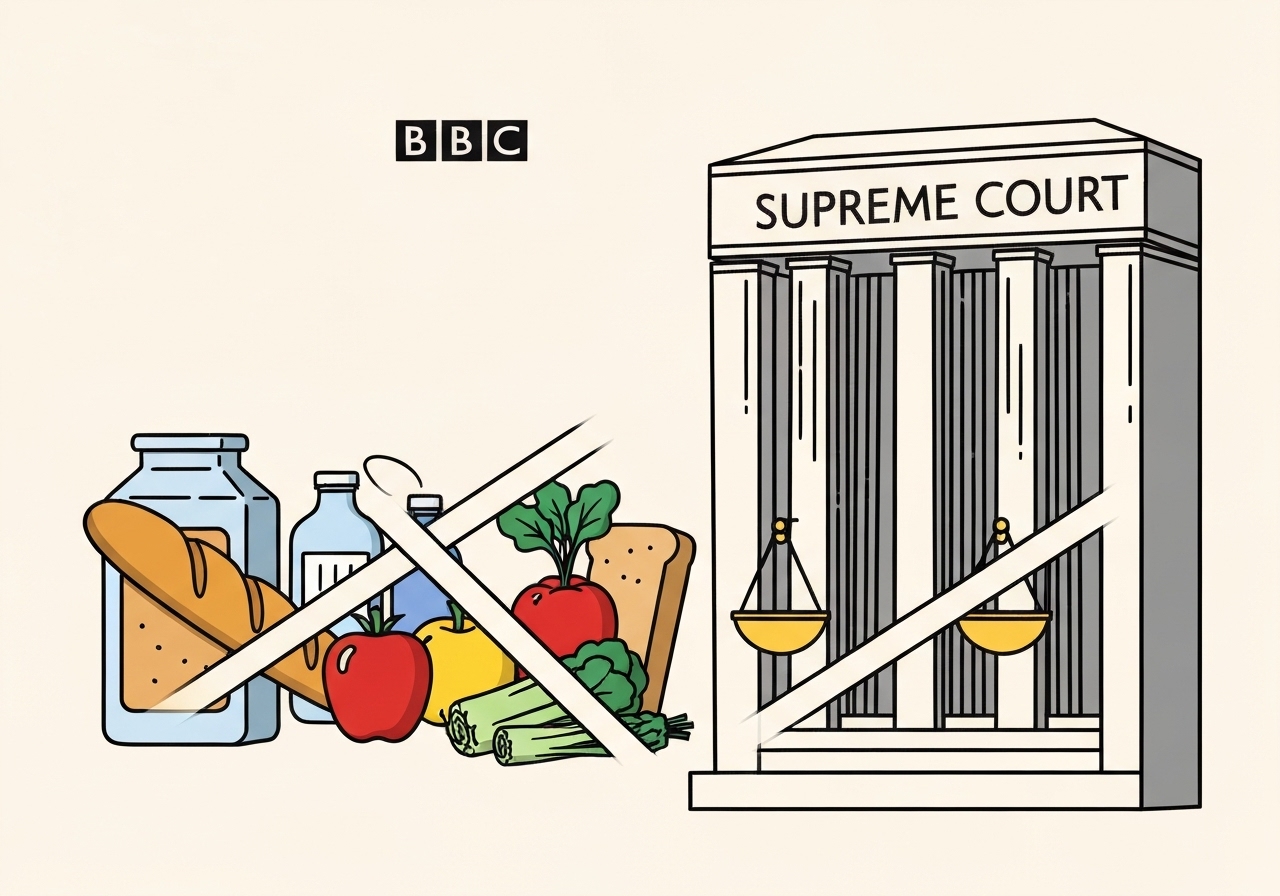
Lead: On Friday the US Supreme Court granted an emergency administrative stay that allows the Trump administration to temporarily withhold about $4 billion in Supplemental Nutrition Assistance Program (SNAP) funding while legal appeals proceed. The order came after a lower court had directed the government to distribute full November benefits amid an ongoing federal shutdown. SNAP serves roughly 42 million Americans and costs nearly $9 billion per month, leaving millions dependent on the outcome. The stay pauses the lower-court ruling for two days as lawyers seek further review.
Key Takeaways
- The Supreme Court issued an administrative stay on Friday allowing roughly $4 billion in SNAP funds to be held back pending appeal.
- SNAP covers about 42 million people—approximately one in eight Americans—and runs at almost $9 billion monthly.
- Rhode Island Judge John McConnell ordered full payments after warning that the interruption could place 16 million children at immediate risk of hunger.
- The USDA had announced that benefits would be halted in November unless funding was restored during the federal government shutdown.
- Some states have used their own reserves to continue payments worth roughly $6 per recipient through preloaded cards; others say they cannot cover the shortfall.
- The dispute is tied to the longest federal government shutdown in US history, with many federal workers unpaid for more than a month and travel disruptions ongoing.
Background
The Supplemental Nutrition Assistance Program (SNAP), commonly called food stamps, is administered by the US Department of Agriculture (USDA) and provides monthly benefits to low-income households. The program reached about 42 million recipients and costs close to $9 billion a month prior to the current funding disruption. The present legal conflict emerged after Congress failed to pass appropriations, triggering a partial federal shutdown that affected multiple programs and payments.
In response to the funding gap the USDA warned that SNAP disbursements could be interrupted for November recipients unless an appropriation or contingency funding was secured. A Rhode Island federal judge then ordered the administration to distribute full benefits, citing immediate risk to children. The White House appealed that decision to the Supreme Court, setting up the emergency order issued on Friday.
Main Event
The USDA notified states that November SNAP benefits might be interrupted because of the shutdown. Some state agencies said they would use state reserves or contingency accounts to maintain payments through preloaded debit cards; others said their reserves were insufficient. On Thursday a federal judge in Rhode Island, John McConnell, ordered the administration to pay benefits in full and criticized the withholding of aid as politically motivated.
The administration sought immediate relief from the Supreme Court, and Justice Ketanji Brown Jackson granted an administrative stay late on Friday. The stay effectively suspended the lower-court order for two days while government lawyers pursue an appeal in the full Court or seek further procedural relief. Officials at the USDA said they were taking steps to comply with various court orders while the litigation continues.
The practical effect of the stay is that approximately $4 billion of SNAP funding can remain undeployed for the short term, leaving state agencies and recipients in uncertainty. States that exhausted reserves or chose not to backstop federal payments face the prospect that some households will not receive expected benefits unless funding is restored or new orders are issued.
Analysis & Implications
The Supreme Court’s temporary intervention shifts the immediate legal battleground back toward appellate review, buying the administration time but not resolving the underlying funding dispute. Legally, an administrative stay is a procedure-focused move; it does not decide the merits of the lower court’s findings but preserves the status quo while higher courts consider jurisdiction and legal standards.
Politically and socially, the decision intensifies public scrutiny of the shutdown’s human costs. SNAP is a primary safety-net program for low-income households, and months-long disruptions could have measurable effects on food security, especially for children and elderly recipients. Judges and advocates have emphasized the immediacy of harm, while the administration frames its stance around budgetary constraints during a lapse in appropriations.
Economically, a pause in $4 billion of SNAP spending could ripple through supply chains and local economies that rely on grocery sales to low-income consumers. Retailers and food banks could see short-term demand shifts; states covering benefits from their budgets may face fiscal pressure that affects other services. The longer the uncertainty persists, the greater the administrative and economic costs for states and beneficiaries.
Comparison & Data
| Metric | Value |
|---|---|
| SNAP recipients | 42 million people |
| Monthly program cost | Nearly $9 billion |
| Temporarily withheld | About $4 billion |
| Children at immediate risk (judge’s assessment) | 16 million |
| Typical state emergency card amount cited | ~$6 per recipient (varies by state) |
These figures indicate the program’s scale and the proportion of resources affected by the temporary stay. With 42 million recipients, even a short interruption in disbursements translates into widespread household-level impacts, particularly for families that rely on monthly benefits for groceries.
Reactions & Quotes
“The court must consider whether withholding benefits during a lapse in appropriations places children at immediate risk,” Judge John McConnell said in his order, stressing the potential harm to minors.
Judge John McConnell (Rhode Island federal court)
“USDA officials said they were taking steps to follow competing court directives and to work on distributing funds where possible,” a department statement noted as it navigated simultaneous orders.
USDA (official statement)
“Some states have used emergency reserves to keep cards loaded, but others have virtually no capacity to replace lost federal funds,” a state benefits director said, outlining inconsistent capacities across jurisdictions.
State benefits official (reported remarks)
Unconfirmed
- Whether the $4 billion withheld will ultimately be restored, reduced, or permanently reallocated remains unresolved pending appeals.
- The precise number of households that will experience a service gap if federal payments are not resumed has not been independently verified.
- The timeline for a final decision from the appeals process beyond the immediate two-day stay remains uncertain.
Bottom Line
The Supreme Court’s administrative stay temporarily shifts resolution of the SNAP funding dispute to higher courts, reducing immediate pressure on the administration but extending uncertainty for millions of beneficiaries. The decision buys legal time for appeals but leaves practical questions about November benefit access unanswered for many families and states.
Watch for fast-moving legal filings, possible additional emergency motions, and state-level actions to cover shortfalls. Policymakers and courts will need to reconcile procedural questions about emergency authority with the tangible human costs of interrupted food assistance.
Sources
- BBC News (media report)
- US Department of Agriculture (official agency)
- Supreme Court of the United States (court site)