
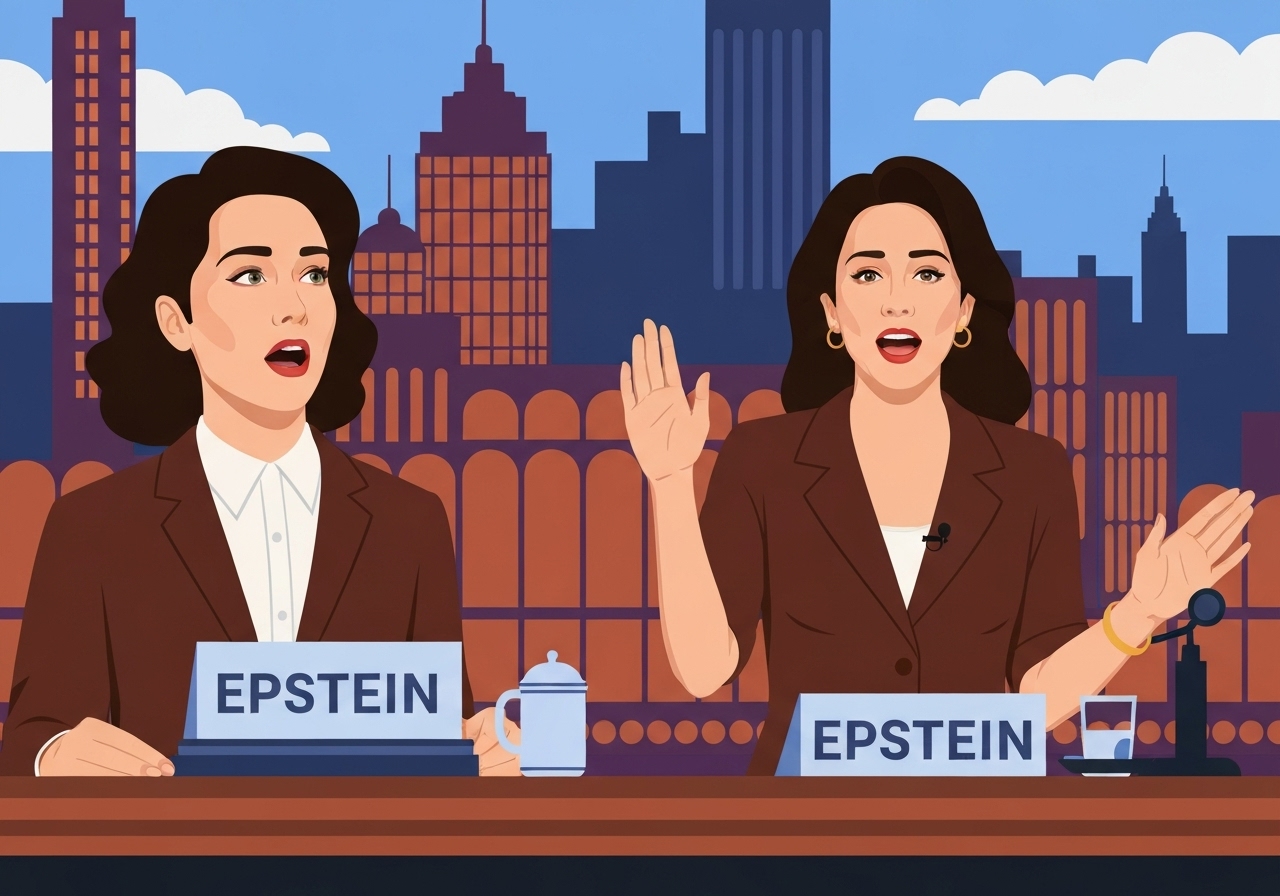
Saturday Night Live opened its latest episode with a fresh impression of Karoline Leavitt by cast member Ashley Padilla, staging a White House press-room cold open that leaned heavily on the week’s revelations about Jeffrey Epstein-related emails. The sketch, which aired this weekend in New York, threaded jokes about the roughly 20,000 emails released by the House Oversight Committee into exchanges between reporters and the press secretary figure. Several SNL players—including Chloe Fineman, Bowen Yang, Kam Patterson and Andrew Dismukes—appeared as cable reporters, and James Austin Johnson popped in as former President Donald Trump to escalate the bit. The cold open used parody to tie the comic premise directly to current political reporting, prompting strong audience reaction.
Key Takeaways
- Ashley Padilla debuted a Karoline Leavitt impression in SNL’s cold open this weekend, centering the sketch on the newly released Epstein emails.
- The sketch referenced approximately 20,000 emails the House Oversight Committee made public earlier in the week, several of which mention Donald Trump.
- Chloe Fineman played a CNN anchor asking about the emails; Bowen Yang and Andrew Dismukes portrayed other network reporters pressing the administration parody on Epstein-related optics.
- Kam Patterson appeared as a Fox News correspondent asking about the president’s health; the brief exchange joked about routine physicals and cognitive testing.
- James Austin Johnson interrupted the briefing as Trump, offering a satirical defense and promising to “release the files” in a comic bit about monetizing documents.
- The cold open tied topical reporting (House Oversight’s document release) to a recurring SNL strategy of lampooning press briefings and administration spokespeople.
Background
The sketch arrives after the House Oversight Committee released a large batch of emails earlier in the week, an action that renewed media attention on Jeffrey Epstein and associates. Those documents include messages that reference a range of public figures; the committee’s release became a focal point for late-night and daytime satire. SNL has a long history of turning the week’s biggest political stories into its weekend cold opens, using caricature and impersonation to compress complex news cycles into punchlines.
Karoline Leavitt, who served as a White House press official in the Trump-era communications team, has been a frequent target for late-night impressions since taking a public-facing role. The show’s new impression by Padilla places Leavitt in the center of the briefing-room dynamic, a familiar SNL set piece that allows multiple cast members to play reporters and escalate the gag. The larger context includes renewed scrutiny of Epstein-era materials across several congressional committees and ongoing media coverage about related prosecutions and legal filings.
Main Event
The cold open began with Padilla-as-Leavitt greeting an assembled press corps and offering an overly upbeat tone that quickly clashed with reporters’ pointed questions. Chloe Fineman, portraying a CNN anchor, led with a question about the 20,000 emails released by the House Oversight Committee and why Trump’s name appears in several entries—an explicit nod to items in the release. Padilla’s character attempted a breezy denial and a flippant defense linking the documents to benign explanations, trading on the familiar trope of a press aide deflecting uncomfortable lines of inquiry.
Kam Patterson, presented as a Fox correspondent, was given a softer, jocular question about the president’s health, which the sketch used to lampoon media-friendly softball queries. Bowen Yang’s MSNBC persona circled back to Epstein, asking about optics and the reported legal maneuvers involving Ghislaine Maxwell. The back-and-forth emphasized contrast: aggressive probing from some outlets and friendlier framing from others—a device SNL has used in past press-room sketches to illustrate media fragmentation.
The exchange culminated with James Austin Johnson’s Trump barging in to answer questions himself, amplifying the sketch’s satire by mixing denial with comic grandstanding. Johnson’s Trump joked about scant acquaintanceship with Epstein while gesturing to images and promised to “release files” for a price in an obvious send-up of transactional politics. The sequence ended with the press room unable to regain control of the briefing, underlining the sketch’s broader point about spectacle overtaking accountability.
Analysis & Implications
SNL’s decision to center the cold open on the newly released emails shows how late-night comedy functions as a rapid interpreter of political news: it selects the most resonant details and reframes them for a broad audience. By foregrounding the House Oversight release, the sketch translates complex document disclosures into micro-dramas—press secretary deflection, partisan questioning, and the former president’s rhetorical interventions. That compression can shape public perception by highlighting certain elements (optics, evasions) while simplifying legal or evidentiary nuance.
The depiction also underscores how media outlets and political actors are seen to occupy distinct roles in public narratives. SNL’s caricatures of different cable reporters—hard-hitting, adversarial, or congenial—mirror real debates about how journalists cover controversies tied to powerful figures. Comedy’s framing matters because satire often becomes a shorthand people cite in conversations and social media threads, reinforcing impressions formed through rapid consumption rather than detailed reading of primary documents.
For political communications teams and the individuals depicted, the sketch is a reputational moment: impersonations can influence public attitudes even if they are overtly comic. While SNL doesn’t provide investigative analysis, its broad reach can increase attention to the underlying reporting—in this case, the Oversight Committee’s document release—and prompt further coverage or public scrutiny. The sketch’s viral potential may also pressure newsrooms and officials to respond, clarifying claims or reasserting context.
Comparison & Data
| Item | Detail |
|---|---|
| Emails released | ≈20,000 (House Oversight Committee) |
| SNL cast highlights | Ashley Padilla, Chloe Fineman, Bowen Yang, Kam Patterson, Andrew Dismukes, James Austin Johnson |
| Sketch focus | Press-room parody tied to Epstein-related documents |
The table above summarizes the core facts the cold open drew from: the scale of the document release, the cast members involved in the sketch, and the thematic focus. That factual spine enabled SNL to anchor jokes in verifiable events, which increases the sketch’s newsworthiness and its potential to drive viewers back to the underlying reporting.
Reactions & Quotes
“I’m here to take your sunny questions,”
Ashley Padilla as Karoline Leavitt — SNL sketch
Padilla’s opening tone set the sketch’s comedic register, intentionally contrasting perfunctory cheer with reporters pressing sensitive topics.
“Jeffrey Epstein? I barely knew him — here are thousands of photos,”
James Austin Johnson as Donald Trump — SNL sketch
Johnson’s cameo amplified the sketch by inserting a mock self-defense that doubled as a punchline about spectacle and self-promotion.
“The committee made a sizable set of communications public this week,”
House Oversight Committee (official release)
The Oversight Committee’s disclosure was the factual event that the sketch built its satire around; the committee described its release as part of ongoing oversight activity.
Unconfirmed
- Reports that Ghislaine Maxwell had prepared an application seeking commutation were referenced in coverage; the sketch treated that as a current matter but the status of any filing or acceptance requires confirmation from court records or official filings.
- Some emails include allegations or representations made by private individuals; the presence of a named individual in a document does not by itself establish the truth of any specific allegation without corroborating evidence.
Bottom Line
SNL’s cold open used a newly released archive of emails to craft a pointed satire of White House communications, cable media dynamics, and a former president’s role in dominating the message. The show translated a complex and potentially technical news development into accessible, shareable comedy that will likely increase public attention to the Oversight Committee’s disclosures.
While the sketch is clearly comedic and intentionally exaggerated, its reliance on the Oversight release highlights the interplay between entertainment and news: satire can accelerate public focus on particular documents or claims, but it cannot substitute for careful legal or journalistic analysis. For readers following developments tied to the Epstein materials, the immediate effect will be heightened public scrutiny and, potentially, renewed coverage that seeks to verify or contextualize the underlying documents.
Sources
- The Daily Beast (news media) — original recap of SNL cold open and sketch details.
- House Oversight Committee (official) — committee website where document releases and statements are posted.
- Saturday Night Live / NBC (entertainment/official) — program page and episode listings for SNL.