
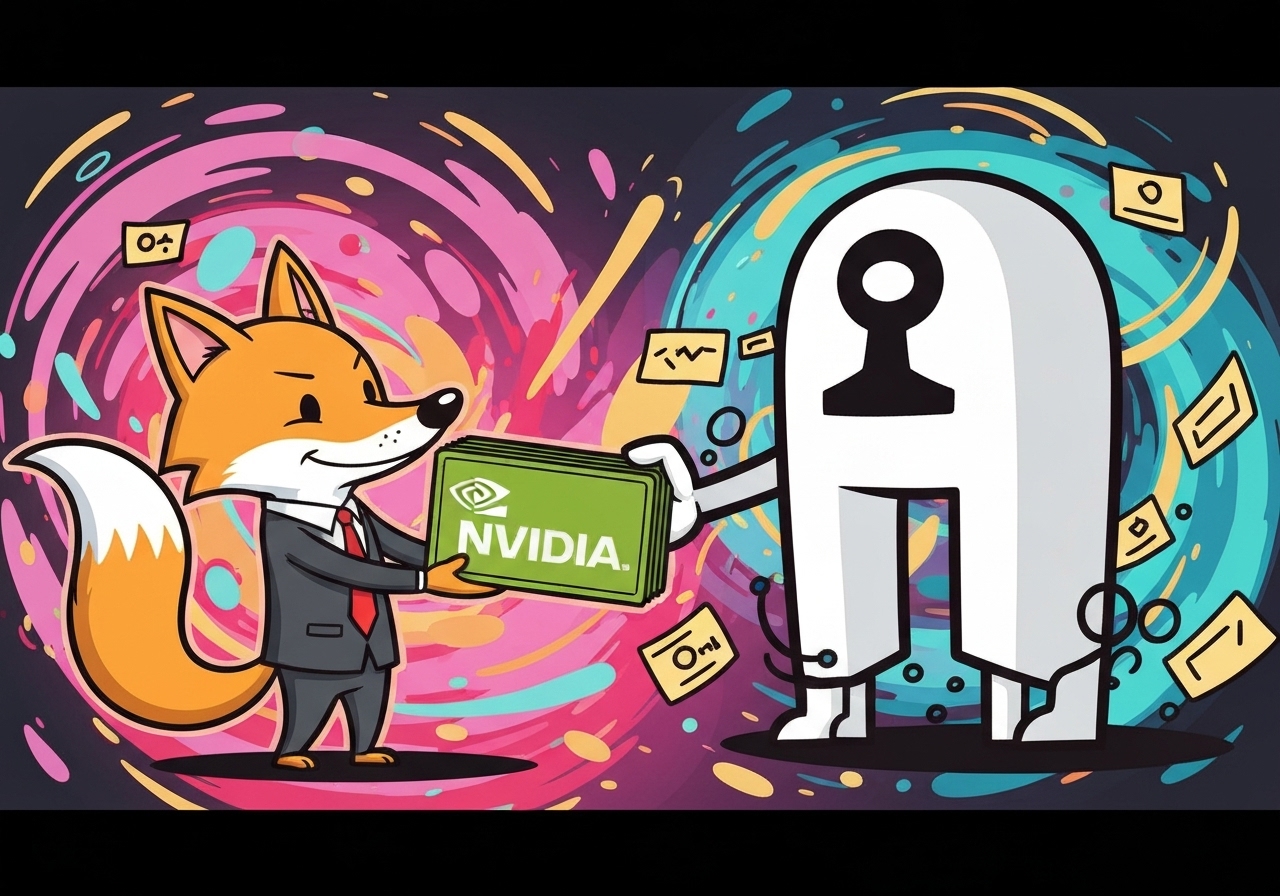
SoftBank announced that it sold all 32.1 million Nvidia shares in October, generating $5.83 billion in proceeds, and used those funds — alongside other asset sales — to bankroll large investments in OpenAI. The move, disclosed in a Tuesday statement and reported by multiple outlets, coincided with renewed volatility in Nvidia shares, which traded below recent highs. SoftBank also recorded $9.17 billion from T‑Mobile stock sales between June and September. Executives say the transactions free capital for accelerated AI investments rather than marking a retreat from the artificial‑intelligence sector.
Key Takeaways
- SoftBank sold 32.1 million Nvidia (NVDA) shares in October, raising $5.83 billion, at an average price just under $182 per share.
- The sale price compares with a Monday close of $199.05 and Nvidia’s late‑October record high of $212 per share.
- SoftBank also reported $9.17 billion in proceeds from T‑Mobile disposals between June and September.
- The company says proceeds are being redeployed into OpenAI; SoftBank committed more than $22 billion in additional funding to OpenAI last month.
- Nvidia shares fell more than 3% in midday trading following the news, underperforming broader markets that session.
- Bank of America analysis showed Nvidia was held by more than three‑quarters of active fund managers in October, reflecting broad institutional exposure.
Background
The past year has been defined by rapid investment flows into companies tied to artificial intelligence, driving steep gains for chipmakers such as Nvidia and prompting large private financings for AI startups. Corporate investors and funds have been reallocating portfolios in response to valuation concerns and shifting expectations about demand for AI hardware and services. SoftBank, a major global technology investor, has been a prominent participant in that repositioning: its Vision Fund strategy historically favored big stakes in both public and private technology firms.
SoftBank’s relationship with OpenAI intensified earlier this year when it provided multi‑billion dollar backing that elevated OpenAI’s private valuation. At the same time, SoftBank has used sales of public holdings to manage liquidity and concentrate capital into strategic bets. Market participants have watched such reallocations closely, interpreting them as potential signals about the attractiveness of specific AI exposures or as routine balance‑sheet management.
Main Event
In October, SoftBank sold its entire position of 32.1 million shares in Nvidia, netting $5.83 billion. The company characterized the October transaction as a “complete sale” of its Nvidia stake; by Investopedia’s reporting, that produced an average sale price just under $182 per share. The sale followed Nvidia shares that had reached an intramonth peak of $212 in late October before moderating.
SoftBank concurrently disclosed other asset dispositions, including $9.17 billion raised from sales of T‑Mobile stock between June and September. Company officials and comments reported to the press framed the moves as fundraising to support major commitments to OpenAI, including a more than $22 billion additional funding pledge made last month.
The market reaction was immediate: Nvidia shares moved lower on the announcement, trading down more than 3% in midday sessions and lagging broader indices. Traders and analysts pointed to a mix of valuation pressure and shifting positioning among institutional holders as factors amplifying the price move that day.
Analysis & Implications
SoftBank’s sale illustrates the distinction between changing exposure to a specific public equity and exiting a thematic investment thesis. By converting Nvidia shares into cash and directing that capital into OpenAI, SoftBank is shifting from public hardware exposure to private software/service exposure within the AI ecosystem. That reallocates risk — concentrating company‑specific and private‑market illiquidity while reducing direct sensitivity to Nvidia’s stock price.
From an investor‑sentiment perspective, a headline that a major holder sold all shares of a blue‑chip chipmaker can appear bearish and may prompt short‑term price reactions. However, context matters: company statements tie the sale directly to funding commitments, suggesting a strategic rebalancing rather than a negative view on Nvidia’s long‑term prospects. The market’s negative reaction that day likely combined headline effects with broader concerns about stretched AI valuations.
For SoftBank, redirecting proceeds to OpenAI deepens exposure to a private, rapidly evolving segment of the AI value chain. That exposure could offer larger returns if OpenAI captures substantial commercial growth, but it also concentrates SoftBank’s portfolio in an entity with different liquidity profiles, governance dynamics, and regulatory scrutiny compared with diversified public holdings.
Comparison & Data
| Item | Value |
|---|---|
| Shares sold | 32.1 million (Nvidia) |
| Proceeds from Nvidia sale | $5.83 billion |
| Average sale price | Just under $182 per share |
| Monday close (comparison) | $199.05 per share |
| Late‑October record high | $212 per share |
| T‑Mobile proceeds (Jun–Sep) | $9.17 billion |
| OpenAI additional funding | More than $22 billion (committed last month) |
The table highlights the scale of the reallocation and the price context for Nvidia around the transaction. Converting a large, concentrated public position into cash to fund private investments changes the firm’s liquidity profile and market correlations. Investors assessing similar moves should weigh short‑term market impact against long‑term strategic intent and the differing risk/return profiles of public versus private AI investments.
Reactions & Quotes
SoftBank’s finance chief defended the move as part of an intentional funding strategy for AI investments, according to press reports. The remark was presented as explanatory context rather than a commentary on Nvidia’s fundamentals.
“We are making large investments in OpenAI. To do that, we have to use some of our existing assets to raise funds.”
Yoshimitsu Goto, SoftBank CFO (as reported)
Market analysts pointed to the widespread ownership of Nvidia shares as a factor amplifying price action when large holders adjust allocations.
“Nvidia was held by more than three‑quarters of active fund managers in October,”
Bank of America analysis
Retail and institutional investors reacted differently: some traders used the news to sell into strength, while others saw the reallocations as an opportunity to buy parts of the semiconductor supply chain that might benefit from continued AI demand.
Unconfirmed
- Whether the $5.83 billion from the Nvidia sale was used exclusively for OpenAI funding has not been independently confirmed; SoftBank cites broader asset reallocation.
- The precise timing of individual share dispositions within October and any algorithmic trading impacts on intraday Nvidia prices are not fully documented in public reports.
- Longer‑term strategic intent—whether SoftBank will re‑enter public chip positions—remains unannounced and subject to future disclosure.
Bottom Line
SoftBank’s complete divestment of its Nvidia stake is best read as a portfolio reallocation rather than a repudiation of the AI sector. The group monetized a substantial public holding to concentrate capital into OpenAI, increasing exposure to private AI assets with different risk and liquidity profiles. That shift clarifies SoftBank’s preference for direct, large private‑market positions over holding certain public equities tied to the same thematic growth.
For investors, the episode underscores the importance of context: large sales by prominent investors can move prices even when driven by financing needs rather than negative views on fundamentals. Market participants should watch subsequent disclosures and OpenAI developments to judge whether SoftBank’s concentration pays off and how similar reallocations affect public AI‑related equities.
Sources
- Investopedia — Financial news report summarizing SoftBank disclosures and market reaction.
- SoftBank Group (official) — Corporate site for company statements and investor materials.
- Wall Street Journal — Media report cited for executive comments and reporting context.