
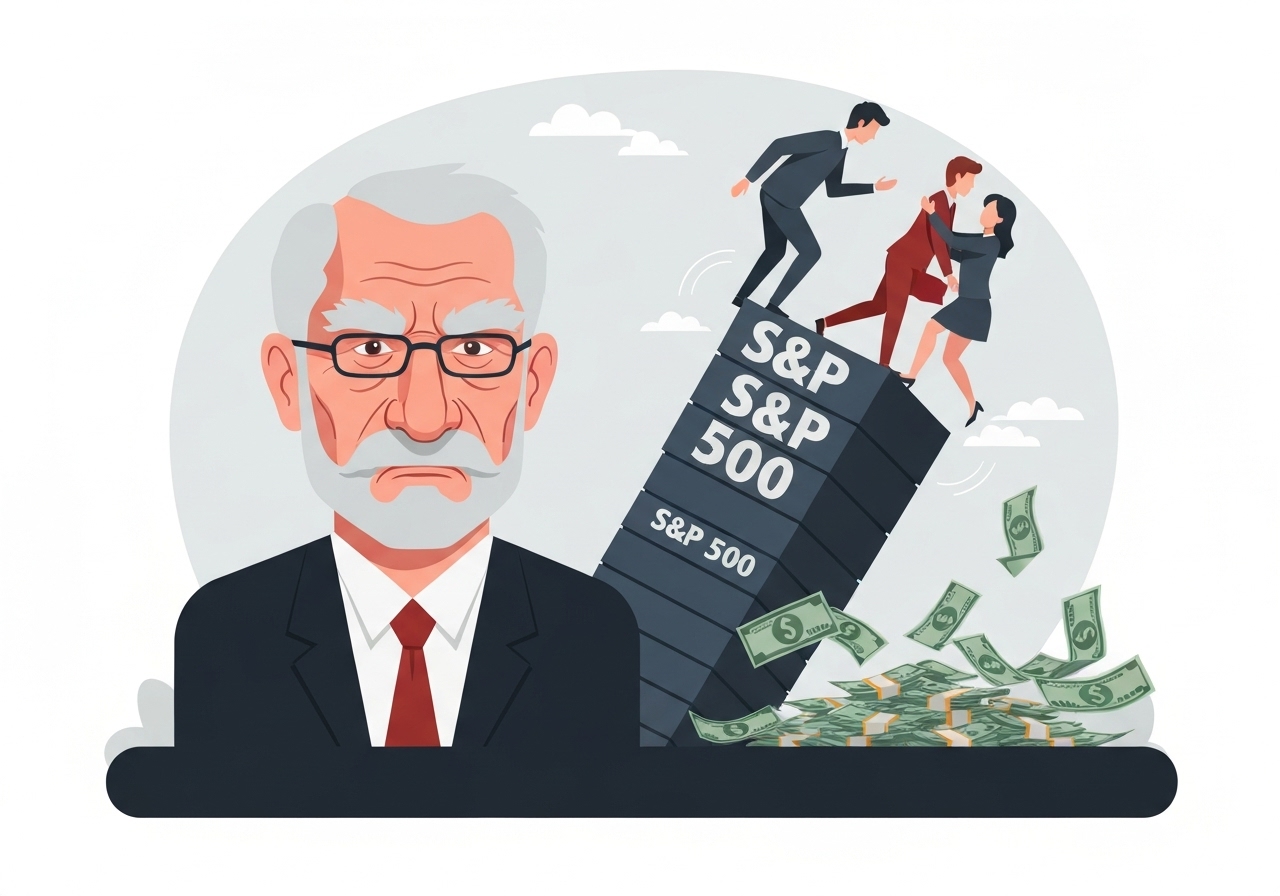
Veteran analyst Jim Welsh warned on Sept. 5 that weakening U.S. jobs data could trigger a sharp turn for the S&P 500. After August’s payrolls came in over 70% below forecasts and the unemployment rate rose to its highest level since 2021, Welsh said layoffs — not yet widespread — are the key signal that would shift the market from slowing to a faster contraction and could precipitate a deep, multi-year decline.
Key Takeaways
- August payroll gains fell more than 70% short of economists’ expectations; June was revised down by 13,000 jobs.
- The unemployment rate reached its highest level since 2021 and weekly initial claims recently ticked to 237,000.
- Jim Welsh expects a short pullback of roughly 3%–7% before the S&P could rally to 6,600–6,800, then face a longer decline if layoffs accelerate.
- Welsh watches weekly initial claims above 275,000 as a clear signal of broader labor-market deterioration.
- He argues the market is in a 17-year secular cycle that could produce large drawdowns to targets like 3,500, 2,200 or even 1,600 for the S&P in worst-case scenarios.
- Spending on artificial intelligence has extended the cycle; a slowdown in that spending could remove a key support for markets.
- Macro risks cited include high federal deficits, rising interest costs, and historically elevated household stock allocations.
Verified Facts
The Bureau of Labor Statistics’ August report showed job growth well below consensus and included a revision that cut June payrolls by 13,000, producing the first monthly payroll loss since December 2020 and reversing the nation’s long employment expansion. The unemployment rate moved to its highest reading since 2021, amplifying concerns about labor-market momentum.
Separately, initial claims for unemployment insurance recently measured 237,000, an 11-week high for first-time filings, while reports show layoff announcements in August reached levels not seen since the pandemic or earlier during the Great Recession. Those measures feed directly into market sentiment and consumer confidence.
In an interview for Money Life with Chuck Jaffe (aired Sept. 5), independent analyst Jim Welsh — a 40-year portfolio manager and author of Macro Tides — said technical indicators suggest a modest pullback could precede new highs, but that rising layoffs would be the catalyst for a deeper correction tied to a 17-year cycle he tracks.
Welsh gave short-term S&P targets in the 6,600–6,800 range if the market continues to advance, but he also outlined downside scenarios returning the S&P to previous bear-market lows: first to about 3,500 (Oct. 2022 low), then potentially to 2,200 (March 2020 low) or to 1,600 — levels that correspond to prior cycle peaks and troughs.
Context & Impact
Markets have been balancing mixed signals: signs of slowing hiring but limited corporate layoff activity so far. That balance helps sustain consumer spending, but it also makes the economy vulnerable to rapid sentiment shifts if job cuts become widespread.
Welsh and others point to heavy corporate and household exposure to equities and elevated valuations as amplifiers of downside risk. He also cites large cash positions among prominent investors — for example, Warren Buffett’s portfolio holdings have been reported at roughly $347 billion, about 30% of his public equity allocation — as a defensive posture some observers interpret as caution about valuations.
Another factor is technology investment, notably in artificial intelligence, which has propped up earnings and hiring in parts of the economy. If that spending slows, markets may lose a major growth driver, producing greater downside pressure across cyclicals and tech sectors.
Official Statements
“Once you see job growth turn negative and layoffs increase, then you’re going to see a more pronounced slowdown,”
Jim Welsh, Macro Tides (Money Life interview, Sept. 5, 2025)
Unconfirmed
- Exact timing that the 17‑year cycle will force a secular bear market within the next 18 months is speculative and not empirically guaranteed.
- Precise S&P targets of 2,200 or 1,600 are model-based scenarios from Welsh and should be treated as hypothetical stress-case levels, not certainties.
- Suggestions to change the monthly BLS jobs-release cadence (reported discussions) remain unconfirmed policy changes at this time.
Bottom Line
Recent U.S. jobs data have shifted risk balances: hiring has slowed, revisions show weaker prior months, and claims have risen — but broad layoffs have not yet arrived. Jim Welsh cautions that if layoffs become widespread, markets that have benefited from AI-driven spending and technical momentum could face a far deeper downturn. Investors should monitor weekly claims, layoff announcements, and corporate guidance for clearer signals of a structural shift.