
Lead
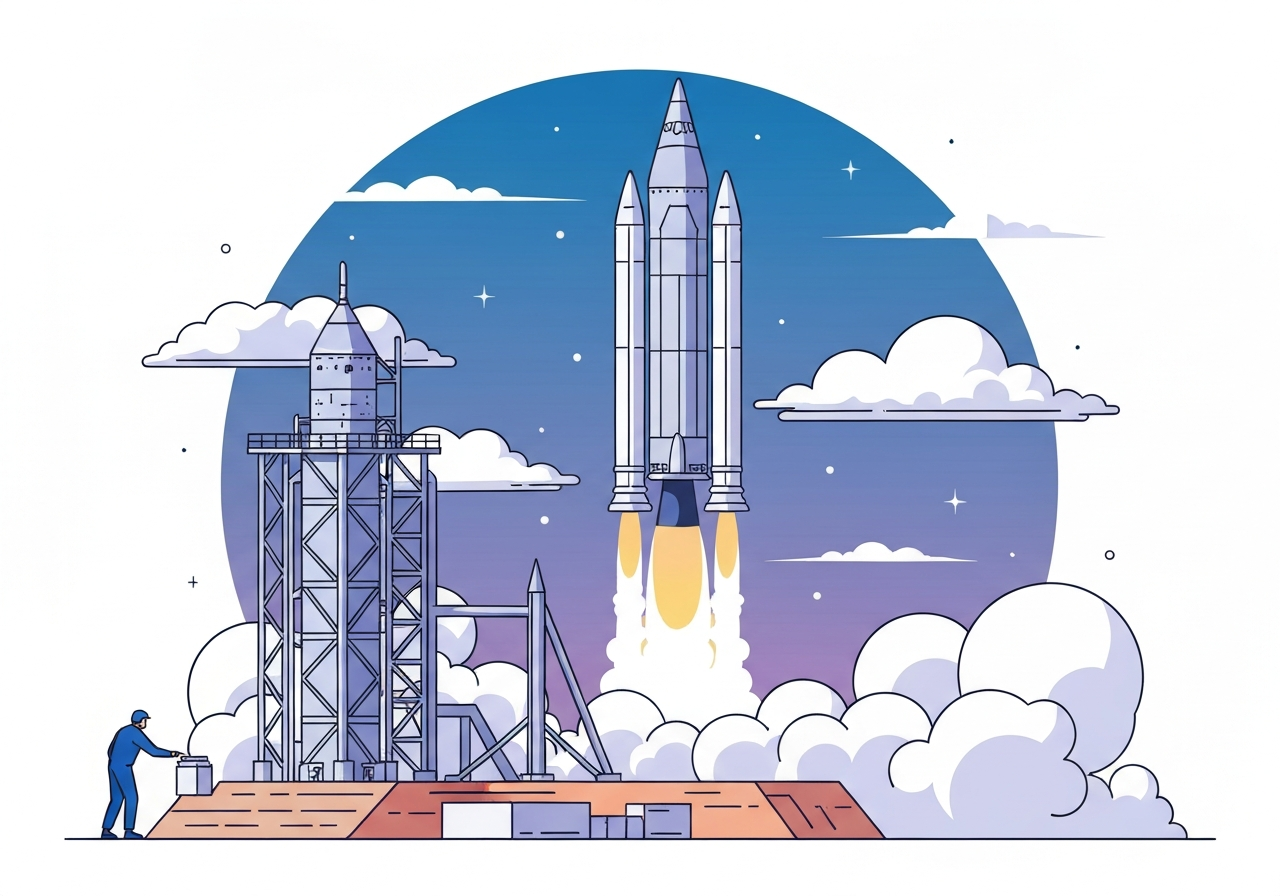
SpaceX is set to mark its 600th Falcon 9 launch with the Starlink 17-13 mission from Vandenberg Space Force Base on Saturday evening. Liftoff from Space Launch Complex 4 East is scheduled for 5:59:59 p.m. PST (8:59:59 p.m. EST / 01:59:59 UTC) at the close of the window. The flight will deliver 24 Starlink V2 Mini satellites to low Earth orbit, while first stage booster B1081—on its 22nd mission—will attempt a landing on the drone ship Of Course I Still Love You roughly eight minutes after liftoff. The milestone follows the same day’s Crew Dragon arrival at the International Space Station.
Key Takeaways
- SpaceX will attempt its 600th Falcon 9 launch in company history with Starlink 17-13 from Vandenberg SFB.
- The mission carries 24 Starlink V2 Mini satellites to low Earth orbit, part of SpaceX’s ongoing broadband constellation expansion.
- Booster B1081 is making its 22nd flight; a landing on the drone ship Of Course I Still Love You is planned about eight minutes after launch.
- If recovered, the landing would mark the 178th landing on that vessel and the 571st booster landing overall for SpaceX.
- Liftoff was delayed from the original T‑0 earlier in the day; live coverage begins roughly 30 minutes before launch.
- The flight follows the Crew Dragon Freedom’s docking at the ISS at 3:15 p.m. EST, part of SpaceX’s 20th human spaceflight mission.
Background
Falcon 9 has been SpaceX’s workhorse since its debut, enabling satellite deployments, cargo runs, and crewed missions. Reaching 600 launches underscores both high flight cadence and the maturation of reusable-rocket operations that SpaceX pioneered. The company’s Starlink program, launched in 2019, has shifted many Falcon 9 missions toward deploying internet-relay satellites; V2 Mini satellites are the latest iteration designed for denser coverage. Vandenberg SFB is the West Coast launch site typically used for polar and high-inclination flights, making it a frequent choice for Starlink missions targeting specific orbital planes.
Reusability is central to SpaceX’s economics: Falcon 9 first stages routinely return to either land on a drone ship at sea or touch down near the launch site. The repeated flights of boosters such as B1081 demonstrate the operational strategy of multiple reflights per core. Regulatory and range coordination at Vandenberg, Pacific recovery zones, and global spectrum approvals shape the cadence and destination orbits of Starlink launches. Public and commercial demand for low-latency broadband, plus SpaceX’s internal launch manifest, drive persistent launch tempo.
Main Event
The Starlink 17-13 mission will lift off on a southerly azimuth from SLC-4E at Vandenberg, placing 24 V2 Mini spacecraft into their planned low Earth orbits. The first stage, tail number B1081, previously supported four NASA missions including Crew-7 and several commercial payloads, and will be tasked with a drone-ship landing at sea. Flight controllers delayed the T‑0 earlier in the day; the revised T‑0 is set at 5:59:59 p.m. PST, leaving a narrow window at the end of the evening.
Telemetry and webcast coverage will track stage separation, second-stage ignition, and the deployment sequence for the Starlink stack. The recovery profile calls for B1081 to burn back toward the Pacific to reach Of Course I Still Love You, positioned downrange for the return. Successful touchdown would add to the vessel’s tally—this ship has supported dozens of recoveries and would reach 178 if this attempt succeeds.
On the same day, SpaceX’s Crew Dragon Freedom docked to the International Space Station at 3:15 p.m. EST with three astronauts and one cosmonaut aboard, concluding a roughly 34‑hour transfer from Cape Canaveral. That human spaceflight milestone occurred independently of the Starlink launch operations but highlights the company’s parallel cadence of crewed and commercial missions.
Analysis & Implications
Hitting 600 Falcon 9 launches is a symbolic and operational milestone: it reflects a decade-plus effort to industrialize rocket operations and scale satellite deployments. For SpaceX, each successful reflown booster and drone-ship recovery reduces marginal launch costs and tightens the company’s control over cadence. The consistent reuse of cores like B1081 shows growing confidence in long‑lived hardware and the supply-chain practices needed to support high-frequency flights.
For the Starlink program, adding 24 V2 Mini satellites incrementally improves capacity and regional coverage, especially for higher-density constellations where small, frequent launches matter. That said, the long-term utility of incremental V2 Mini deployments depends on regulatory approvals, frequency coordination, and subscriber uptake in target markets. Launch reliability also affects commercial customers and investor perception; repeated successes help sustain demand for both launch services and consumer broadband subscriptions.
Strategically, the dual tempo—human missions to the ISS and mass-starlink deployments—demonstrates SpaceX’s ability to run concurrent mission threads. This raises questions for range safety and scheduling competition, particularly as global launch demand rebounds. Internationally, other launch providers are watching the economics and operational playbook; sustained Falcon 9 throughput could shape competitive responses in small-satellite markets and reusable-launch adoption.
Comparison & Data
| Metric | Value |
|---|---|
| Total Falcon 9 launches (to date) | 600 |
| Booster recoveries (total) | 571 |
| Landings on Of Course I Still Love You | 178 (if successful) |
| B1081 flight count | 22nd flight |
| Starlink satellites on this flight | 24 V2 Mini |
| Scheduled liftoff | 5:59:59 p.m. PST / 8:59:59 p.m. EST / 01:59:59 UTC |
The table places this mission in historical context: 600 total Falcon 9 launches represent cumulative operational experience, while 571 booster recoveries show how often those cores have been returned for reuse. B1081’s 22 flights align with a growing trend of very-high-cycle cores, and the 24-satellite payload is consistent with recent mini-satellite cluster deployments. These figures matter for cost-per-kilogram calculations and manifest planning across the next year.
Reactions & Quotes
Observers in industry noted the logistical complexity of running a human mission and a high-volume Starlink launch on the same day, a schedule that amplifies the operational demands on launch and range teams.
“We will deploy 24 Starlink V2 Mini satellites into low Earth orbit as planned for this mission.”
SpaceX (mission brief)
The company’s publicly stated payload and recovery objectives framed real-time commentary during prelaunch coverage.
“The booster B1081 is targeting a drone-ship landing roughly eight minutes after liftoff.”
Spaceflight Now (live coverage summary)
Independent analysts highlighted how repeated booster reflights compress costs but also concentrate risk on older hardware undergoing many thermal cycles.
“Sustained reuse is reshaping launch economics, but it requires rigorous inspection regimes as flight counts climb.”
Independent aerospace analyst (comment to press)
Unconfirmed
- The precise technical reason for the day’s T‑0 delay has not been publicly detailed by SpaceX at the time of this report.
- The success of B1081’s landing attempt on Of Course I Still Love You is unknown until post‑flight telemetry and recovery confirmation are released.
- Any undisclosed payload-level adjustments or in-orbit configuration changes for the Starlink satellites have not been independently verified.
Bottom Line
Saturday’s Starlink 17-13 mission is both a routine operational flight and a major milestone: Falcon 9’s 600th launch underscores how reusability and high cadence have become integral to modern commercial spaceflight. The mission also demonstrates SpaceX’s ability to run simultaneous streams—crewed missions and large constellation deployments—without immediate operational conflict.
For observers, the key near-term indicators are whether B1081 completes a successful sea landing and how quickly SpaceX turns around the booster for additional missions. Longer term, the accumulated data from hundreds of missions will inform market pricing, competitive responses, and regulatory discussions around megaconstellations and launch safety.
Sources
- Spaceflight Now (media — live coverage)
- SpaceX Launches (official company launch manifest and mission descriptions)
- NASA — International Space Station (official agency — ISS status and mission updates)