
Lead
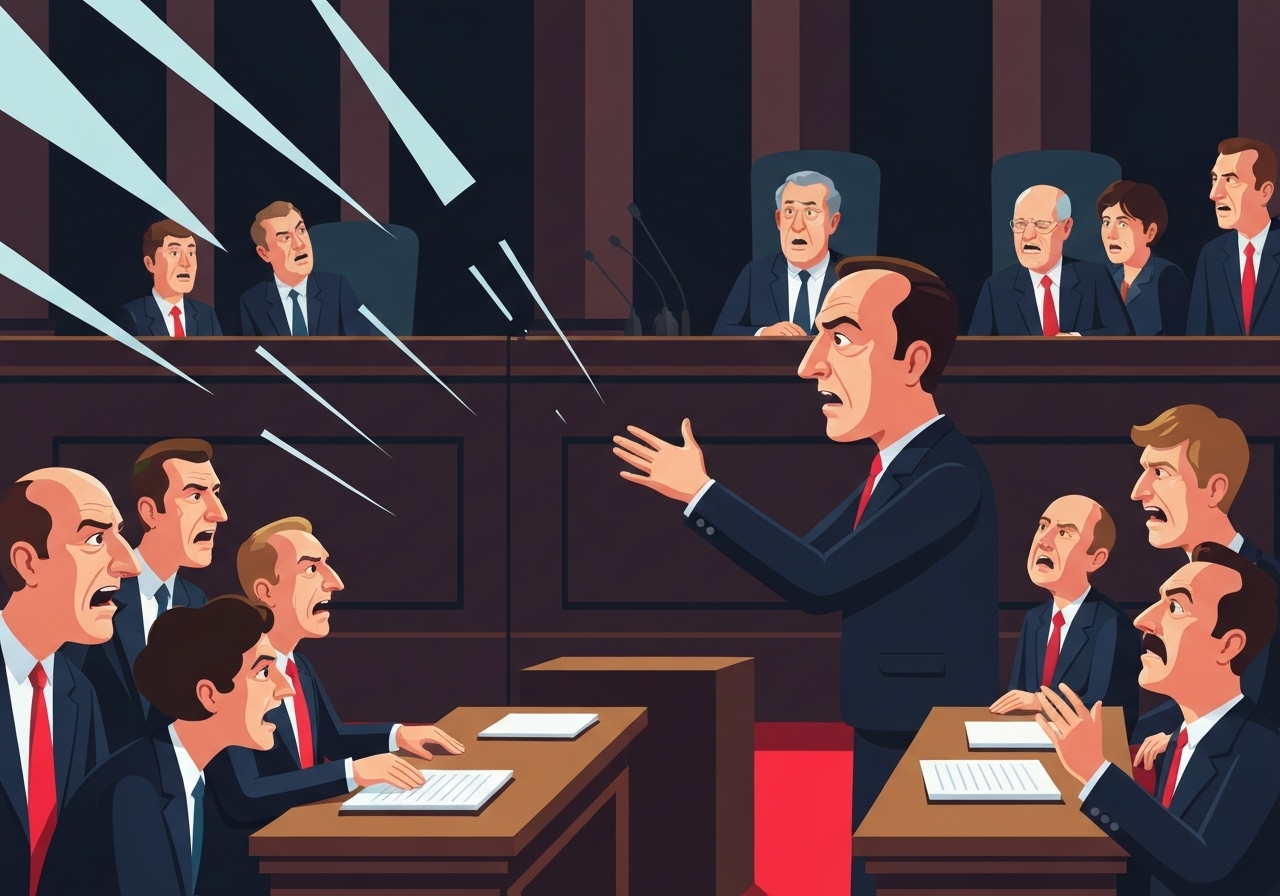
Speaker Mike Johnson, who rose to the leadership two years ago, is confronting an unusually intense bout of dissent inside his own conference in early December 2025. Members across the ideological spectrum are pressing him to change tactics ahead of the 2026 midterms, while his most important outside ally, former President Donald Trump, has not provided visible reinforcement. Johnson’s job is secure for now given the House GOP’s slim majority, but his ability to lead into and after the midterms is increasingly uncertain and may hinge on whether key figures choose to back him. The immediate pressure centers on legislative tempo, a looming healthcare subsidy cliff and frustration over recent strategic choices.
Key Takeaways
- Internal pressure: Multiple GOP members have confronted Johnson directly this week, urging faster action on the economy and health care before the 2026 midterms.
- Health care cliff: Enhanced Affordable Care Act subsidies are scheduled to expire on December 31, 2025, and House leaders have not produced a clear, conference-wide replacement plan.
- Conference margins: The House GOP’s slim edge—about 220 members in the conference—limits Johnson’s leeway to enforce a unified agenda.
- Recent disruptions: The chamber experienced a 43-day government shutdown earlier in the year and a prolonged recess that members say cost legislative momentum.
- Electoral warning: A December special election in Tennessee (Matt Van Epps won by a significantly narrower margin than Trump in 2024) intensified worries about messaging on affordability.
- Public criticism: Figures from across the conference, including Kevin Kiley and Eric Burlison, have openly demanded a more aggressive legislative strategy.
- Leadership defense: Allies such as Tom Cole and Carlos Gimenez praise Johnson’s tactical successes but acknowledge the morale problem within the conference.
Background
Johnson became House speaker two years ago in a contest that many described as unlikely; since then he has navigated repeated crises and internal disputes. His speakership has been shaped by a narrow GOP majority and by the heavy imprint of former President Donald Trump on the party’s legislative priorities and political calendar. Those dynamics have produced a leadership environment in which small margins magnify disagreements and procedural maneuvers can significantly alter outcomes.
Recent months saw the conference tied up by high-profile fights: the passage of a major domestic package championed by Trump, a contentious law to release Jeffrey Epstein-related records enacted over Johnson’s objections, and the 43-day government shutdown that paused much House activity. Lawmakers describe that period as a lost window for advancing a coherent, voter-facing agenda ahead of 2026.
Main Event
This week, rank-and-file Republicans converged on leadership spaces, on the floor and by phone to press Johnson for a strategic shift. Members want the House to move more quickly on bills framed around affordability and the economy, believing that a more forceful legislative posture is necessary to blunt Democratic attacks and revive the party’s messaging.
Conservative hard-liners and more centrist Republicans alike voiced frustration. Some, including Rep. Kevin Kiley, have publicly said Johnson must change how he runs the conference; others have used private meetings and floor interactions to press their case. The chorus of complaints has made it harder for Johnson to find breathing room for deliberation.
Leadership critics point to tactical choices they see as mistakes: keeping the House in recess for weeks during the shutdown, allowing procedural tools to be used by dissidents to advance localized priorities, and failing so far to present a consensus solution to the ACA subsidy expiration. Supporters counter that Johnson moved a comprehensive tax and spending bill this year and that with roughly 220 colleagues, compromise is difficult but not impossible.
Amid the turmoil, Johnson told reporters he is not worried about his standing and indicated plans to run again for leadership roles after the next Congress. He also pledged to present a health-care approach to the conference in the days ahead, though many lawmakers said they remain unclear about the content and timing of any plan.
Analysis & Implications
The current ferment within the House GOP reflects a broader strategic tension: whether to prioritize procedural stability and member-driven wins or pursue a centralized, aggressive agenda that presents clear choices to voters. With the 2026 midterms approaching, that tension now carries electoral consequences; members cite the Tennessee special election as a concrete signal that message and discipline matter.
Policy-wise, the impending end of enhanced ACA subsidies on December 31, 2025, poses immediate political risk. Millions could face higher premiums if no legislative fix or extension is enacted, and the absence of a clear House plan leaves Republicans exposed to attacks that they have failed to protect affordability—an issue voters consistently rank as important.
Institutionally, the party’s narrow majority constrains Johnson’s options. When the floor can be hijacked by small contingents using arcane procedures, leadership must balance concessions against preserving a coherent program. That dynamic raises the odds of short-term tactical victories for factions but reduces the conference’s capacity to enact a unified, signature policy before the midterms.
Finally, the political calculus is complicated by external factors: Trump’s attention and approval trajectory, ongoing legal and media controversies, and a crowded national news cycle. If Trump chooses to endorse a particular path—or refrain—that decision could be decisive for Johnson’s long-term viability as speaker.
Comparison & Data
| Metric | Value |
|---|---|
| House GOP conference size | ~220 members |
| Length of government shutdown | 43 days |
| ACA enhanced subsidy expiration | December 31, 2025 |
| Recent special election signal | Tennessee: Van Epps won by narrower margin than Trump (2024) |
These concrete figures explain why members are pressing for a swift response: a slim majority magnifies procedural risks, a prolonged shutdown consumed legislative bandwidth for weeks, and the health-care timing forces urgent choices before year-end.
Reactions & Quotes
Lawmakers and leaders offered starkly different interpretations of the situation, framing Johnson either as a beleaguered manager constrained by circumstances or as an overly cautious steward who must act more forcefully.
“I certainly think that the current leadership, and specifically the speaker, needs to change the way that he approaches the job.”
Rep. Kevin Kiley (R-CA)
Kiley’s blunt assessment captures frustration on the right flank, which argues Johnson should accelerate floor action and take clearer political stands. Such comments have moved from private corridors to public remarks, signaling a willingness to apply visible pressure.
“We need to go big or go home. The American people are expecting us to deliver.”
Rep. Eric Burlison (R-MO)
Burlison framed the moment as existential for messaging ahead of 2026, urging leadership to prioritize healthcare and affordability. Others, like Appropriations Chair Tom Cole, stressed the difficulty of governing with narrow margins and praised recent legislative achievements.
“You get through it one day at a time and one vote at a time.”
Rep. Tom Cole (R-OK)
Cole’s comment reflects the view among some allies that incremental wins and member-driven negotiation remain the most realistic path given the conference’s composition.
Unconfirmed
- Whether former President Trump will actively intervene to preserve Johnson’s speakership beyond public statements remains unclear.
- The precise contents and timing of the House GOP’s replacement proposal for the expiring ACA subsidies had not been finalized at the time of reporting.
- The scale and timing of potential retirements prompted by frustration in the conference are speculative and not yet supported by announced decisions.
Bottom Line
Speaker Johnson is navigating an intensified intra-party backlash that combines tactical complaints about pacing with deeper strategic questions about messaging and independence from the former president’s priorities. The near-term calendar—including the December 31, 2025, ACA subsidy expiration—creates a hard deadline that will test whether the speaker can deliver a coherent response that satisfies both caucus factions and the electorate.
With the 2026 midterms approaching, the conference faces a choice: centralize strategy and risk alienating members, or continue a member-led, incremental approach that may fail to present a decisive alternative to Democrats on affordability and health care. How Johnson and key allies manage that trade-off will likely determine both legislative outcomes and his standing in the months ahead.
Sources
- CNN — news report