
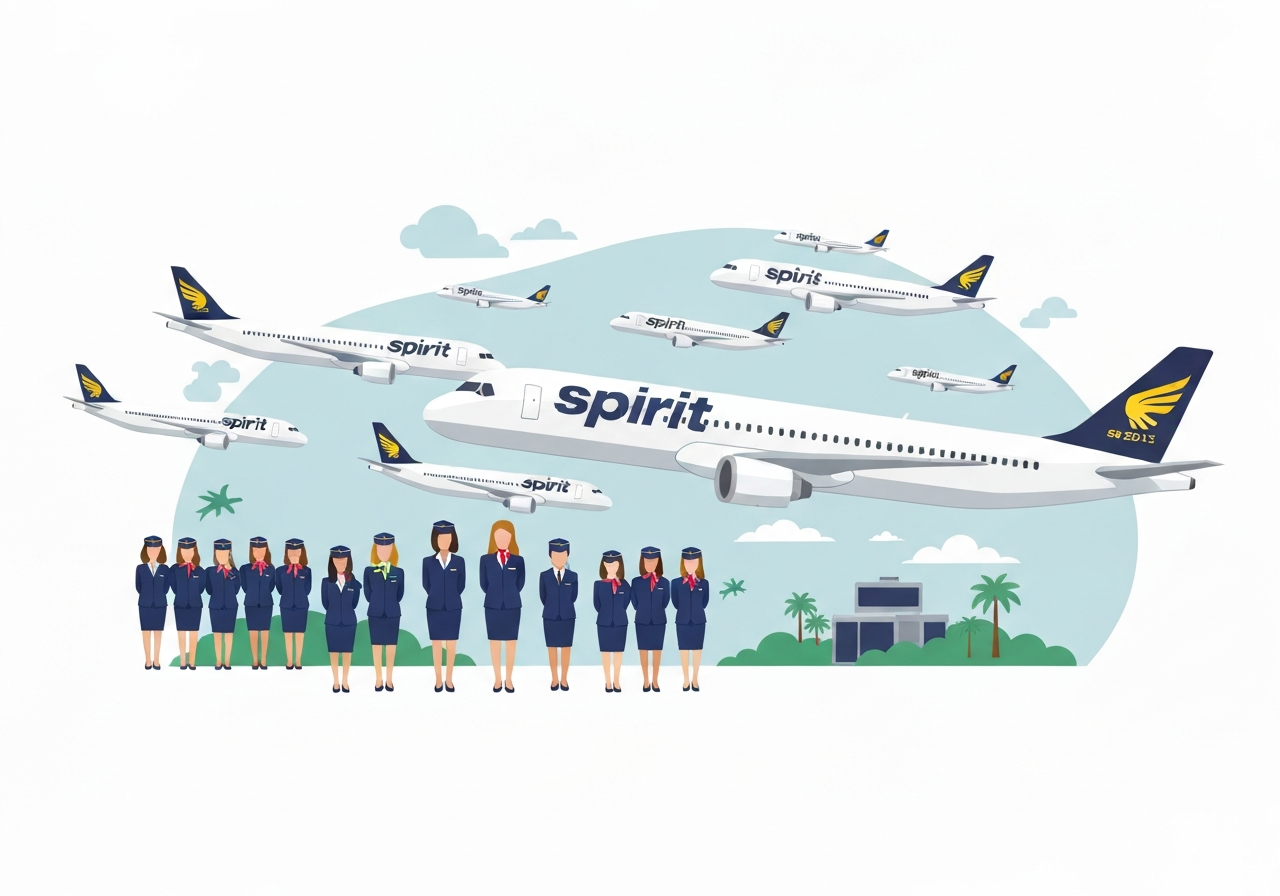
Spirit Airlines said on Feb. 12, 2026 that it has sold 20 more Airbus jets and will recall 500 flight attendants from furlough as it prepares for the spring break travel peak. The Dania Beach, Florida-based carrier, navigating a second bankruptcy filing in under a year, reduced its active fleet to 94 aircraft and plans to phase out the sold airplanes beginning in April. Company management framed the moves as part of a wider effort to right-size operations and focus capacity on the carrier’s strongest routes. The recall is positioned as a targeted operational fix to reduce recent service disruptions ahead of the seasonal demand spike.
Key Takeaways
- Spirit sold 20 Airbus aircraft, most of which were out of service; the fleet will be reduced to 94 aircraft.
- The retired jets will be phased out starting in April 2026 as part of a plan to concentrate on the most efficient routes and equipment.
- Spirit is recalling 500 flight attendants from furlough to bolster staffing for spring break; more than 1,300 flight attendants had been furloughed earlier.
- The carrier also furloughed hundreds of pilots in recent cost-cutting rounds to preserve cash amid financial distress.
- Tentative talks with investment firm Castlelake and rival Frontier Airlines did not produce a deal that would alter Spirit’s immediate path forward.
- Leadership says voluntary attrition and internal actions are being used to adjust pilot and cabin staffing levels without broader mandatory recalls.
- The company emphasized the changes are intended to stabilize operations while management explores longer-term options for the business.
Background
Spirit Airlines has faced prolonged financial strain that culminated in a second bankruptcy filing within a year, a rare and acute sign of distress for a major U.S. carrier. The airline, known for its ultra-low-cost model, has compressed its route network and shed capacity over the past months as it seeks to reduce cash burn. Cost-cutting measures have included furloughs for more than 1,300 flight attendants and hundreds of pilots, curtailing the carrier’s ability to absorb disruptions without service impacts.
Negotiations earlier this year with private-equity firm Castlelake and competitor Frontier Airlines were explored as potential options to provide capital or a strategic path forward, but those talks have not delivered a decisive transaction. Management has said it may proceed with independent restructuring steps if third-party deals are not feasible. The company’s home base in Dania Beach, Florida, remains the hub for network planning decisions that prioritize profitable leisure routes, especially during seasonal peaks like spring break.
Main Event
On Feb. 12, 2026 Spirit disclosed the sale of 20 Airbus jets, most previously parked, and confirmed a fleet count of 94 aircraft after the transaction. The carrier told employees the phased retirements will begin in April, part of a strategy to operate a more uniform and efficient fleet on high-demand sectors. Executives framed the sales as necessary to align capacity with current demand and cash constraints.
At the same time, Spirit announced the recall of 500 flight attendants who had been furloughed in prior cost-cutting rounds. Management characterized the recall as a targeted operational move to shore up crew availability for the upcoming spring break surge, while continuing to rely on voluntary attrition and other measures to set staffing levels for both pilots and cabin crew.
Company COO John Bendoraitis communicated the steps directly to employees, saying adjustment through natural attrition and voluntary measures is providing flexibility to right-size staffing. He linked the fleet and staffing changes to an effort to stabilize day-to-day operations while longer-term options remain under consideration. The airline did not announce a new investor agreement; instead it reiterated that its plan centers on focusing on the strongest routes and most efficient equipment.
Analysis & Implications
The sale of 20 airframes and the recall of 500 attendants represent a short-term operational recalibration rather than a full strategic turnaround. By reducing the active fleet to 94 aircraft, Spirit narrows its footprint and concentrates flying on higher-yield leisure markets, which could improve unit revenues but limits network flexibility. That tighter footprint makes the airline more susceptible to localized disruptions, since fewer spare aircraft and crews are available to absorb irregular operations.
Recalling furloughed staff before a peak travel period is both pragmatic and politically necessary. The move should reduce delays and cancellations caused by understaffing, improving customer experience and short-term revenue capture over the spring break window. However, restoring sufficient pilot and cabin depth takes time: training, pairing and schedule reintegration mean the immediate operational benefit may be gradual rather than instantaneous.
Strategically, the failure so far to secure a deal with Castlelake or Frontier leaves Spirit’s long-term capital structure and ownership unresolved. If outside financing or a strategic transaction remains elusive, Spirit may have to pursue deeper restructuring measures under bankruptcy protection, which could include additional asset sales, network cuts, or renegotiation of labor contracts. Conversely, stabilizing operations with a smaller, more efficient fleet could make the airline more attractive to potential investors or partners over the medium term.
Comparison & Data
| Metric | Before | After |
|---|---|---|
| Fleet size (aircraft) | 114 | 94 |
| Aircraft sold | — | 20 |
| Flight attendants furloughed | 1,300+ | ~800+ remaining furloughed (recall of 500) |
The table frames immediate numerical changes: fleet trimmed by 20 aircraft to 94 planes, and 500 of the previously furloughed attendants slated to return. Those figures do not capture schedule adjustments or the distribution of recalled staff across bases, which will affect how quickly service improves.
Reactions & Quotes
Spirit leadership described the steps as hard choices intended to stabilize operations while management pursues all available options. The company emphasized reliance on voluntary workforce adjustments to limit forced actions.
“Natural attrition and voluntary actions are providing flexibility needed to right-size our staffing levels for both pilots and flight attendants,”
John Bendoraitis, Spirit Airlines COO (company note)
The carrier’s largest flight attendant union framed the recall as a relief for members and a practical step to reduce recent operational strain. The union also underscored ongoing concerns about the airline’s stability and the need for clear commitments to workforce protection.
“Recalling 500 flight attendants is welcome news for those workers and should help ease operational issues that have impacted on-the-ground crews,”
Association of Flight Attendants-CWA (labor union)
Unconfirmed
- Whether Castlelake or Frontier will re-enter negotiations or change their terms remains unconfirmed and may depend on due diligence and regulatory questions.
- The precise bases and flight schedules where recalled flight attendants will be assigned have not been publicly detailed by Spirit and may shift as network needs evolve.
Bottom Line
Spirit’s sale of 20 aircraft and recall of 500 flight attendants are immediate, pragmatic steps to stabilize operations ahead of a critical revenue period. Trimming the fleet to 94 aircraft focuses capacity on stronger routes but reduces operational slack, making recovery sensitive to further disruptions.
Absent a breakthrough transaction with outside investors or competitors, Spirit will likely continue a mix of measured workforce recalls, asset sales and network pruning as short-term tools to conserve cash and restore reliability. Observers should watch for any new financing, revised labor arrangements, or regulatory developments that could materially change the airline’s trajectory.