
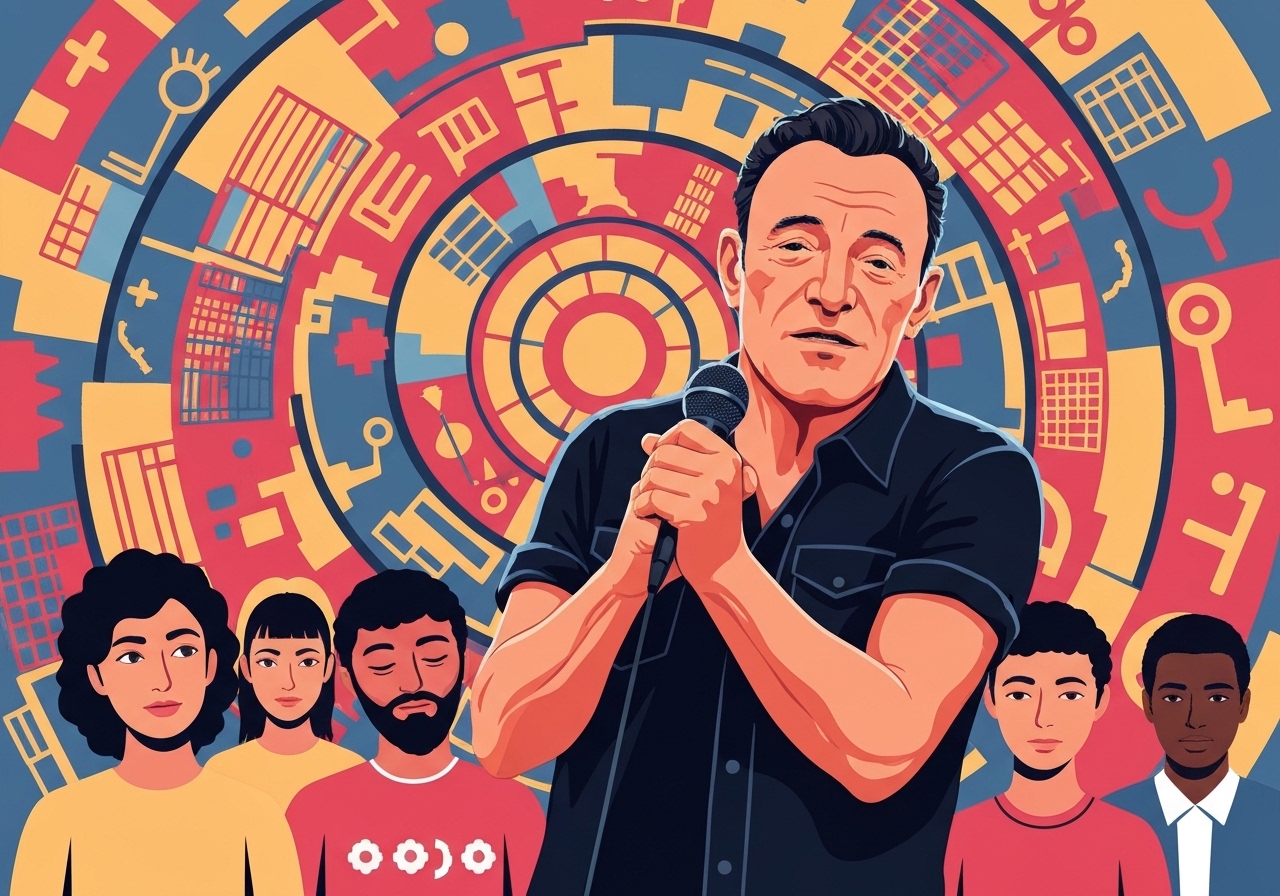
Lead: On 28 January 2026, Bruce Springsteen published a new track responding to recent federal immigration-enforcement killings in Minneapolis. The musician said he wrote and recorded the piece over a weekend and released it immediately as a direct protest to what he described as “state terror” in the city. The song is dedicated to Minneapolis residents, immigrant neighbors and the memory of Alex Pretti and Renee Good. Springsteen posted the recording on his YouTube channel and amplified the message via his social accounts.
Key Takeaways
- Release date: The song was posted on 28 January 2026 to Springsteen’s official YouTube channel and promoted via his social media accounts.
- Named victims: The track explicitly commemorates Alex Pretti and 37-year-old Renee Good, both killed in recent encounters with federal immigration agents in Minneapolis.
- Speed of production: Springsteen said he wrote the song on Saturday, recorded it the next day and released it the following day, emphasizing immediacy in his response.
- Explicit criticism: Lyrics and accompanying commentary single out Department of Homeland Security operations, with Springsteen characterizing the enforcement presence in sharply critical terms.
- Recent stage remarks: Earlier in January 2026, at a New Jersey concert, Springsteen criticised increased immigration enforcement and dedicated “The Promised Land” to Renee Good.
- Longstanding stance: Springsteen has publicly opposed Donald Trump since 2016 and has repeatedly used performances to make political statements.
- Public pushback: President Donald Trump has previously dismissed Springsteen with derogatory remarks after the musician’s political comments.
Background
Bruce Springsteen’s career has long mixed music with public commentary; from working-class anthems in the 1970s and 1980s to pointed onstage remarks in recent years, political expression is part of his public persona. The recent Minneapolis episode—fatal encounters between federal immigration agents and two local residents—has intensified a national debate over the scale, tactics and oversight of federal immigration enforcement. Minneapolis, which has a complex recent history of policing controversies and protests, has become a focal point for advocates calling for greater accountability.
In the weeks before the song’s release, Springsteen spoke from the stage about an increased federal presence in American cities, using strong language to condemn tactics he said threatened democratic norms. His decision to name victims and dedicate music to them follows a pattern in which artists respond rapidly to unfolding events through new material or onstage statements. The combination of instantaneous digital distribution and established celebrity amplifies such responses beyond local news cycles.
Main Event
On 28 January 2026 Springsteen uploaded a piece titled Streets of Minneapolis to his YouTube channel and shared a short message on social media explaining the song’s origin and intent. He told followers that he had written the song the prior Saturday, recorded it the next day and released it immediately as a reaction to what he described as “state terror” in Minneapolis. He dedicated the song to the city’s residents, immigrant neighbors and the memory of the two people killed in the recent federal enforcement actions.
The song’s lyrics depict scenes of civil unrest and name the federal enforcement presence as a central force in the narrative; lines reference violent footprints and the deaths of Alex Pretti and Renee Good on snow-lined streets. In social posts accompanying the release Springsteen closed with a brief exhortation to listeners to “stay free,” framing the work as both memorial and protest. The immediacy of the recording — conceived and published within days — underscores the artist’s intent to respond in real time rather than through a delayed statement.
Springsteen has not limited his response to recorded music. Earlier this month at a concert in New Jersey he criticised what he called aggressive immigration policing and dedicated his 1978 song “The Promised Land” to Renee Good, a dedication that preceded the new release. The pattern of onstage protest, recorded response and public messaging aligns with his long-standing use of platforms to weigh in on civic issues.
Analysis & Implications
Springsteen’s intervention intensifies public scrutiny of federal immigration enforcement tactics, particularly in cities with recent high-profile policing controversies. A figure of his stature transforms a local tragedy into a national cultural conversation, potentially increasing pressure on local and federal authorities to clarify rules of engagement and accountability processes. For Minneapolis officials and investigators, the heightened attention may accelerate calls for independent review or congressional inquiry.
Politically, the release arrives at a moment when immigration enforcement is a salient national issue. Cultural interventions by prominent artists can shift public narratives: they can mobilize sympathetic constituencies, influence media coverage and shape the language used in political debates. Opponents may dismiss such interventions as partisan, but they nonetheless alter the salience of the issue in the public sphere.
For law enforcement oversight, the practical implication is a renewed demand for transparency about operational orders, use-of-force protocols, and interagency coordination. If the song and its attendant publicity increase demonstrations or public pressure, municipal leaders and federal agencies may face intensified calls for immediate briefings, policy reviews or changes in engagement rules. Legal proceedings and official investigations remain the primary venues for determining accountability.
Comparison & Data
| Year | Springsteen work or action | Primary focus |
|---|---|---|
| 1978 | The Promised Land (album-era) | Working-class themes and aspiration |
| 1984 | Born in the U.S.A. era | Veterans’ struggles and national critique |
| 2026 | Streets of Minneapolis (new single) | Immediate protest against federal immigration actions |
The table places the new release in the arc of Springsteen’s public-facing work: older songs addressed social and economic issues through broad narratives, while Streets of Minneapolis is notable for its rapid composition and explicit naming of contemporary events. Digital distribution allows artists to publish targeted responses within days, shortening the interval between incident and cultural reaction and thereby intensifying media and civic response cycles.
Reactions & Quotes
Springsteen framed the release as an urgent artistic response and offered a succinct closing line on social media that many supporters echoed online.
“Stay free.”
Bruce Springsteen (social post, 28 January 2026)
At a recent concert he used forceful language to characterise federal tactics in American cities, language that drew widespread attention and renewed debate.
He accused enforcement measures of resembling “Gestapo tactics” in the context of increased immigration policing.
Bruce Springsteen (concert remarks, January 2026)
The president has previously dismissed Springsteen’s public criticism with brief, disparaging comments, illustrating how cultural interventions quickly become politicised.
“Highly overrated,” the president said in response to Springsteen’s criticisms in earlier exchanges.
Donald J. Trump (public remark, prior years)
Unconfirmed
- Exact chain of command: Publicly available accounts have not yet fully documented the operational orders or chain of command for the agents involved.
- Motivation and intent: Whether the actions that led to the deaths were driven by specific local directives or broader federal policy remains under investigation.
- Ballistic and forensic details: Full forensic conclusions about the circumstances of the shootings have not been released publicly.
Bottom Line
Bruce Springsteen’s rapid release of Streets of Minneapolis turns a local tragedy and debate over federal immigration enforcement into a national cultural flashpoint. By naming victims and issuing a direct critique of enforcement tactics, the musician has intensified public scrutiny and widened the conversation beyond legal and local-government channels to include cultural and electoral arenas.
What happens next is chiefly in the hands of investigators, local officials and federal overseers: independent reviews and formal inquiries will determine legal accountability, while the heightened public debate may influence policy responses and oversight priorities. For readers, the central takeaway is that a high-profile cultural response accelerates attention and can shape the political and civic framing of unfolding events.
Sources
- The Guardian — news report