
Lead
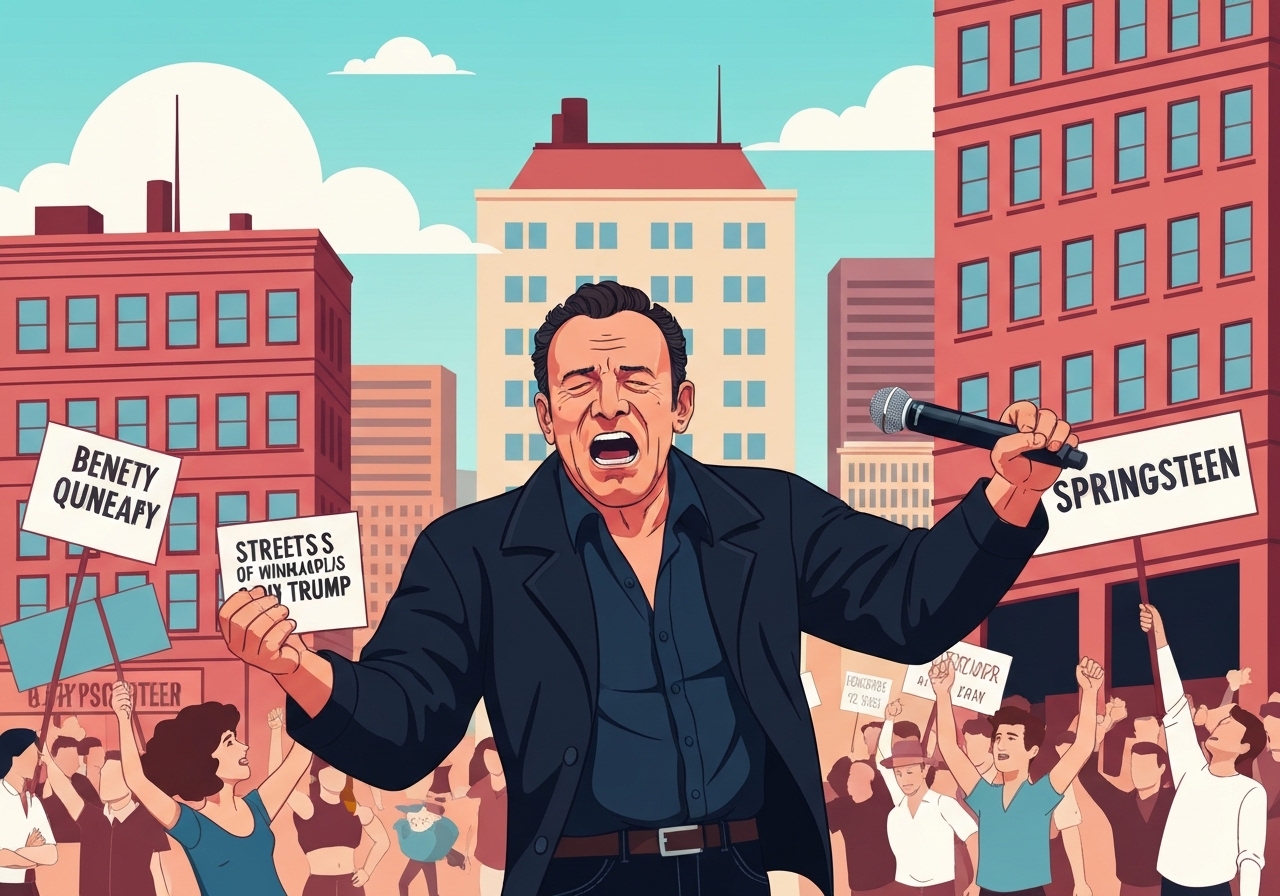
Bruce Springsteen released a new protest song, “Streets of Minneapolis,” this Wednesday, dedicating it to Minneapolis residents and to two people killed during a federal immigration enforcement operation. He said he wrote and recorded the track over the weekend in reaction to a second deadly shooting by federal agents in the city. The song names the victims, Alex Pretti and Renee Good, and condemns the enforcement presence that Springsteen described in sharply critical terms. The release follows other artistic responses and comes ahead of benefit events organized in Minneapolis.
Key Takeaways
- Springsteen released “Streets of Minneapolis” on Wednesday, saying he wrote and recorded it over the preceding weekend in response to a second deadly federal immigration-agent shooting in Minneapolis.
- The singer dedicated the song to the people of Minneapolis, immigrant neighbors and to the memory of Alex Pretti and Renee Good, the two victims named in his statement.
- The lyrics depict a city under occupation and include Springsteen’s characterization of federal agents as “King Trump’s private army,” a line he used in his release.
- The musical arrangement moves from solo acoustic guitar to a fuller band sound, includes a harmonica solo and ends with chants of “ICE Out!”.
- The White House, via spokesperson Abigail Jackson, criticized the song as irrelevant and defended federal immigration enforcement cooperation with local authorities.
- English singer-songwriter Billy Bragg released his own Minneapolis tribute, “City of Heroes,” the day after Pretti’s death; other performers are taking part in a benefit concert at First Avenue this Friday.
- Minneapolis venues and artists are organizing a benefit, with proceeds directed to the families of Good and Pretti, signaling sustained local mobilization.
Background
Minneapolis has been the focus of heightened federal immigration enforcement after two separate deadly encounters between federal immigration agents and civilians; the latest fatal shooting prompted fresh public outcry. These incidents have reignited long-running debates over the scope of federal immigration operations, local policing priorities and community safety in cities with sizable immigrant populations. Historically, Minneapolis has hosted robust activist networks and a local culture of protest that frequently draws national attention when incidents involving law enforcement occur.
Artists and musicians have often responded to U.S. political controversies with benefit concerts and protest songs—examples range from 20th-century civil-rights anthems to modern solidarity events. Springsteen’s move follows this tradition: prominent musicians have used releases and live events to direct funds, highlight victims and shape public conversation. At the same time, federal officials typically defend enforcement actions as public-safety measures, framing them as partnerships with state and local authorities rather than unilateral operations.
Main Event
Springsteen said he recorded “Streets of Minneapolis” quickly after learning of the second fatal shooting involving federal immigration agents in the city. The song’s lyrics portray Minneapolis as a place under strain: he sings, in part, “Oh our Minneapolis, I hear your voice… We’ll take our stand for this land and the stranger in our midst,” lines that explicitly center solidarity with immigrants. Springsteen also uses stark language to describe the federal presence, calling it “King Trump’s private army” in his statement accompanying the release.
The track’s arrangement starts with Springsteen’s voice and acoustic guitar, gradually adding band elements and a harmonica solo before concluding with collective chants of “ICE Out!”. The sonic arc is built to shift an intimate statement into an organized protest sound. The timing and tone link the song to recent local activism and to other musicians who have released tributes or protest songs in the same period.
In immediate response, the White House spokesperson Abigail Jackson pushed back sharply, saying the administration is focused on encouraging cooperation between federal officers and state and local Democratic officials to remove what it called “dangerous criminal illegal aliens,” and dismissed the song as containing irrelevant opinions and inaccurate information. Local event organizers countered by announcing a benefit concert at Minneapolis’ First Avenue set for Friday, with artists including Tom Morello, Rise Against, Al Di Meola and Ike Reilly; they said proceeds will aid the families of Good and Pretti.
Analysis & Implications
Springsteen’s rapid release underscores how cultural figures can accelerate public attention in the wake of violent incidents involving law enforcement. A high-profile artist framing the episode as part of a broader pattern of state action elevates the story beyond local or policy circles into national cultural conversation. That amplification can shape public sentiment, influence local fundraising and shift media coverage toward civil-rights framing and calls for accountability.
Politically, the exchange illustrates polarization over immigration enforcement. Federal officials frame operations as public-safety initiatives; critics view aggressive enforcement actions as excessive and harmful to immigrant communities. Springsteen’s framing as an occupation and his naming of victims personalize the consequences, intensifying pressure on political leaders to justify tactics and review oversight mechanisms for federal agents operating in municipalities.
Economically and socially, protest-driven benefits and solidarity concerts can provide immediate material support to affected families and sustain activist networks, but they do not, by themselves, resolve the policy disputes at issue. In the medium term, continued public scrutiny—fueled by songs, statements and concerts—could prompt local elected officials, prosecutors or federal agencies to open reviews, change protocols or pursue settlements, depending on investigative outcomes.
Comparison & Data
| Event | Timing / Note |
|---|---|
| Springsteen release: “Streets of Minneapolis” | Released Wednesday; written/recorded over the prior weekend |
| Billy Bragg: “City of Heroes” | Written Sunday and released the following day; cited Pretti’s killing as inspiration |
| First Avenue benefit concert | Scheduled for Friday; proceeds to families of Good and Pretti |
The table places the artistic responses and benefit event alongside the enforcement incidents that precipitated them. While cultural responses are rapid, formal investigatory and legal timelines typically stretch longer: criminal or administrative inquiries into use-of-force incidents can take weeks to months, or longer if federal civil-rights or departmental reviews are opened.
Reactions & Quotes
“It’s dedicated to the people of Minneapolis, our innocent immigrant neighbors and in memory of Alex Pretti and Renee Good.”
Bruce Springsteen (statement)
Springsteen’s short statement names the two victims and frames the song as a dedication to immigrant neighbors and the community of Minneapolis. He offered a direct critique of the federal presence in his accompanying remarks.
“The Trump Administration is focused on encouraging state and local Democrats to work with federal law enforcement officers on removing dangerous criminal illegal aliens from their communities — not random songs with irrelevant opinions and inaccurate information.”
Abigail Jackson (White House spokesperson)
The White House framed the administration’s actions as centred on public safety and cooperation with local officials, characterizing the song as irrelevant and factually off-base.
“We are coming to Minneapolis where the people have heroically stood up against ICE… this terrible rising tide of state terror.”
Tom Morello (statement announcing benefit)
Organizers and performers at the benefit event used strong language to describe their motivation, linking the concert to local resistance and fundraising for the victims’ families.
Unconfirmed
- Whether any formal federal investigation has changed its scope or timeline in direct response to Springsteen’s song is not confirmed by available reporting.
- Detailed operational justifications from the federal agency involved in the shootings have not been released publicly in full; many operational facts remain under review.
- It is unconfirmed whether additional nationwide enforcement actions are planned that mirror the Minneapolis operations beyond statements of policy.
Bottom Line
Springsteen’s “Streets of Minneapolis” is both a cultural intervention and a public statement that amplifies local outrage over two fatal encounters involving federal immigration agents. By naming victims and using stark language to describe the federal presence, the song adds pressure on officials to account for tactics and outcomes. The White House response underscores the political polarization that surrounds immigration enforcement, suggesting that the debate will remain contentious as local activism and national messaging collide.
In practical terms, the most immediate effects are likely to be heightened public attention, fundraising support for victims’ families and intensified scrutiny of federal operations in Minneapolis. Longer-term consequences—policy changes, oversight reviews or legal outcomes—will depend on investigatory findings and the balance of political pressure from local communities, elected officials and federal agencies.