
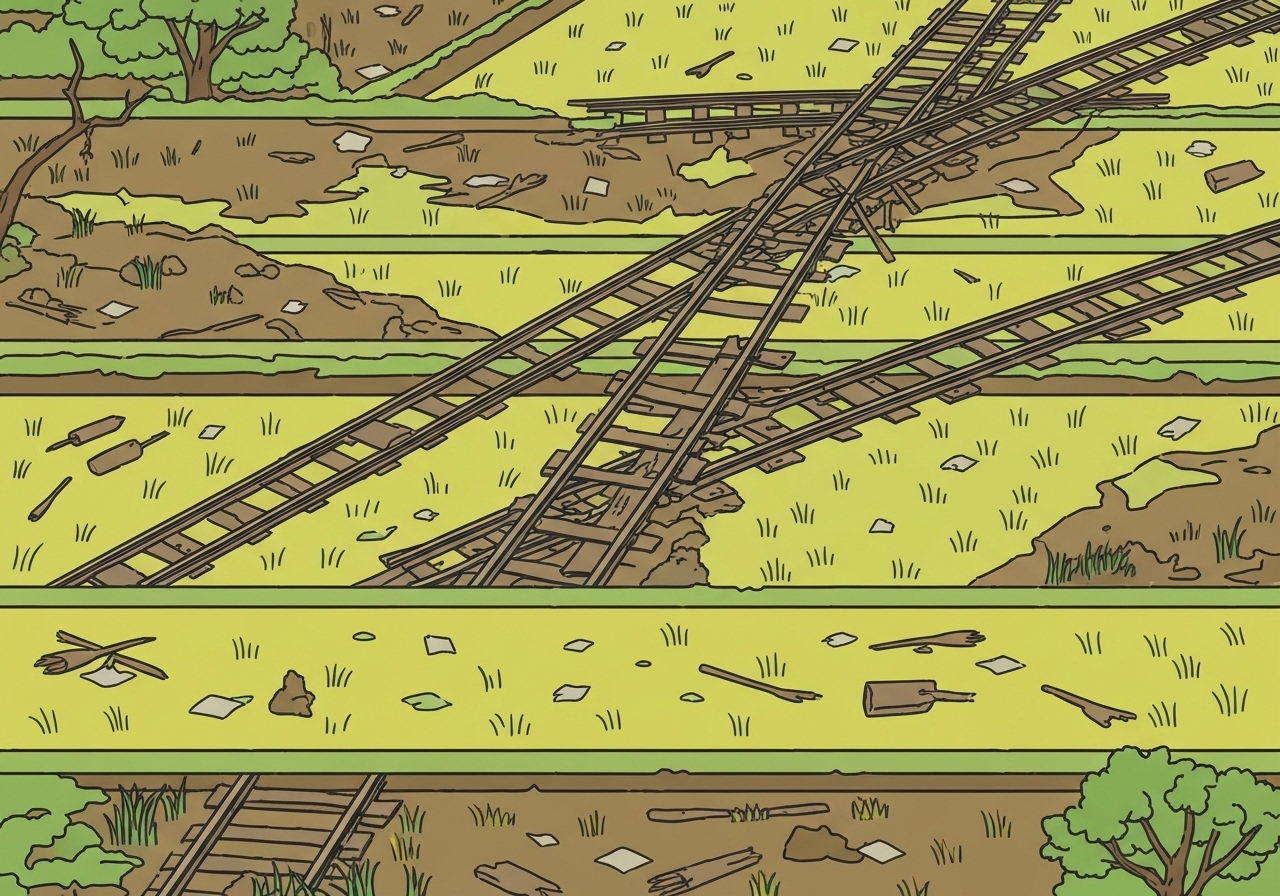
Lead: Cyclone Ditwah left a trail of flooding and destruction across Sri Lanka in early December 2025, with officials reporting more than 480 confirmed deaths as waters recede. Initial government estimates place reconstruction costs between $6 billion and $7 billion, an onerous burden for a nation still recovering from a 2022 economic collapse and decades of conflict. Widespread damage — from washed-out bridges and damaged dams to ruined rice paddies and severed rail links — has isolated communities and complicated relief efforts. International aid pledges remain uncertain as authorities await formal damage assessments led by the World Bank.
Key Takeaways
- More than 480 people have been found dead after Cyclone Ditwah struck Sri Lanka in late November–early December 2025; recovery and identification efforts continue.
- Officials estimate reconstruction costs could reach $6–7 billion, based on preliminary surveys of infrastructure, agriculture and housing.
- Major transport arteries were hit: multiple rail lines are out of service and key roads and bridges were washed away, disrupting supply chains and relief deliveries.
- Large stretches of paddy land were submerged or eroded, threatening local food supplies and farmers’ livelihoods in the short term.
- Sri Lankan leaders have held talks with friendly countries and funding agencies, but most donors have signaled they will wait for the World Bank’s formal damage assessment.
- United Nations officials warned of declining global humanitarian funding, describing current conditions as “an age of indifference,” complicating prospects for large-scale external support.
Background
Sri Lanka entered this disaster still fragile after a severe economic collapse in 2022 that depleted foreign reserves, triggered shortages and prompted heavy borrowing. The island nation also continues to manage long-term recovery from a decades-long civil war that formally ended in 2009; the combined legacy of conflict and fiscal strain has limited public buffers for large-scale reconstruction. Agriculture — particularly rice production in lowland paddy systems — supports millions of rural households and accounts for a significant share of domestic food security and local employment.
At the same time, Sri Lanka’s transport infrastructure has been progressively modernized in recent years, with railways long serving as a backbone for both passenger travel and freight. Damage to rail corridors and rural roads will therefore have ripple effects beyond immediate repair costs, slowing movement of goods and services across regions already coping with economic stress. International humanitarian funding has tightened globally in 2025, leaving governments like Sri Lanka’s facing difficult choices between emergency response and longer-term rebuilding.
Main Event
As floodwaters ebb, communities in the north and central provinces are surveying widespread destruction. In Mannar and other hard-hit districts, residents have begun recovery and funeral rites after the fatalities were recorded. Landslides in hill country and flash floods in lowlands swept away homes, drowned crops and undermined riverbanks and small dams, creating secondary hazards for downstream settlements.
Transport networks suffered heavy damage: several rail sections were ruptured or buried under debris, and key bridges and arterial roads were either blocked or collapsed, cutting off affected villages from larger towns. Repair teams have prioritized reopening routes for humanitarian deliveries, but large-scale reconstruction of rail and road links will require engineering surveys, significant funding and months — if not longer — to complete.
The government dispatched senior advisers to meet donor nations and multilateral agencies. Duminda Hulangamuwa, the president’s senior economics adviser, said authorities are coordinating with partners while emphasizing the need for an internationally supervised assessment to guide rebuilding. The World Bank has begun a formal appraisal of losses and damage; many potential donors have indicated they will condition major disbursements on that assessment.
Analysis & Implications
The $6–7 billion preliminary estimate represents a major fiscal shock for a country with limited fiscal space. Even when spread over several years and supported by concessional financing, the scale of reconstruction could crowd out other public investments or require fresh external borrowing. That would risk entrenching debt vulnerabilities unless a coordinated program of grants and low-cost loans is secured.
Damage to rice paddies poses immediate food-security and income risks for rural households. Depending on the timing of planting cycles and the extent of soil salinization or erosion, some fields may fail to produce for one or more seasons. Localized food shortages could increase demand for subsidized rice and expand the need for cash or in-kind assistance in the coming months.
Rail and road disruptions will also have economic spillovers: goods transport costs are likely to rise, tourism access to cultural and coastal sites may be impeded during peak season repairs, and businesses that rely on timely freight could face inventory problems. The interruption to domestic mobility may slow relief distributions, complicate shelter and health responses, and delay longer-term recovery efforts.
Geopolitically, reconstruction offers an arena for both bilateral partners and multilateral institutions to deepen ties with Sri Lanka — but global aid fatigue and a retreat by some traditional donors could leave gaps. A transparent, prioritized reconstruction plan tied to a credible assessment will be crucial to mobilize concessional finance and private-sector participation while minimizing corruption and misallocation risks.
Comparison & Data
| Damage Category | Observed Impact |
|---|---|
| Rail lines | Multiple sections ruptured or obstructed; key corridors closed |
| Rice fields | Large paddy areas submerged or eroded; planting cycles at risk |
| Roads & bridges | Several arterial roads washed away; communities isolated |
| Dams & irrigation | Small dams breached; irrigation networks damaged |
The table summarizes observed damage categories from preliminary field reports. While costs are still being compiled, initial official estimates place the aggregate reconstruction bill between $6 billion and $7 billion. Accurate prioritization of repairs — reopening lifeline roads and restoring irrigation before full infrastructure rebuilding — will affect short-term relief outcomes and medium-term economic recovery.
Reactions & Quotes
“We have met with major funding agencies and friendly countries; many are aiding relief but will wait for an official assessment,”
Duminda Hulangamuwa, Senior Economics Adviser to the President (paraphrased)
This statement summarized government efforts to coordinate immediate assistance while signaling that larger reconstruction pledges will depend on external validation of damages.
“An age of indifference,”
United Nations officials (description cited in reporting)
United Nations officials used this phrase to describe a global slowdown in humanitarian contributions, a backdrop that could complicate Sri Lanka’s fundraising for reconstruction.
Unconfirmed
- The final nationwide reconstruction cost is not yet confirmed; $6–7 billion is an early official range pending the World Bank assessment.
- Exact totals of missing persons and unregistered displaced households remain fluid as search and registration continue in remote areas.
- Details on specific donor pledges, timelines and conditionalities for large-scale funding have not been finalized.
Bottom Line
Cyclone Ditwah’s immediate human toll — more than 480 confirmed dead — is compounded by large-scale damage that threatens food security, transport connectivity and fiscal stability. The initial $6–7 billion estimate underscores the scale of rebuilding required, but the final bill and funding mix will depend on the World Bank’s assessment and the willingness of international partners to provide concessional finance or grants.
For Sri Lanka, effective recovery will hinge on prioritizing lifelines (roads, bridges, irrigation), transparent use of funds and rapid support to farming households to preserve the next planting season. Observers should watch the World Bank report, donor responses, and the government’s reconstruction plan for signals about the pace and equity of recovery.
Sources
- The New York Times — news reporting from Mannar and other affected regions (news media).