
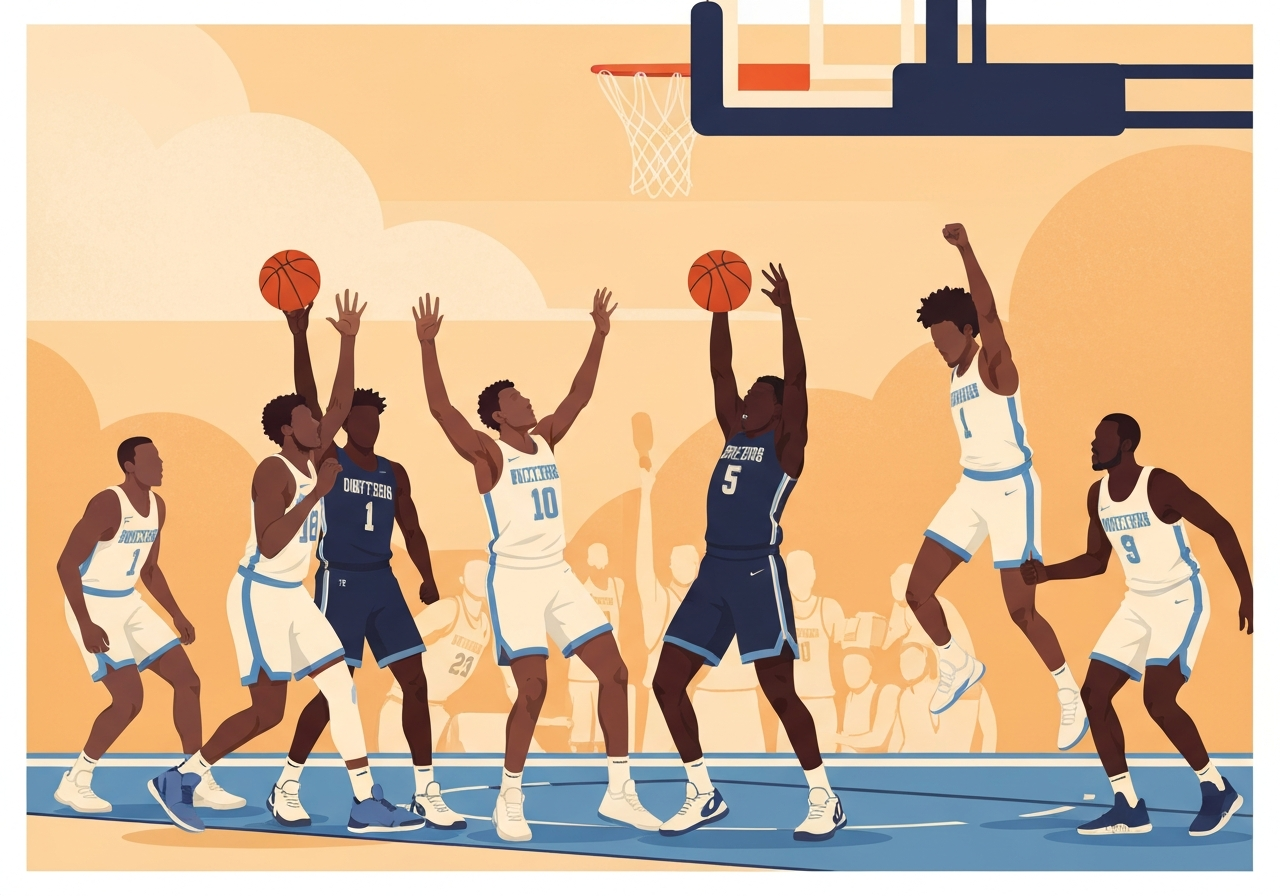
San Diego — St. John’s snapped a 27-year Sweet 16 drought on March 22, 2026, when Dylan Darling, scoreless for the night, drew up a last-play and sank a buzzer-beating shot with 3.9 seconds remaining to defeat Kansas and advance. The victory capped a chaotic second-round game in which both teams traded scoring droughts and defensive adjustments, and it marked a milestone in coach Rick Pitino’s third season in charge. Fans who had long remembered the program for its struggles flooded the court, and players framed the moment as proof the program is returning to relevance. Pitino, measured as ever, praised the result but cautioned that the run is not finished.
Key takeaways
- St. John’s reached the Sweet 16 for the first time since 1999, ending a 27-year gap in the program’s March success.
- Dylan Darling, who had logged zero points before the final possession, hit the game-winning field goal with 3.9 seconds left.
- Coach Rick Pitino is in his third season at St. John’s; the program had 17 losing conference seasons since 1999 and passed through six head coaches in that span.
- Kansas entered the game as a program with recent disappointment — missing the second weekend for the fourth straight season — but forced contested perimeter looks that shaped St. John’s offensive approach.
- Bryce Hopkins, who had 25 three-pointers through the first 35 games this season, drilled 6 of 9 from deep in the matchup.
- Both teams endured long scoring droughts: Kansas went 7:50 without a field goal in the first half, while St. John’s had nearly a six-minute scoring lapse in the same period.
- The game was widely previewed as a marquee second-round showdown between Hall of Fame coaches and contrasting program arcs.
Background
Since reaching the Sweet 16 in 1999, St. John’s has largely been defined by underperformance in the Big East and on the national stage. Across the subsequent 27 years the program recorded 17 conference seasons with losing records and rotated through six head coaches, including high-profile hires that failed to restore consistent success. The combination of inconsistent leadership, recruiting misses and waning local support turned Madison Square Garden from a regular haven of collegiate energy into a venue that sometimes felt disconnected from the program’s potential.
Rick Pitino was hired with an explicit mandate to rebuild the culture and competitive identity of St. John’s. Now in his third season, Pitino has guided the team back into the national conversation by changing defensive schemes, prioritizing toughness on the glass and pressing for a more varied offensive attack. The Sweet 16 berth is widely seen as a tangible data point in that rebuild, though Pitino himself has tempered broad conclusions about the program’s long-term status. The stakes for March are especially high for programs trying to reverse long trends, because single-game outcomes alter recruitment visibility and donor momentum nearly overnight.
Main event
The second-round matchup in San Diego played out as an uptempo, error-prone affair that seldom resembled a polished tournament classic. Early and often both teams missed consecutive shots; Kansas experienced a 7:50 stretch without a field goal in the first half while St. John’s suffered a nearly six-minute scoreless span that left fans nervously quiet. Defensive adjustments forced St. John’s out to the perimeter, where the Red Storm were less proven — a choice Kansas made repeatedly to limit drives to the rim and trips to the free-throw line.
Late in the game the score tightened and the tension rose. With the clock draining toward the final seconds and the scoreboard tied, Pitino and his players discussed options. Dylan Darling, who had not scored, suggested the play called ‘Power’ — a direct drive strategy designed to attack the rim immediately. Pitino agreed, perhaps surprised by the confidence of a player struggling offensively all night.
Darling executed the play, attacking the basket with force, releasing the shot as the horn neared. He fell to the floor as the ball left his hands and, by his account, did not watch it go through the net; he only heard the arena erupt. Teammates sprinted from the bench to celebrate; Pitino remained composed, walking to the handshake line while acknowledging the game’s emotional weight. The moment was not only a single play but the culmination of years of incremental rebuilding.
Analysis & implications
Short term, the win vaults St. John’s into the Sweet 16 and extends their March journey, increasing exposure for current players and the program. Tournament runs generate immediate recruiting benefits, increase donor enthusiasm and can transform perceptions in a single weekend; for a program emerging from decades of inconsistency, those downstream effects matter more than an isolated box score. Pitino’s presence and the timing of this result make St. John’s a team to watch for seeding and recruiting through the offseason.
Strategically, the game highlighted a persistent tension in St. John’s identity: the roster has been built to attack the rim and earn free throws, but Kansas’ defensive contesting forced perimeter attempts. Bryce Hopkins’ 6-of-9 three-point performance demonstrated the potential upside of diversified shooting; if St. John’s can sustain higher-quality looks from deep, opponents will be less able to collapse and clog interior lanes. The coaching staff’s emphasis on more outside shooting is likely to be a focus in practice and recruiting evaluations after this game.
For Kansas, the loss continues a recent pattern of early NCAA exits; four straight seasons without advancing to the tournament’s second weekend raises questions about roster construction and late-game execution. Nationally, the result reorders a slice of the bracket: teams that might have expected to prepare for a Kansas matchup now face a resurgent St. John’s with momentum. That ripple affects bracket predictions, television narratives and the national conversation around program trajectories.
Comparison & data
| Metric | St. John’s (1999–2026) | Game/Season Data |
|---|---|---|
| Years since last Sweet 16 | 27 | 1999 → 2026 |
| Seasons with losing conference record since 1999 | 17 | Program instability noted |
| Head coaches since 1999 | 6 | Includes Lavin, Mullin, Anderson, Roberts, Clark, Pitino |
| Bryce Hopkins 3P (season → game) | 25 through 35 games → 6 of 9 vs Kansas | Spike in shooting output in marquee moment |
| Kansas recent tournament trend | Missed second weekend 4 straight seasons | Questions on late-tournament planning |
The table summarizes program trends and immediate game statistics to place this victory in context. St. John’s measurable turnaround is incremental but visible across coaching stability, marquee wins and newfound ability to withstand tournament pressure. Individual shooting outbursts like Hopkins’ are important signals that role players can change a single game’s arc.
Reactions & quotes
Players, coaches and fans responded in ways that reflected both relief and the recognition of a longer journey still underway.
“I probably don’t deserve this. I was pretty bad all night long.”
Dylan Darling
Darling tempered celebration with humility, immediately framing the shot as a team accomplishment and expressing surprise at his own late-game heroics. His comment underlines how single plays can override an otherwise quiet personal performance in tournament lore.
“I’ve been on winning at the buzzer and losing at the buzzer.”
Rick Pitino
Pitino’s short reflection referenced his long career and the cyclical nature of March outcomes. He acknowledged the win’s significance but was careful not to declare the program fully restored.
“It means a lot to New York, Johnnies Nation. They haven’t been here since 1999.”
Zuby Ejiofor
Ejiofor connected the victory to the fanbase and local history, emphasizing how the result resonates beyond the roster and into the program’s community and identity.
Unconfirmed
- Whether this Sweet 16 run will produce immediate top-tier recruiting commitments is not yet confirmed; early interest typically follows marquee wins but commitments take time.
- Long-term assessments of Pitino’s tenure and legacy at St. John’s remain open; a single tournament run does not conclusively settle program trajectory.
Bottom line
St. John’s victory in San Diego is both symbolic and practical: it ends a 27-year absence from the Sweet 16 and provides momentum that can be leveraged for recruiting, fundraising and media attention. The buzzer-beater by Dylan Darling will stand as a defining image for this program’s renewed relevance, but sustaining success will depend on roster development and consistent execution.
Rick Pitino’s composed response after the game reflected a coach who values process as much as result; he celebrated the moment while signaling that the work to re-establish St. John’s as a regular contender is ongoing. For fans and stakeholders, the coming weeks—how the team performs in the next round, and how the administration capitalizes on this surge—will determine whether this night is remembered as a turning point or a singular triumph.
Sources
- The New York Times (news report)
- The Athletic (live coverage/ sports media)
- NCAA / March Madness (official tournament information)