
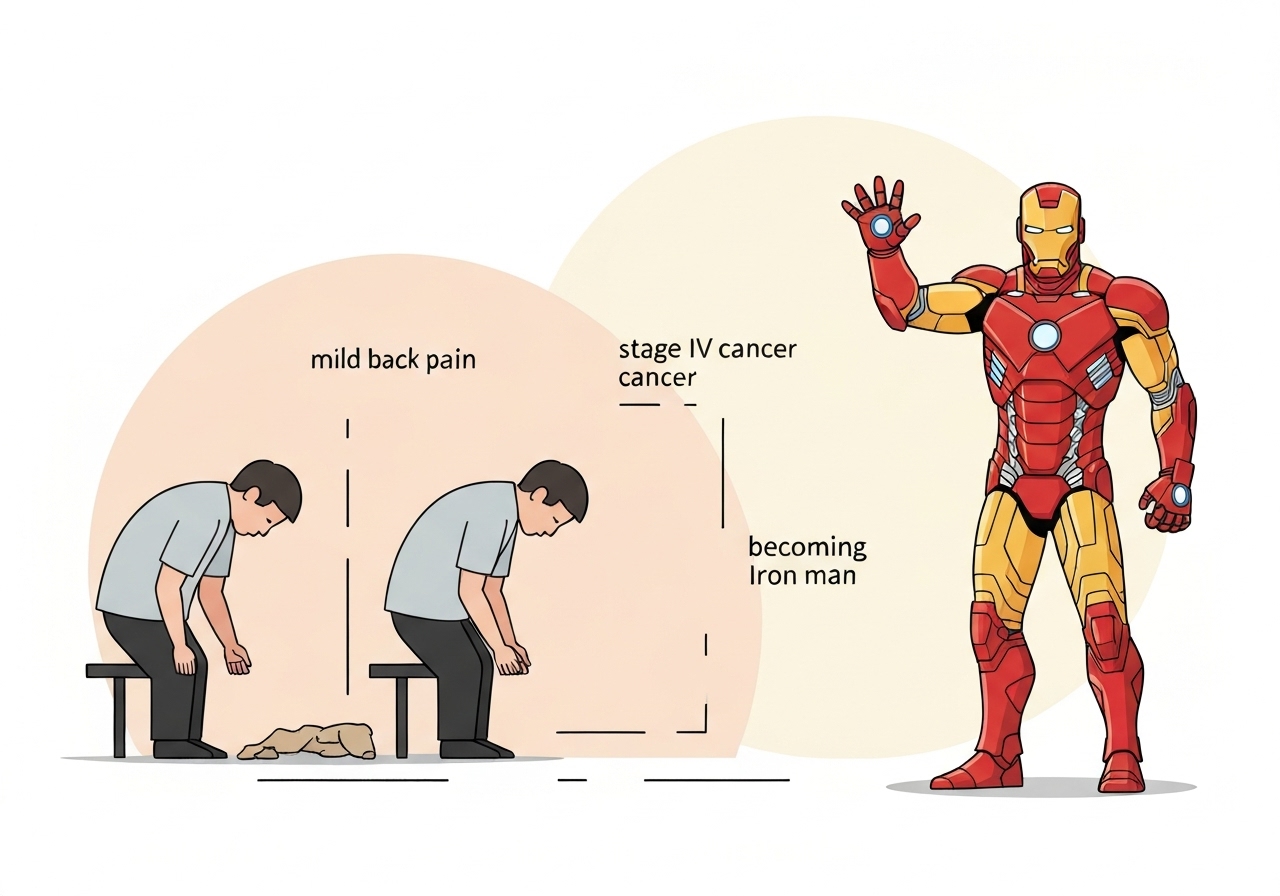
In January 2024 a persistent back ache and a lingering cough led 36-year-old endurance athlete and father Kevin Humphrey to medical testing that culminated in a May 2024 diagnosis of Stage IV non-small cell adenocarcinoma. After targeted genomic testing identified a driver mutation, physicians combined immunotherapy and chemotherapy to shrink the tumor, making surgery possible by mid-September 2024. Following resection of most of the tumor and months of rehabilitation, Humphrey completed the Ironman 70.3 Michigan on Sept. 14, 2025, then ran the Chicago Marathon on Oct. 12, 2025. Doctors report a complete response to therapy with no current evidence of disease; he continues on maintenance immunotherapy with ongoing surveillance.
Key Takeaways
- Symptoms began in January 2024 as persistent back pain and cough; an initial pneumonia diagnosis did not resolve his symptoms.
- Second-opinion testing at Northwestern Medicine in May 2024 found a tumor compressing the left bronchus and confirmed Stage IV non-small cell adenocarcinoma.
- Genomic testing identified a driver mutation, enabling targeted immunotherapy plus chemotherapy that made the tumor operable by August 2024.
- Surgery in mid-September 2024 removed roughly half of his left lung; recovery included broken ribs and a long rehabilitation phase.
- Humphrey finished Ironman 70.3 Michigan on Sept. 14, 2025 (411th of ~1,600 athletes) in under 5.5 hours and later completed the Oct. 12, 2025 Chicago Marathon among ~53,000 participants.
- Clinicians report a complete response with no evidence of disease on recent scans; Humphrey remains on immunotherapy with few side effects.
- The Cleveland Clinic figure cited for 5-year survival at comparable disease extent is 37%, underscoring how individualized molecular therapy can change outlooks.
Background
Lung cancer historically affects older people and smokers, but clinicians have documented a rising subset of younger patients without tobacco exposure diagnosed with adenocarcinoma. Experts say this shift has been associated with higher rates of actionable genomic changes — so-called driver mutations — that can be targeted by newer therapies. The cause of the apparent increase in young, non-smoking lung cancer patients is not settled; investigators point at environmental exposures, changing diagnostics and other lifestyle factors as possible contributors.
When symptoms are subtle — a cough, unexplained pain or presumed pneumonia that does not resolve — diagnosis can be delayed. For patients like Humphrey, who maintained a high level of fitness and had no family history of lung cancer, lung malignancy was not an early consideration. That gap between symptom onset and cancer confirmation is one reason clinicians emphasize re-evaluation and second opinions for persistent, unexplained respiratory or thoracic symptoms.
Main Event
Humphrey first noticed relentless back pain in January 2024 and a cough that lingered after a treatment for pneumonia. A CT scan revealed an abnormality in the left lung; an initial biopsy returned inconclusive, prompting Humphrey to seek care at Northwestern Medicine in Chicago in May 2024. A bronchoscopy then showed a tumor compressing the left side of his windpipe, and subsequent pathology confirmed Stage IV non-small cell adenocarcinoma.
Tumor genomic profiling identified a driver mutation that clinicians judged targetable. Northwestern oncologist Dr. Daniel Dammrich and Humphrey pursued a rapid plan of immunotherapy followed by summer 2024 chemotherapy intended to reduce tumour burden. By August 2024 the tumor had shrunk sufficiently to permit surgical resection; surgeons removed most of the cancer at an operation in mid-September 2024 that necessitated taking about half of his left lung.
Postoperative recovery was arduous: broken ribs, a large incision and severe deconditioning meant Humphrey could barely walk at first and running was impossible for months. He and his care team set progressive rehabilitation goals and Humphrey used the prospect of the Ironman scheduled a year and a day after surgery — Sept. 14, 2025 — as motivation for steady rehabilitation.
At the Ironman Humphrey completed the mile swim, 56.1-mile bike and 13.2-mile run in just under five and a half hours, finishing 411th among roughly 1,600 participants. Less than a month later on Oct. 12, 2025 he ran the Chicago Marathon, finishing in about seven and a half hours and placing 25,395th among more than 53,000 runners. Clinicians report his scans show no evidence of disease and he remains on maintenance immunotherapy.
Analysis & Implications
The Humphrey case illustrates how molecular testing can shift prognosis in advanced lung cancer. Where Stage IV disease has historically carried a poor prognosis, identification of actionable driver mutations allows targeted agents and immunotherapies that can produce deep responses. In this instance, a combination approach converted an initially inoperable tumor into one amenable to curative-intent resection, followed by ongoing systemic therapy.
At a population level, the increasing share of young, non-smoking lung cancer patients changes screening and diagnostic imperatives. Routine screening guidelines focus on older current or former heavy smokers; cases like Humphrey’s highlight diagnostic blind spots for younger patients with atypical profiles. Clinicians and health systems may need to adapt pathways for rapid re-evaluation when symptoms persist despite initial treatment.
There are broader psychosocial and functional questions about recovery after lung resection in endurance athletes. Removing substantial lung tissue raises questions about long-term respiratory capacity, exercise tolerance and quality of life. Humphrey’s return to endurance events is an encouraging individual outcome, but it should not be generalized: rehabilitation, residual lung function and treatment side effects vary widely between patients.
Finally, the case underscores the importance of multi-disciplinary care — thoracic surgery, medical oncology, rehabilitation and patient-driven advocacy. Access to specialized centers capable of genomic testing and multimodal therapy can materially affect outcomes, which raises equity concerns for patients without proximity or resources to tertiary centers.
Comparison & Data
| Stage | Typical 5‑Year Survival (Referenced) |
|---|---|
| Stage I | Higher (localized) — varies widely by source |
| Stage IV | Approximately 37% (figure cited in reporting; source: Cleveland Clinic) |
The single-row dataset above highlights a cited 37% five-year survival figure for disease at the extent reported; survival varies by tumor biology, patient factors and the availability of targeted and immunologic therapies. Humphrey’s complete response reflects how individualized molecular therapy can materially change trajectory compared with historical averages.
Reactions & Quotes
Family, clinicians and peers described the diagnosis and recovery as simultaneously frightening and galvanizing. Humphrey framed his persistence in seeking answers as decisive to reaching the correct diagnosis and care pathway.
I just knew something wasn’t right and I kept pushing until we found the cause.
Kevin Humphrey, patient
Dr. Dammrich emphasized how genomic findings changed the plan from primarily palliative to potentially curative by enabling tumor shrinkage before surgery.
Identifying a driver mutation opened options that turned a dire situation into one with realistic curative intent.
Dr. Daniel Dammrich, Northwestern Medicine (treating oncologist)
Independent experts have cautioned that causes of rising lung cancer in younger non-smokers remain uncertain and require further study.
We don’t have a definitive explanation for the increase in young non-smoking patients — multiple hypotheses remain under investigation.
Dr. Jonathan Villena‑Vargas, NewYork‑Presbyterian/Weill Cornell Medicine (thoracic surgeon, not involved in this case)
Unconfirmed
- The precise environmental or lifestyle causes behind any increased incidence of lung cancer in younger non-smokers remain unproven and are under investigation.
- Exact timing of tumor initiation is estimated by clinicians from imaging and symptoms but cannot be pinpointed; assertions that the tumor had been growing “for at least a year” are based on clinical interpretation of imaging and history.
Bottom Line
Kevin Humphrey’s case demonstrates how persistence in seeking care, rapid genomic testing and multi-modality treatment can change outcomes for some patients with advanced lung cancer. While his return to endurance racing is a powerful individual recovery story, it reflects a broader shift in oncology where molecular diagnostics and targeted therapies can convert otherwise poor prognoses into durable responses.
At the population level, the rise in younger, non-smoking lung cancer patients presents diagnostic and equity challenges: clinicians need pathways for timely re-evaluation of persistent symptoms, and health systems must expand access to molecular testing and specialized care. Ongoing research into environmental, biological and healthcare factors is essential to understand and address this trend.