
Lead
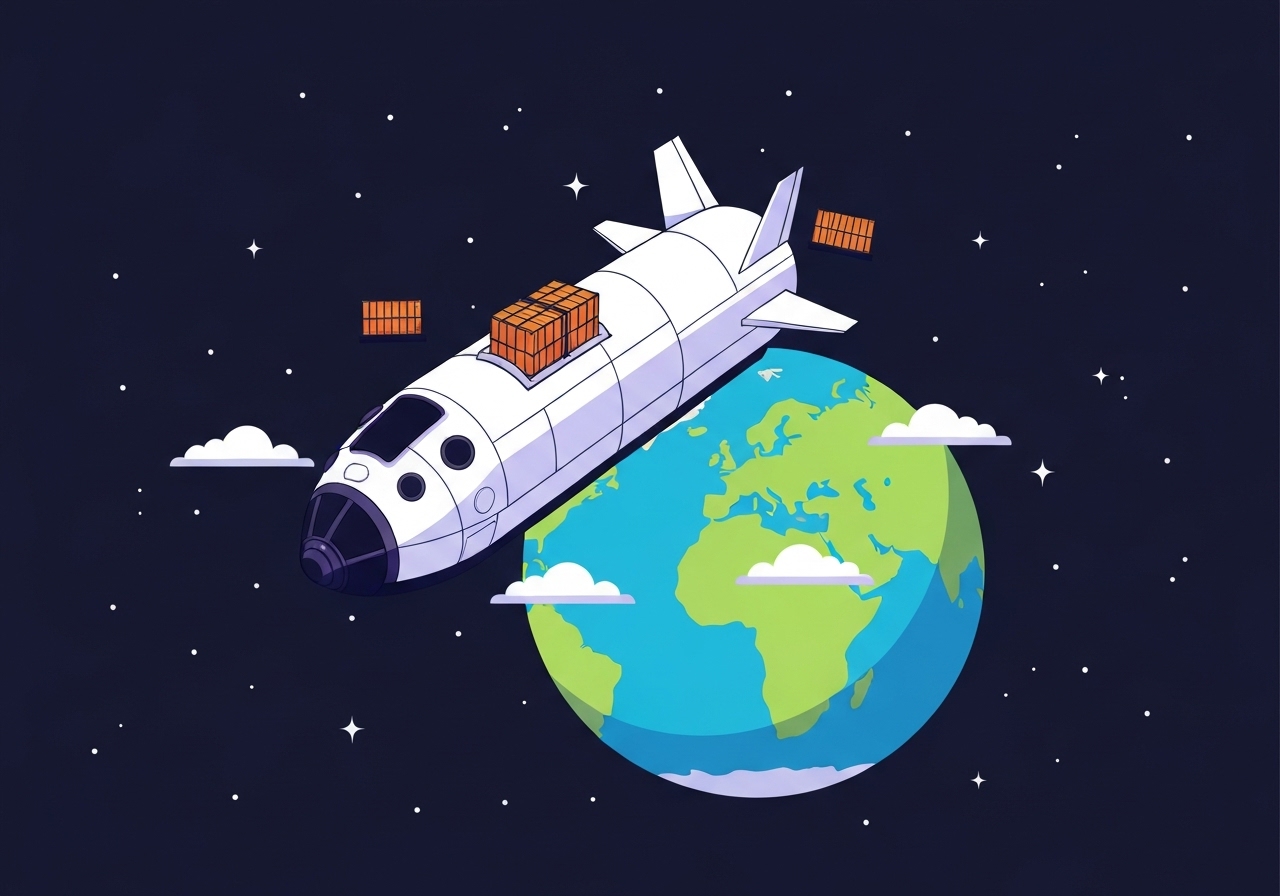
NASA announced on Monday that Boeing’s next Starliner flight to the International Space Station will carry only cargo, ending months of speculation about whether the vehicle’s next trip would be crewed. The agency and Boeing are now aiming for an uncrewed Starliner-1 launch no earlier than April 2026, contingent on finishing required tests, certifications and mission-readiness work. NASA framed the decision as part of a contract modification that shifts the originally planned crewed rotations to later flights. The change is explicitly tied to continued propulsion testing and broader station planning through 2030.
Key Takeaways
- NASA and Boeing confirmed the next Starliner flight will be cargo-only, announced Monday with no earlier-than-April-2026 target.
- The modification alters the 2014 Commercial Crew contract that previously called for six crewed Starliner missions after certification.
- Under the new plan Starliner-1 will fly uncrewed, followed by up to three additional missions prior to the ISS retirement window through 2030.
- NASA cited ongoing propulsion-system testing as a gating item for crewed certification and flight readiness.
- SpaceX, the other 2014 Commercial Crew awardee, delivered Crew Dragon crewed flights beginning in 2020; Crew-11 launched in August and Crew-12 is scheduled for February 15.
- The schedule shift prioritizes system certification and safety over accelerating a first crew rotation on Starliner.
Background
The Commercial Crew Program contracts awarded in 2014 tasked Boeing and SpaceX with delivering crewed spacecraft to the International Space Station. SpaceX met that milestone first: its Crew Dragon completed a crewed test flight in mid-2020 and quickly moved into operational missions later that year. Boeing’s Starliner has faced a longer path to crewed operations, encountering delays tied to software fixes, hardware inspections and additional verification steps.
Boeing’s Starliner was designed as a crew-capable vehicle to rotate astronauts on and off the ISS under NASA’s commercial partnership model. The original contract envisioned six crewed operational missions after the vehicle achieved certification. Over recent months, NASA and Boeing undertook more intensive testing, particularly of Starliner’s propulsion system, to resolve remaining technical and safety questions before any crewed launches.
Main Event
On Monday, NASA publicly confirmed that the Starliner-1 mission will be uncrewed and focused on delivering cargo to the station. The agency said the change follows continued ground and integrated-system testing and a mutually agreed contract modification with Boeing. The earliest target for launch is April 2026, but NASA emphasized that date depends on completing the rigorous test and certification activities still outstanding.
NASA Commercial Crew Program manager Steve Stich said the agency and Boeing are still rigorously testing the propulsion system in preparation for two potential flights next year, and framed the cargo-only decision as a step that allows more time for certification. The agency also stated that the contract change retains the flexibility to fly additional Starliner missions—up to three more—before the ISS is decommissioned.
The modification effectively reduces the number of immediate crewed rotations that the original 2014 contract anticipated for Starliner. NASA described the shift as enabling both organizations to focus on safe certification first, and to schedule crew rotations when the system is demonstrably ready and when station operations require them.
Analysis & Implications
Operationally, running Starliner-1 as a cargo mission lowers near-term risk by separating the vehicle’s final verification work from a crewed launch. That approach gives Boeing and NASA more time to validate the propulsion system and other flight-critical hardware and software without placing astronauts aboard. It also preserves a path to crewed flights once certification benchmarks are met.
Strategically, the change reshapes how NASA balances access to the ISS across commercial providers. SpaceX has established a cadence of crewed Dragon flights that supports station rotations; deferring Starliner’s first crew rotation reduces near-term redundancy but concentrates on ensuring a second crew-capable vehicle is fully validated before it begins transporting astronauts.
Financially and contractually, altering the 2014 agreement underscores how development timelines can evolve years after awards are made. Boeing will need to demonstrate sustained progress in testing to satisfy NASA’s certification criteria, and both parties will likely reassess scheduling, costs and resource allocation as Starliner moves toward certified operations.
Internationally, the timing matters for partners who rely on a stable manifest of crew and cargo services to the ISS. A later crewed debut for Starliner could shift how European, Canadian and Japanese partners plan astronaut assignments and logistics, although NASA indicated flight planning will be adjusted to station needs through 2030.
Comparison & Data
| Program | Key Milestone |
|---|---|
| NASA–Boeing Commercial Crew (2014) | Originally: six crewed Starliner missions after certification |
| Revised Starliner plan | Starliner-1 uncrewed (cargo) and up to three additional missions before ISS retirement window through 2030 |
| SpaceX Crew Dragon | Crewed test flight mid-2020; first operational crew missions in 2020; Crew-11 launched in August; Crew-12 scheduled for Feb 15 |
The table contextualizes the contractual baseline from 2014 against the newly announced plan and SpaceX’s operational tempo. While SpaceX delivered crewed capability on a compressed schedule, Boeing’s path reflects extended validation and changes to how NASA and Boeing will phase Starliner missions.
Reactions & Quotes
The agency emphasized safety and certification as drivers of the decision and provided short, targeted comments from program leadership rather than long statements.
“NASA and Boeing are continuing to rigorously test the Starliner propulsion system in preparation for two potential flights next year.”
Steve Stich, NASA Commercial Crew Program manager (official statement)
“This modification allows NASA and Boeing to focus on safely certifying the system in 2026, execute Starliner’s first crew rotation when ready, and align our ongoing flight planning for future Starliner missions based on station’s operational needs through 2030.”
Steve Stich, NASA Commercial Crew Program manager (official statement)
Public reaction has been mixed: industry observers welcomed a safety-focused approach, while some analysts noted it temporarily narrows crew-launch redundancy at a time when ISS logistics remain complex.
Unconfirmed
- The precise launch date in April 2026 remains provisional and will depend on test outcomes and certification milestones.
- The timing and manifest of the “up to three additional missions” have not been publicly scheduled and may change with station needs.
- Details about which cargo or cargo capacity Starliner-1 will carry have not been disclosed in the public announcement.
Bottom Line
NASA’s decision to designate Starliner-1 as a cargo-only mission is a deliberate move to prioritize testing and certification over accelerating a crewed debut. The agency and Boeing are signaling they prefer to complete propulsion and related verifications on the ground and in-flight without the added risk of passengers.
For the ISS and NASA’s broader crew-transport ecosystem, the change maintains a path to certified, crew-capable operations but shifts the timeline. Observers should watch forthcoming test results, NASA’s certification milestones, and mission manifests through 2026–2030 to understand when Starliner will begin regular crew rotations.
Sources
- Ars Technica — News report summarizing NASA and Boeing announcement
- NASA — Official agency statements and press materials (official source)