
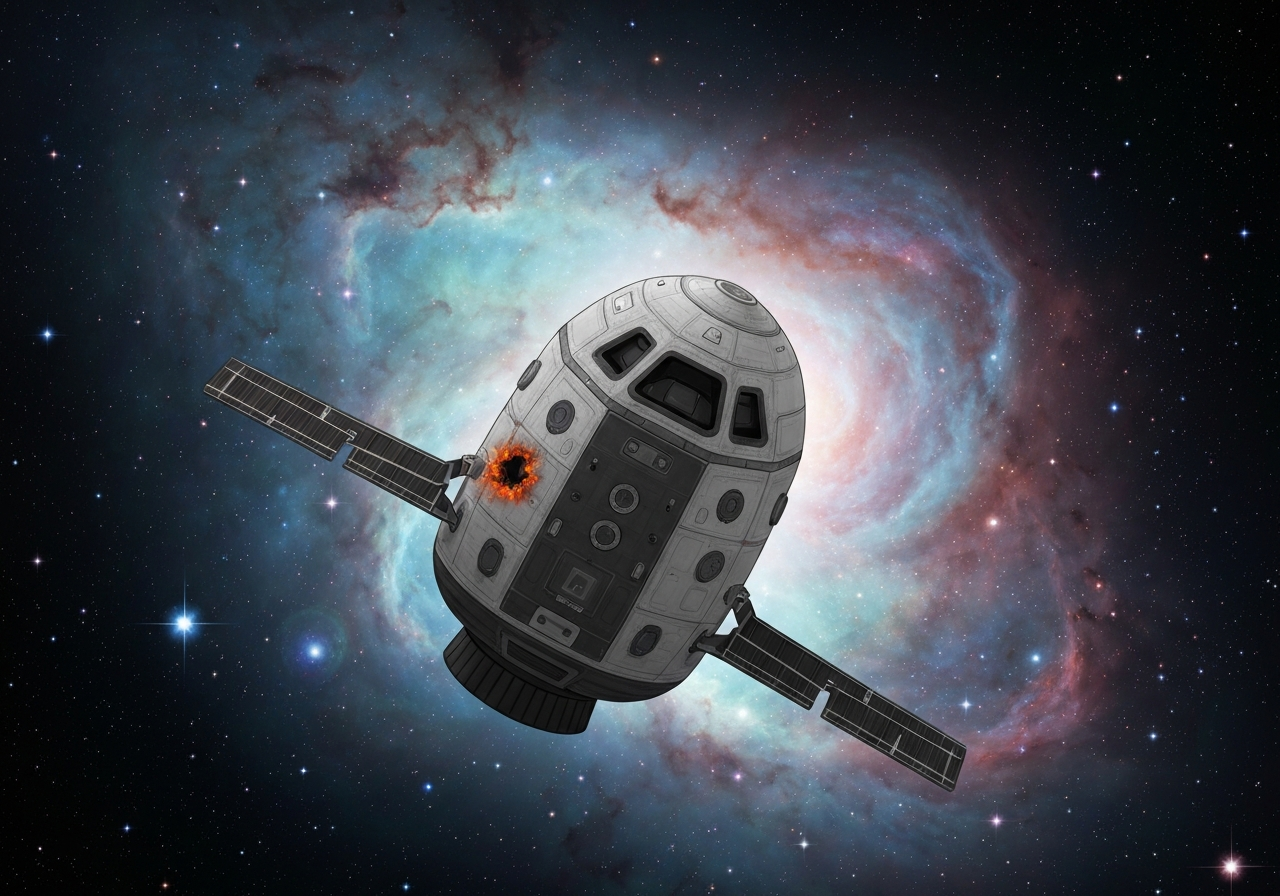
Lead: In February 2026, NASA’s top official formally classified Boeing’s 2024 Starliner crewed flight as a “Type A” mishap and acknowledged agency mistakes in oversight and decision-making. The mission had docked successfully with the International Space Station in summer 2024, but severe thruster problems during approach left commander Butch Wilmore wrestling for control. After weeks of internal debate, NASA shifted plans and the two astronauts returned to Earth on a SpaceX Crew Dragon in March 2025.
Key Takeaways
- NASA has designated the Starliner 2024 crewed flight a “Type A” mishap, the agency’s most serious classification, and says internal errors contributed to the outcome.
- Commanders Butch Wilmore and Suni Williams docked at the ISS in summer 2024, though Boeing publicly hailed the mission as a success immediately after docking.
- Boeing maintained post-docking confidence—posting an “confidence remains high” message on August 2, 2024—before that page was taken offline and later archived.
- By early August 2024 NASA privately considered returning the crew on a SpaceX Crew Dragon; on August 24, 2024 the agency decided the astronauts would not fly home on Starliner.
- Wilmore reported multiple thruster failures and a near-loss of full 6-degree-of-freedom (6DOF) control during rendezvous, forcing the crew to weigh approaching the station versus attempting reentry.
- The astronauts ultimately returned safely in March 2025 aboard SpaceX Crew-9, avoiding a Starliner reentry that NASA later judged too risky.
- Officials and outside observers have questioned NASA’s earlier public and internal willingness to let Starliner attempt a crewed return despite known propulsion anomalies.
Background
Boeing’s CST-100 Starliner is one of two U.S. commercial crew vehicles developed under NASA’s Commercial Crew Program to supply and rotate crews for the International Space Station, alongside SpaceX’s Crew Dragon. Starliner’s program has faced repeated technical delays and test anomalies since its inception, making close coordination and oversight between NASA and Boeing a persistent focus.
Commercial Crew contractors operate under fixed-price contracts with performance milestones, while NASA retains authority for flight safety decisions. That arrangement has produced tension: contractors are incentivized to meet schedules and manifest commitments, while NASA must balance those pressures against crew safety and mission assurance. Past near-miss events in crewed spaceflight have led agencies to tighten independent verification and review processes.
Main Event
The flight in question launched and achieved rendezvous with the International Space Station in the summer of 2024. After docking, Boeing officials, including Mark Nappi—vice president and manager of Boeing’s Commercial Crew Program—characterized the mission as a success, telling reporters the company had “accomplished a lot, and really more than expected.” Boeing’s public messaging remained upbeat into early August 2024.
Inside the vehicle, however, commander Butch Wilmore later recounted that multiple thrusters failed as Starliner approached the station. He described losing effective 6DOF control and having to calculate, in real time, whether to continue rendezvous or attempt an immediate path back to Earth—decisions that hinge on thruster availability for both docking and the deorbit burn.
NASA privately and publicly wrestled with the next steps. Initially the agency’s primary option was to return the crew on Starliner, but internal assessments and risk discussions shifted that stance. On August 24, 2024, NASA announced the crew would not attempt a Starliner return; instead, plans moved toward returning the astronauts later on a SpaceX Crew Dragon.
Wilmore and Williams ultimately came home safely in March 2025 as part of SpaceX’s Crew-9 mission. In the months that followed, NASA opened investigations and the agency’s leader categorized the flight a “Type A” mishap, signaling a top-tier review and an admission that NASA had erred in some decisions around the flight.
Analysis & Implications
Safety culture and contractor oversight are central to the lessons from this mission. A “Type A” classification typically triggers a broad, independent mishap investigation and signals systemic issues rather than a single-point technical failure. That process will examine NASA’s risk assessments, Boeing’s anomaly reporting, and the interaction between commercial incentives and agency safety requirements.
For Boeing, the reputational and programmatic impact is substantial. Starliner must regain both NASA’s and the broader community’s confidence before resuming crewed operations. The incident will likely translate into additional flight tests, stricter acceptance criteria for propulsion hardware, and more intrusive NASA oversight—steps that could delay future flights and increase program costs.
For NASA and international partners, the episode underscores the value of redundant crew-transport capabilities. SpaceX’s availability to return the crew mitigated immediate danger, but reliance on a single contractor for contingency returns is suboptimal. Budget planners and mission managers may therefore accelerate investments in redundancy, cross-certification, and independent verification systems.
Regulatory and contractual fallout is probable. NASA’s acknowledgement of agency mistakes could lead to contract amendments, enforcement actions, or renewed scrutiny by Congress and independent audit bodies. The mishap review’s findings will be closely watched for recommendations on governance, testing standards, and the threshold for grounding crewed flights.
Comparison & Data
| Event | Date | Outcome |
|---|---|---|
| Docking at ISS | Summer 2024 | Successful docking; thruster anomalies during approach reported |
| Boeing public confidence message | August 2, 2024 | “Confidence remains high” posted on company site (later archived) |
| NASA decision to avoid Starliner return | August 24, 2024 | Crew to return on SpaceX Crew Dragon |
| Astronauts returned to Earth | March 2025 | Safely returned aboard Crew-9 |
The table summarizes the public timeline of key milestones and decisions. It highlights a multi-month period in which internal risk assessments evolved from an initial willingness to attempt a Starliner crewed return to a conservative decision to fly the astronauts home on another vehicle.
Reactions & Quotes
Immediately after docking, Boeing leadership framed the mission positively, a posture that drew scrutiny once the propulsion issues became public.
“We accomplished a lot, and really more than expected.”
Mark Nappi, Boeing Commercial Crew Program
Commander Butch Wilmore later gave reporters a terse account of the onboard emergency calculations and the reality of losing several thrusters in sequence.
“I don’t know if we can come back to Earth at that point.”
Commander Butch Wilmore
Outside analysts have urged that NASA and Boeing be transparent about technical root causes and organizational drivers so that recommendations from the mishap review can be implemented quickly and effectively.
Unconfirmed
- Root-cause attribution for the thruster failures remains under formal investigation and publicly unconfirmed; no final technical fault report has been released yet.
- The full extent and content of internal NASA–Boeing communications about the decision to consider a Crew Dragon return have not been published.
- Any potential disciplinary or contractual penalties against Boeing (or internal NASA personnel) have not been announced and remain subject to the ongoing review.
Bottom Line
The Starliner episode exposed both a dangerous in-flight technical failure and weaknesses in program oversight. While the crew survived and returned safely thanks to contingency options, NASA’s classification of the event as a “Type A” mishap and its admission of mistakes signal systemic concerns that will require substantive organizational and engineering fixes.
Expect an extended independent investigation, likely stricter certification requirements for Starliner, and more intrusive NASA oversight of contractor test and risk-acceptance processes. The incident will shape U.S. crewed space policy and commercial partnership terms for years to come.
Sources
- Ars Technica (media report summarizing interviews and documents)
- Boeing — Starliner Updates (archived) (company page archived after the incident)
- NASA (official agency announcements and mishap investigation materials)