
Lead
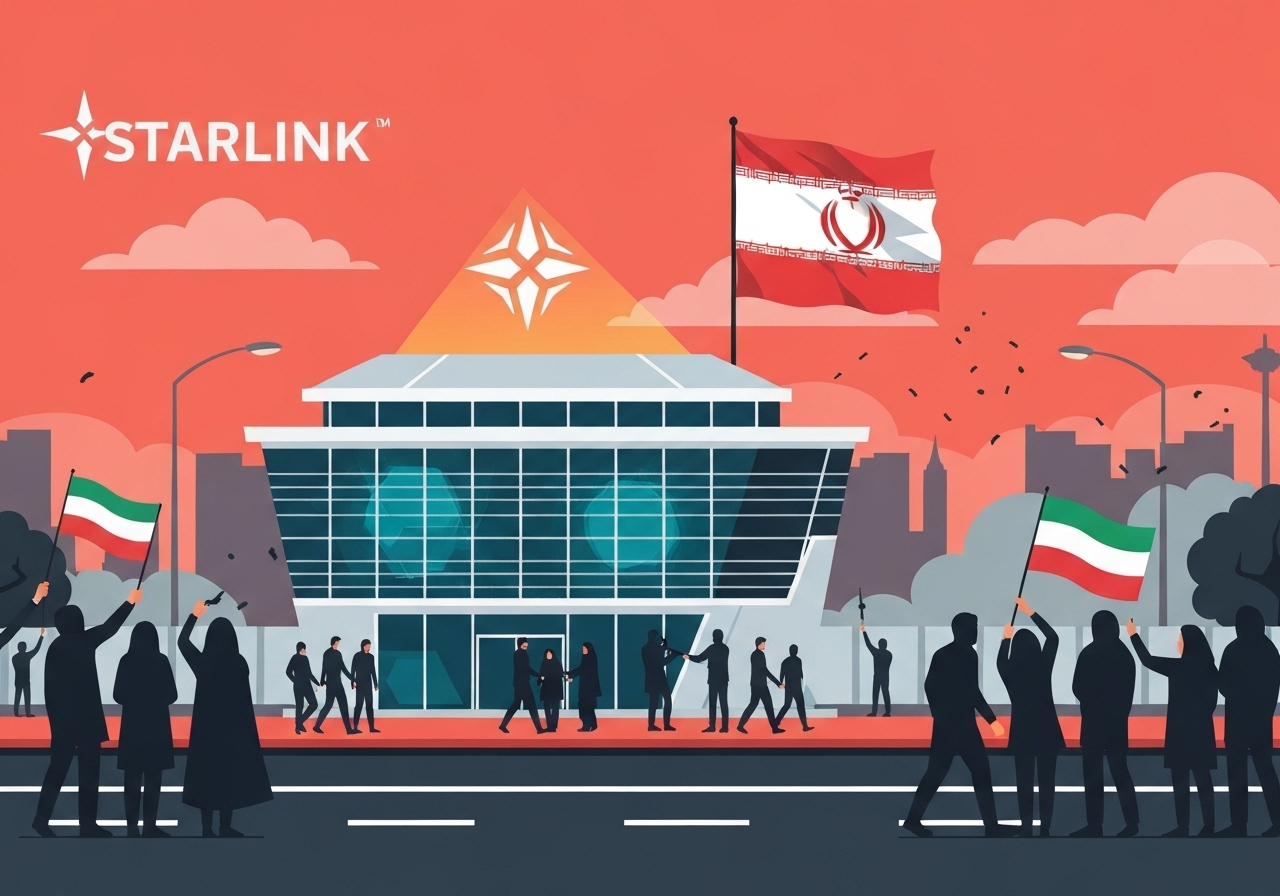
SpaceX’s Starlink satellite internet service began providing free access to users in Iran this week, with previously inactive accounts reportedly reactivated and subscription fees waived as of Tuesday, Jan. 13, 2026. The change comes amid a nationwide communications blackout and a government crackdown that rights groups say has killed more than 1,800 protesters. A technology nonprofit director in contact with Iranian users said terminals can be used immediately where there is a clear sky view, while SpaceX and the White House declined to comment. Analysts warn the measure will aid only a fraction of Iran’s 92 million people and that the regime retains tools to disrupt or jam satellite signals.
Key Takeaways
- SpaceX’s Starlink reportedly reactivated inactive accounts and waived subscription fees for Iranian users as of Jan. 13, 2026, according to Ahmad Ahmadian of Holistic Resilience.
- Human rights groups and monitors say Iran’s security response has killed more than 1,800 protesters amid a multi-day nationwide internet blackout.
- Estimates suggest roughly 50,000 Starlink receivers are in Iran; that number would reach only a small portion of the country’s 92 million people.
- Experts including Doug Madory of Kentik report Iran can block or severely degrade internet access and is attempting to jam or disrupt Starlink signals.
- Starlink is not officially licensed in Iran; authorities criminalized its use after the 12-day conflict between Israel and Iran last year.
- The U.S. government has funded tools to help Iranians circumvent censorship, but funding cuts last year curtailed some programs assisting in connectivity.
Background
For years Iranian authorities have built and refined a national internet control apparatus to monitor and restrict online activity, using centralized gateways and filtering systems that analysts sometimes call a national “Great Firewall.” Those controls make broad shutdowns and targeted throttling relatively straightforward because international connectivity is concentrated through a small number of providers. The current unrest follows sustained protests in multiple cities, and the state’s communications restrictions have complicated independent verification of casualties and arrests.
Satellite-based internet like Starlink operates via low-earth-orbit constellations and user terminals that communicate directly with satellites, offering an alternative channel where ground infrastructure is disabled or monitored. SpaceX has previously said Starlink signals can be accessed in Iran even without a formal license, and demand for terminals reportedly rose after last year’s 12-day conflict involving Israel. That surge continued despite Iranian laws criminalizing unauthorized satellite terminals.
Main Event
On Tuesday, Jan. 13, 2026, multiple Iranian Starlink accounts that had been dormant reportedly showed active connections and users were informed that subscription fees had been waived. Ahmad Ahmadian, executive director at Holistic Resilience, told reporters the reactivation process was straightforward for recipients with a line of sight to the sky: set up the terminal and connect. SpaceX and the White House did not provide on-the-record comments when contacted for this article.
The development followed a phone call earlier in the week between U.S. President Donald Trump and Elon Musk in which Starlink access in Iran was discussed, according to media reports. Trump has publicly urged protesters to continue resisting and said that U.S. support options, including military choices, remain on the table — a claim that officials describe as political posture rather than an immediate policy change.
Iranian authorities have imposed widespread internet restrictions for several days, complicating casualty counts and independent reporting. Rights monitors put the reported death toll at more than 1,800, and observers warn the total may be higher because communications cuts impede confirmation. At the same time, officials and independent researchers describe active efforts by Tehran to interfere with satellite connectivity, including jamming techniques that analysts liken to disruptions seen in other conflict zones.
Analysis & Implications
Restoring or extending Starlink access to some Iranian users changes the information environment but does not eliminate the regime’s control options. Satellite terminals concentrate alternative connectivity in the hands of users who can obtain hardware and operate it in exposed settings — often a small, urban subset of the population. As a result, free access helps activists document and transmit events internationally but is unlikely to restore nationwide connectivity.
Technically, jamming and signal interference present real limits. Experts at network monitoring firms point to Iran’s existing ability to sever or reroute traffic and to deploy targeted electromagnetic measures that can reduce Starlink throughput or force terminals offline. Those actions can be temporary or escalatory; military-grade jamming has been documented in other theaters and would raise the risk profile for users relying on satellites to communicate.
Politically, the move to enable Starlink for Iranians highlights tensions between technology companies’ capacity to extend connectivity and governments’ claims of sovereignty and security. If users can transmit images and testimony out of Iran, international awareness and pressure may grow, potentially affecting diplomatic calculations. Conversely, Tehran may escalate penalties for terminal possession or increase enforcement against intermediaries that supply hardware.
Comparison & Data
| Metric | Value |
|---|---|
| Iran population | 92,000,000 |
| Estimated Starlink receivers in Iran | ~50,000 |
| Reported protest-related deaths | 1,800+ |
| Date of reported reactivations | Jan. 13, 2026 |
The table above illustrates scale: an estimated 50,000 Starlink receivers are negligible compared with Iran’s 92 million people, so any satellite rollout will remain a partial remedy to a nationwide blackout. The reported death toll of more than 1,800 is a significant human cost; analysts caution that communications restrictions make timely and accurate tallies difficult.
Reactions & Quotes
Officials, experts and rights groups reacted to the developments with cautious support for increased information flow and stark warnings about risks.
“It’s plug and connect — just put the terminal where you have a clear view of the sky, and you’re good to go,”
Ahmad Ahmadian, Holistic Resilience (technology nonprofit)
Ahmadian described direct contact with Iranian users who reported reactivated accounts and waived fees. He emphasized that terminals are useful where they can be installed safely and where interference is not overwhelming.
“Blocking access is straightforward for the regime because international links are concentrated; they have the tools to degrade or jam signals,”
Doug Madory, Kentik (network monitoring firm)
Madory explained the structural vulnerabilities that allow a state to impose large-scale outages and noted technical methods the government can use to limit satellite internet effectiveness.
“If the window of visibility from Starlink expands, it could both help document violence and act as a deterrent to further atrocities,”
Mahsa Alimardani, Witness (human rights organization)
Alimardani framed satellite access as an instrument for evidence and accountability but warned that much depends on scale and sustained reporting channels.
Unconfirmed
- Whether SpaceX issued an internal policy change to formally waive subscriptions in Iran remains unconfirmed; public statements were not released.
- The exact number of functioning Starlink receivers actively connecting in Iran today is an estimate and may be higher or lower than the ~50,000 figure cited by rights groups.
- Claims that the U.S. will take direct military action in support of Iranian protesters are unconfirmed and rest on political statements rather than announced policy.
Bottom Line
Free Starlink access represents a meaningful but limited shift in how information can leave Iran during a severe communications blackout. It provides activists and journalists with an additional channel to document events internationally, but it will not restore universal connectivity or negate Tehran’s ability to jam signals or criminalize equipment.
For policymakers and human rights advocates, the development is a reminder that technological fixes alone cannot resolve a violence-driven political crisis. Effective responses will require coordinated diplomatic pressure, support for secure communications at scale, legal protection for those providing and using connectivity, and sustained international scrutiny to ensure that reported abuses are investigated.