
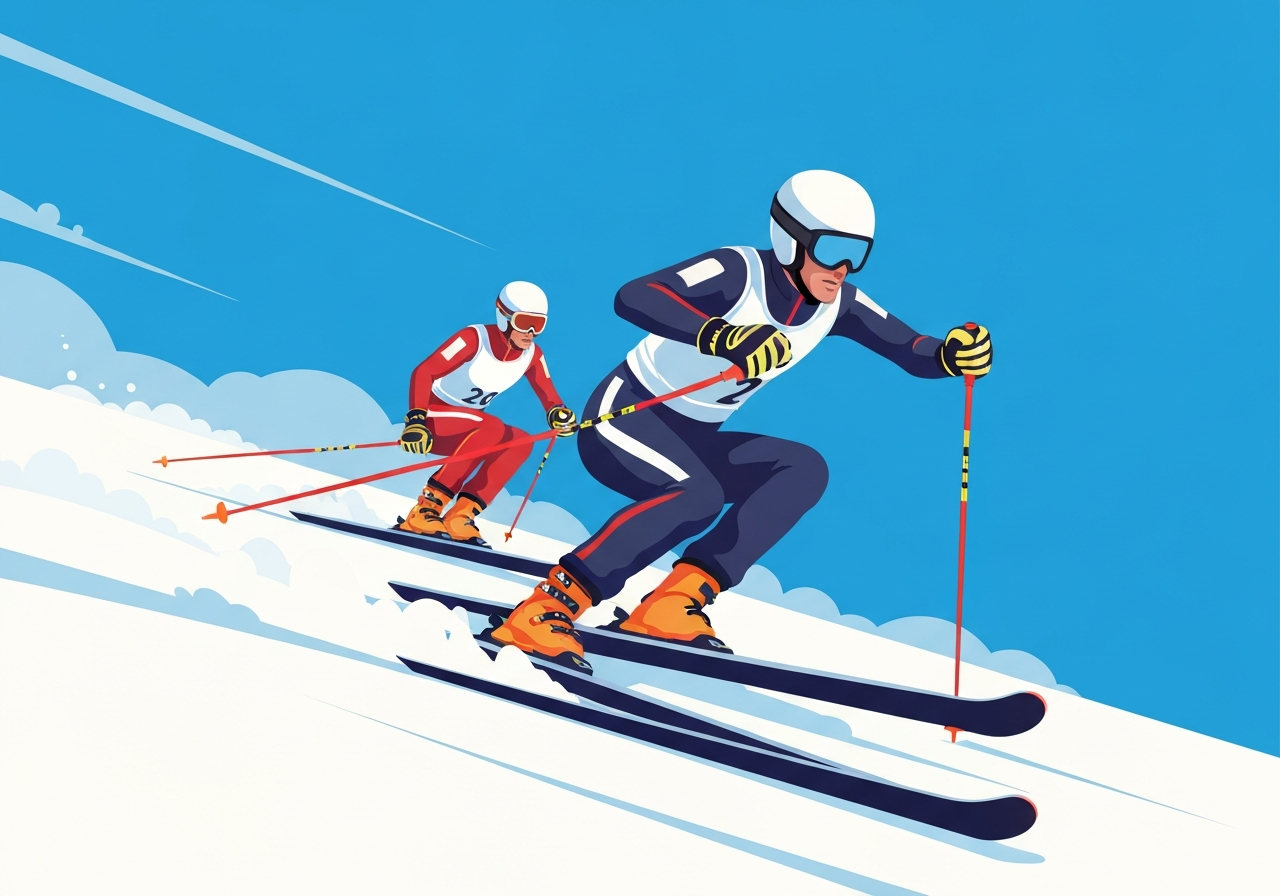
At the 2026 Winter Olympics in Milan‑Cortina, high on the Stelvio near Bormio at roughly 2,000 meters above sea level, male super‑G competitors enter a tiny wooden start hut that contrasts with the stadium roar below. Inside that timber shelter, skiers such as Kyle Negomir and Sam Morse confront a private ritual: a strict countdown, sudden spikes in heart rate and a race‑ready silence that some describe as solemn. The moment before the gate — the beeps, the breathing exercises, the visualizations — can decide whether reaction and balance stay sharp or fray under adrenaline. What happens in those isolated minutes is both intensely personal and professionally engineered to translate composure into speed down one of the world’s steepest courses.
Key takeaways
- The start huts sit near the Stelvio track in Bormio, Italy, at about 2,000 meters elevation and are limited to the skier, one trainer and start officials.
- Countdown beeps occur at 30 seconds, 10 seconds and then count down audibly (5–1); skiers report these triggers can induce anxiety even off season.
- Pre‑start physiological spikes are common — one racer described heart rate jumping to about 180 beats per minute before placing a run.
- Warmup routines vary: free skiing, core moves (Maxence Muzaton did side planks), chest‑pounding (Alexis Monney) or short practice runs on snow.
- Breathwork and sensory anchoring (jaw/shoulder relaxation, focus on touch or temperature) are used to downshift the nervous system and protect coordination.
- Psychological cues matter: mantras like “stay smooth and calm” or tactical phrases (“stay with the outside ski”) are routine before release.
- Start mechanics are precise: skis rest on a wand that triggers the electronic timer when the competitor leaves, and a powerful push at 3–5 seconds is decisive for acceleration.
Background
The Milan‑Cortina 2026 Winter Olympics returned marquee Alpine events to the Stelvio track around Bormio, where weather, altitude and steep pitches create one of the most demanding downhill and super‑G venues. World Cup rivals spend much of the season racing the same circuits, so the start area is simultaneously a site of fierce competition and peer familiarity. The hut itself is a long‑standing fixture in alpine racing: a compact wooden cabin meant to shelter athletes from wind and cold and to isolate them from crowd noise and team chatter.
Preparation for a run blends physical warmups with mental routines developed on the World Cup circuit. Athletes arrive at the top by chairlift and decide on micro‑routines — whether to free ski, make a short practice run, or do targeted mobility work in the snow. With medals and national expectations at stake, those minutes before the gate are engineered to convert arousal into focused motor control; when calibration fails, the margin for error at high speed disappears.
Main event
Competitors step into the hut alone with a single coach or trainer and listen for the countdown sequence that will dictate their launch. Those beeps — at 30 seconds and at 10, then a five‑second count — are so burned into racers’ heads that several said hearing them out of season provokes anxiety. Sam Morse, who placed 19th in the men’s downhill and was scheduled to race the super‑G midweek, described timing his push to synchronize with the three‑second mark; for him the start is a sprinter’s explosive window.
Warmup behaviors before entering the hut vary widely. Frenchman Maxence Muzaton activated core muscles with a side plank in the snow; Switzerland’s Alexis Monney celebrated with a chest thump. Giovanni Franzoni, who finished as silver medallist in a recent event, said leg tension rose during his warmup as top competitors posted fast benchmark times — a reminder that the start hut’s stillness belies intense, immediate pressure.
Kyle Negomir described a different inner scene: when adrenaline surges he can feel his heart race to the high end, mentally bracing against a sudden sense of risk. He purposely anchors attention to a vivid sensory image — for instance, the texture and smell of a floating tennis ball — to pull the nervous system back into a regulated state before the gate opens. As the wand releases the skis and triggers the timing mechanism, that regulated state is what converts prepared intent into steady, coordinated motion down a slope where speed leaves no margin for error.
Analysis & implications
Physiologically, a rapid heart rate and increased muscle tone are adaptive for short, intense tasks but become counterproductive for fine motor control and balance. Breathwork and grounding techniques target the autonomic nervous system to reduce excess arousal so the prefrontal cortex — the site of decision making — remains engaged. Coaches and performance specialists increasingly treat the start hut as a controlled environment where mental‑skills training is as important as physical prep.
The prevalence of these routines influences how teams prepare off the snow: mental‑skills training, simulated countdowns and sensory anchoring drills are now regular components of elite programs. That shift may favor nations and teams that integrate sports psychology into daily training, potentially affecting small time differences that decide podium placements. Prevention is also a safety issue: when adrenaline compromises coordination, crash risk rises; regulated arousal supports both speed and survival.
At an event level, the private, uniform design of start huts and the electronic timing system ensure equal conditions across competitors, but they also amplify individual differences in coping strategies. The athlete who best converts pre‑start composure into a smooth, powerful exit will often gain crucial hundredths of a second — margins that determine rankings and media narratives during Olympic competition.
Comparison & data
| Metric | Typical value | Racer example |
|---|---|---|
| Start elevation | ≈2,000 m | Stelvio, Bormio |
| Pre‑start countdown | 30s → 10s → 5–1s | Audible beeps trigger launch |
| Resting heart rate (adult) | 60–80 bpm | — |
| Reported pre‑start spike | up to ~180 bpm | Described by competitor Kyle Negomir |
The numbers underline how extreme arousal compares with normal physiology: typical resting heart rates sit under 80 beats per minute, while racers report transient spikes that more than double that level. In that state, coordination and decision making can degrade; breathwork and targeted sensory cues act to bring heart rate down and cognitive control back online before the skier commits to the slope. The table shows how small procedural details — the sequence and timing of the countdown — are replicated across competitors yet experienced differently depending on individual psychophysiological factors.
Reactions & quotes
“It’s like a funeral at the top.”
Kyle Negomir, U.S. Alpine skier
Negomir used the phrase to describe the hush and inward focus inside the hut moments before a run, stressing the solemnity that replaces the raucous stands below.
“If you hear those beeps in the middle of the summer, it’ll give you anxiety.”
Sam Morse, U.S. competitor
Morse highlighted how the countdown sequence is a conditioned stressor — something that can trigger anticipatory anxiety unless managed with practiced routines.
“Pressure is a privilege.”
Giovanni Franzoni, recent silver medallist
Franzoni framed the intense atmosphere as an honor to compete against the world’s fastest skiers, a perspective used by some athletes to reappraise stress positively ahead of a run.
Unconfirmed
- Whether a given breathing or visualization technique produces measurable performance gains for every skier remains unproven across a large sample of elite athletes.
- Reports of exact heart‑rate peaks (for example, 180 bpm) are self‑reported and may vary between athletes and measurement methods.
Bottom line
The small wooden hut above Bormio is more than shelter; it is a clinical pressure chamber where athletes convert nerves into precise movement. The ritualized beeps, the wand release and the sensory anchors are engineered to produce optimal motor control at extreme speed. How an individual manages that five‑minute microcosm often separates a safe run from a crash and a podium from midpack.
As sports science integrates deeper into national programs, expect start‑hut protocols — simulated countdowns, breath training, sensory anchoring and brief visualization practices — to become standardized. At the Olympic level, where hundredths of a second matter, mastery of the pre‑start minute is now a core competitive skill.
Sources
- The New York Times (reporting) — original coverage of start‑hut routines and athlete interviews at Milan‑Cortina 2026.