
Lead
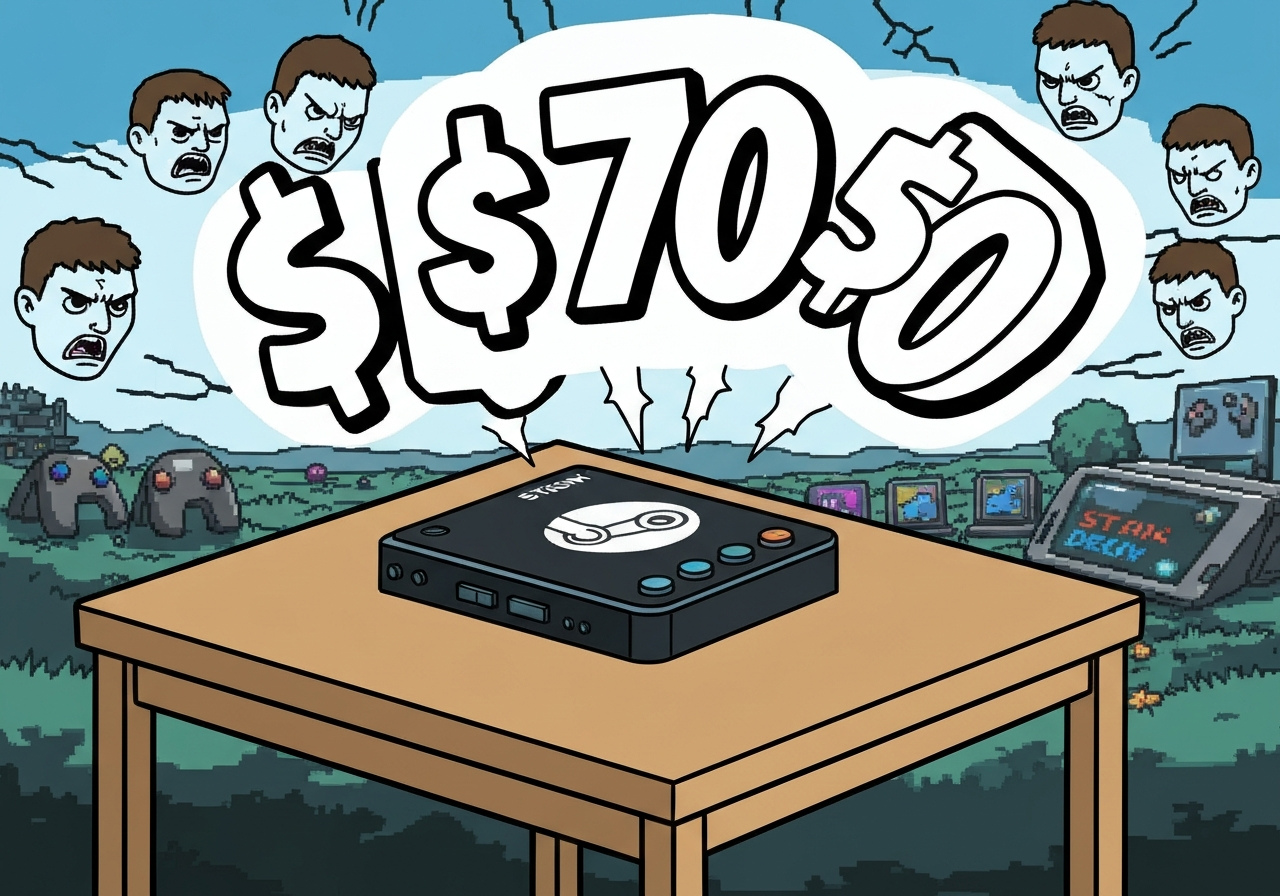
In February 2026 reporting, industry analysts warned that a retail price approaching $700 could effectively kill Valve’s new Steam Machine before it gains traction. The concern centers on recent component-cost spikes that favor large console makers with massive orders. Because Valve’s PC-centric hardware is a narrower, niche product, analysts say the company may lack the supplier leverage to absorb higher parts costs. If costs push the street price well above initial targets, demand for a premium-priced, niche box may evaporate.
Key Takeaways
- Analysts say a retail rise to about $700 would severely limit the Steam Machine’s addressable market, making profitability difficult for Valve.
- Large console makers like Sony and Microsoft can secure better component pricing by committing to “tens of millions” of units, a scale Valve does not match (Niko Partners).
- Valve’s Steam Machine is a niche product and likely cannot access the same procurement discounts as Nintendo, Sony or Microsoft, raising per-unit costs.
- It is unclear whether Valve locked in supply contracts early or can reassign parts from the Steam Deck to the Steam Machine (Tech Insights).
- Smaller product size could lower packaging and shipping costs, and Valve’s direct-to-consumer sales through Steam reduce retailer margins that other console makers must accept.
- Industry voices warn the component-price spike looks more persistent than initially expected, increasing the risk that temporary cost squeezes become structural.
- Valve’s relative hardware scale—even after the Steam Deck—means suppliers may not prioritize its orders, according to F-Squared’s analysis.
Background
The Steam Machine project emerges against broader electronics supply-chain turbulence that began in the early 2020s and has produced recurring component price volatility. Console manufacturers that buy components in the tens of millions typically negotiate more favorable long-term agreements, insulating them from short-term cost shocks. Valve’s past success with the Steam Deck established it as a significant niche hardware vendor, but that device operates in a different procurement and distribution model than mainstream consoles. The Steam Machine targets a smaller, PC-like install base where price elasticity is higher and retail channel exposure differs.
Historically, niche hardware launches have been sensitive to final retail price: a premium tag narrows potential buyers and lengthens time to profitability. Valve sells through its own storefront and website, which reduces retail margins but also concentrates sales expectations on a smaller, enthusiast-heavy audience. Analysts tracking this launch say two procurement questions are pivotal: whether Valve locked in parts before the cost spike, and whether parts contracted for the Steam Deck are fungible with the Steam Machine. The answers determine how much of the component-price increase Valve must absorb or pass on to customers.
Main Event
Industry reporting in February 2026 conveyed that component cost inflation could force Valve to raise the Steam Machine’s price toward $700, a level analysts call dangerous for a niche console. Daniel Ahmad of Niko Partners emphasized that Sony and Microsoft can leverage massive order volumes to secure lower per-unit pricing — a benefit Valve likely cannot match. F-Squared’s Futter similarly noted Valve’s smaller procurement profile, arguing suppliers may not treat Valve with the same priority as the three major console OEMs.
Tech Insights’ James Sanders flagged uncertainty about contract timing: if Valve did not lock favorable prices early, it may have to absorb cost increases or choose a higher retail price. Conversely, Sanders pointed out design elements that could help: the Steam Machine’s compact size can reduce packaging and freight expenses, and Valve’s web-based direct sales remove typical retailer markups that raise console shelf prices. These design and distribution advantages may offset some but not all component-cost pressure.
Other industry observers said Valve appeared to have hoped the component issue would be short-term. Analyst Cole said that initial expectations for a transient spike are being replaced by a consensus that disruptions may last longer, complicating launch economics. That shift forces a choice: accept compressed margins, raise retail prices and risk demand collapse, or delay the product while seeking better supplier terms. Each option carries commercial and reputational trade-offs for Valve.
Analysis & Implications
A price near $700 for the Steam Machine would place it well above many enthusiast PC alternatives and some console bundles, reducing its competitiveness. For a product positioned as a bridge between PC gaming and living-room convenience, perceived value is highly price-sensitive; pushing beyond expected thresholds could move prospective buyers to DIY PC builds or wait for discounts. That risk is amplified because Valve’s core audience includes price-conscious PC gamers who can often upgrade components incrementally rather than buying a closed-box premium system.
Strategically, Valve faces constrained options. Leveraging direct sales helps, but without supplier commitments comparable to first-tier console makers, the company lacks a straightforward path to bring down component costs. One mitigation would be redesigning to use fewer premium parts or substitute components with lower cost, but that risks diluting the product’s performance story. Alternatively, Valve could stagger launch quantities to preserve margins, though limited supply could undercut broader market adoption and press momentum.
Broader market effects would be limited but instructive: a high-profile pricing failure might reinforce the idea that mid-tier, boutique living-room PCs struggle unless priced close to mainstream consoles. It would also signal to suppliers that certain mid-volume hardware remains vulnerable to price swings, potentially discouraging small hardware entrants. On the flip side, if Valve can maintain a lower price through clever sourcing or design compromises, it would validate direct-to-consumer distribution as a partial hedge against supplier power.
Comparison & Data
| Manufacturer | Procurement Leverage | Typical Order Scale |
|---|---|---|
| Sony / Microsoft | High — can secure long-term discounts | Tens of millions of units |
| Valve (Steam Machine) | Low — niche orders, limited priority | Hundreds of thousands to low millions |
The table synthesizes analyst remarks that emphasize scale as the core differentiator. Large OEMs lock multi-year contracts and volume commitments, which smooth price volatility for components like SoCs, memory and power modules. Valve’s smaller expected volumes reduce its bargaining power, making it more exposed to near-term spikes. Packaging, shipping and direct-sale savings can moderately offset higher parts prices, but analysts estimate those effects are unlikely to fully bridge the gap to match console suppliers’ negotiated discounts.
Reactions & Quotes
Industry analysts were measured but blunt about the procurement problem; their comments focused on order volume and supplier prioritization. The following quotes capture that central argument and were provided within the broader reporting context.
“Large console makers can commit to tens of millions of orders, and have strong negotiating power.”
Daniel Ahmad, Niko Partners
Ahmad’s point underlines why Sony and Microsoft historically secure better component pricing: long-term, large-volume commitments. In the context of the Steam Machine, that dynamic means Valve may face materially higher unit costs unless it secures comparable supply contracts or finds parts elsewhere.
“Valve is not an enormous player in the hardware space, even with the Steam Deck’s success. So they likely don’t have the same kind of priority as a Nintendo, Sony, or Microsoft when it comes to suppliers.”
Futter, F-Squared
Futter’s remark stresses supplier prioritization: when parts are scarce or prices spike, vendors prioritize larger partners. For Valve, this could mean longer lead times or higher prices compared with first-tier console manufacturers, constraining launch plans or forcing price adjustments.
Unconfirmed
- Whether Valve locked favorable supply contracts for the Steam Machine before the component-price spike remains unverified; public filings do not confirm timing.
- It is not confirmed if components contracted for Steam Deck production can be redirected to the Steam Machine without redesign or additional cost.
Bottom Line
The central takeaway is straightforward: scale and contract timing determine whether Valve can avoid a retail price that kills demand. If the company cannot secure parts at prices that support a sub-$700 price point, the Steam Machine risks falling into a small, slow-moving niche with weak adoption. Industry analysts see the pricing issue as more persistent than originally hoped, which tightens the window for Valve to respond.
Valve’s potential responses—redesign, accepting lower margins, staged launch, or postponement—each carry strategic costs. For consumers and the market, the outcome will be a test case: can a smaller hardware-focused company use design and distribution advantages to counter supplier power, or will component-price dynamics reassert the dominance of high-volume console players?
Sources
- Ars Technica (media — reporting that quotes industry analysts)
- Niko Partners (industry analyst firm — cited analyst commentary)