
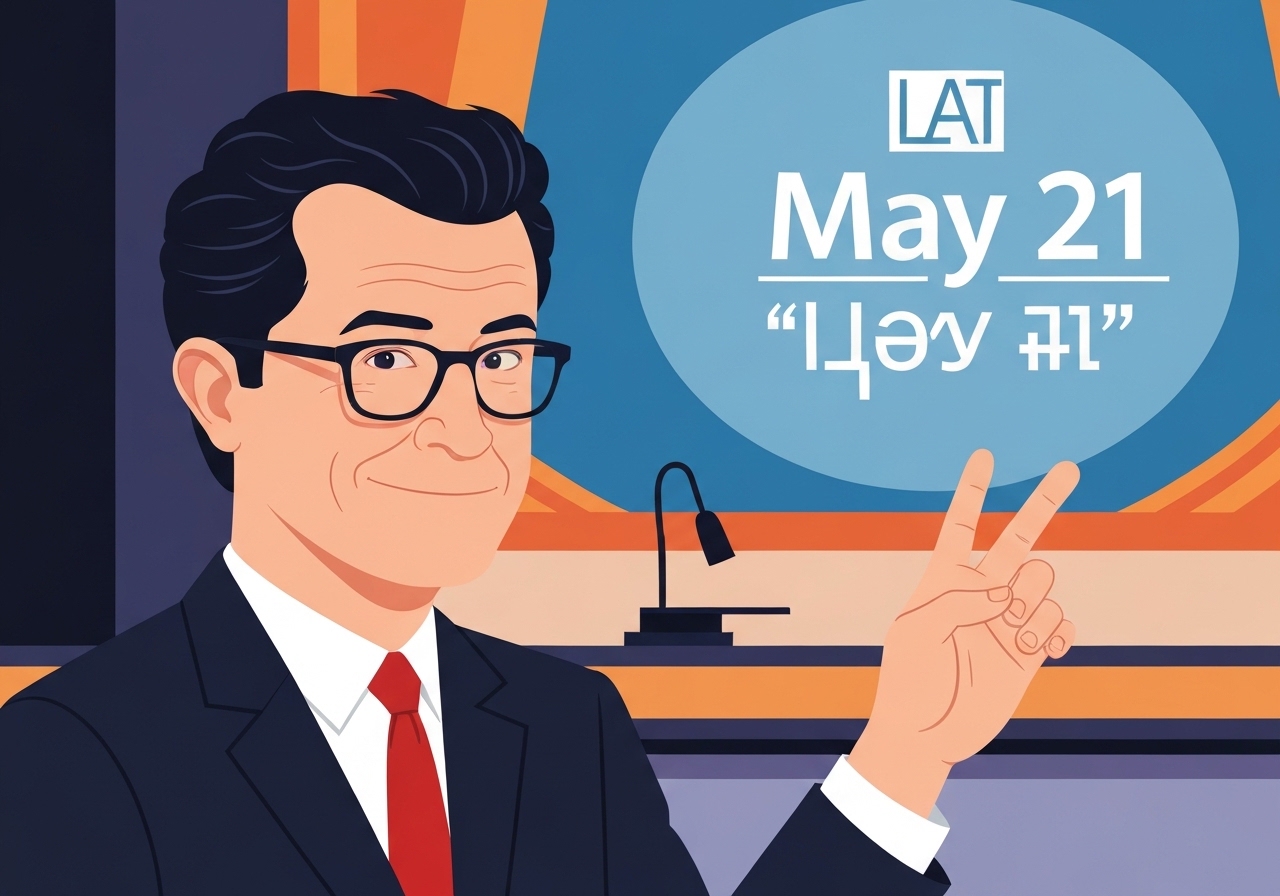
Stephen Colbert will close out The Late Show on 21 May, the host announced during a Monday taping of NBC’s Late Night With Seth Meyers. Colbert, who took over The Late Show in 2015, revealed the date while appearing as a guest on Meyers’s program; the taping is scheduled to air on Tuesday night. CBS had signalled in July that the series would end in May, bringing to a close a Late Show run on CBS that began in 1993 under David Letterman. The network and Colbert’s team have said the broadcast will be a planned finale rather than an immediate replacement.
Key takeaways
- The final episode of The Late Show With Stephen Colbert is scheduled to air on 21 May 2026, announced on a taping of Late Night With Seth Meyers.
- Colbert hosted The Late Show since 2015, a run of roughly 11 years; the Late Show franchise on CBS began in 1993 (33 years ago).
- CBS first announced in July 2025 that the programme would end in May 2026, describing the move as a financial decision amid late-night market pressures.
- The announcement follows a $16m settlement between Paramount and Donald Trump over alleged deceptive editing of a 60 Minutes interview with Kamala Harris.
- Paramount was simultaneously pursuing an $8.4bn merger with Skydance Media that requires federal approval, a context cited in reporting on the cancellation.
- The cancellation prompted public reactions from politicians and viewers, including criticism that the decision may be linked to Colbert’s criticism of political figures.
Background
The Late Show has been a fixture on CBS since David Letterman launched the franchise in 1993. Over three decades the series has changed hosts and editorial tone; Letterman left in 2015 and Stephen Colbert succeeded him that year. Colbert’s tenure shifted the programme’s comedic style and political commentary, and the show became a prominent voice in late-night television.
In July 2025 CBS announced that The Late Show would end in May 2026. The network framed the decision as part of broader cost and scheduling considerations affecting late-night programming. The announcement arrived amid several corporate developments at parent company Paramount, which included a settlement with former president Donald Trump and merger talks with Skydance Media.
Main event
On Monday, during a taping of Late Night With Seth Meyers set to air the next night, Colbert disclosed the exact date for The Late Show’s final episode: 21 May 2026. He appeared as a guest on Meyers’s programme where the reveal took place; the segment will air Tuesday night, per the taping schedule. The date closes a period of public uncertainty since CBS’s initial July statement that the show would end in May.
CBS has described the cancellation as a financial decision made against a challenging late-night market, saying it was unrelated to the show’s content or performance. Colbert and others have pushed back on that characterization, citing the larger corporate backdrop at Paramount and recent high-profile legal and merger developments. The host has publicly criticised the $16m settlement between Paramount and Donald Trump, calling it a “big fat bribe” in past remarks.
The announcement sparked swift reactions across political and entertainment circles. Some commentators argued the timing and corporate context raise questions about whether the decision was purely fiscal. Others, including supporters of Colbert, framed the move as part of wider shifts in television economics and corporate consolidation impacting creative programming.
Analysis & implications
The scheduled finale marks the effective end of the Late Show as it has existed on CBS for more than three decades. That duration — from 1993 to 2026 — underscores how network late-night programming has been shaped by individual hosts, changing audience habits and evolving advertising markets. The network’s framing of the cancellation as financial points to structural pressures: rising production costs, streaming competition and shifting ad revenues.
Paramount’s concurrent settlement and merger activity complicate public interpretation. While the company and CBS deny a content-related motive, the timing has fuelled debate about whether corporate legal and regulatory matters can influence programming decisions. If the Skydance merger proceeds, it may prompt further strategic realignments that affect late-night lineups across networks.
For talent and staff, the decision could accelerate talent redistribution across platforms: streaming services, cable and smaller networks may court experienced late-night personnel and writers. Advertisers and affiliates will also reassess late-night inventory, potentially altering revenue patterns for CBS and competitors. Internationally, the closure of a major U.S. late-night franchise will be noted by global broadcasters that follow American comedic and political commentary.
Comparison & data
| Host/Franchise | Start | End / Tenure |
|---|---|---|
| Late Show (David Letterman) | 1993 | 1993–2015 (22 years) |
| Late Show (Stephen Colbert) | 2015 | 2015–2026 (≈11 years) |
The table shows how the Late Show’s history is defined by long host tenures. Colbert’s roughly 11-year run follows Letterman’s 22 years; the programme’s 33-year presence on CBS reflects continuity but also changing eras in television. These figures help situate the cancellation within a longer institutional arc rather than as an isolated event.
Reactions & quotes
“Do I think this is a coincidence? NO.”
Bernie Sanders, social post (reaction to cancellation)
Senator Sanders tweeted strong suspicion that the timing of Colbert’s departure and corporate settlements were connected, framing the move as potentially retaliatory. His comment reflects broader political scrutiny of corporate decisions that affect public discourse.
“I absolutely love that Colbert got fired.”
Donald Trump, Truth Social (reaction)
Former president Trump celebrated the cancellation on his platform, underscoring the polarized responses the decision drew from political figures and their supporters. Public reactions ranged from relief to condemnation, illustrating the show’s role in national conversation.
“Purely a financial decision against a challenging backdrop in late night.”
CBS statement (corporate response)
CBS reiterated that the choice was driven by business considerations and not by content or performance, a line the network has used to distance programming moves from external controversies.
Unconfirmed
- That the Paramount $16m settlement with Donald Trump was the direct cause of The Late Show’s cancellation—this link has been suggested but not independently verified.
- That the $8.4bn Skydance merger directly dictated the timing of the show’s end—no official document has established causation.
- That Colbert was specifically targeted for his political commentary—this remains an assertion from critics and has not been substantiated by internal corporate records disclosed publicly.
Bottom line
Stephen Colbert’s announcement that The Late Show will end on 21 May 2026 brings a long-running late-night franchise to a close on CBS. The date gives audiences and staff time to prepare for a planned finale, but it also crystallises questions about the interplay of business decisions, corporate transactions and editorial independence in broadcast media.
While CBS frames the move as financial, the surrounding legal and merger activity at Paramount has made the cancellation a focal point for debate on whether corporate imperatives can shape cultural outlets. Viewers, advertisers and regulators will be watching how the finale is handled and what successor strategies CBS pursues for late-night programming.
Sources
- The Guardian — press coverage summarising the announcement and corporate context (news outlet)