
Lead
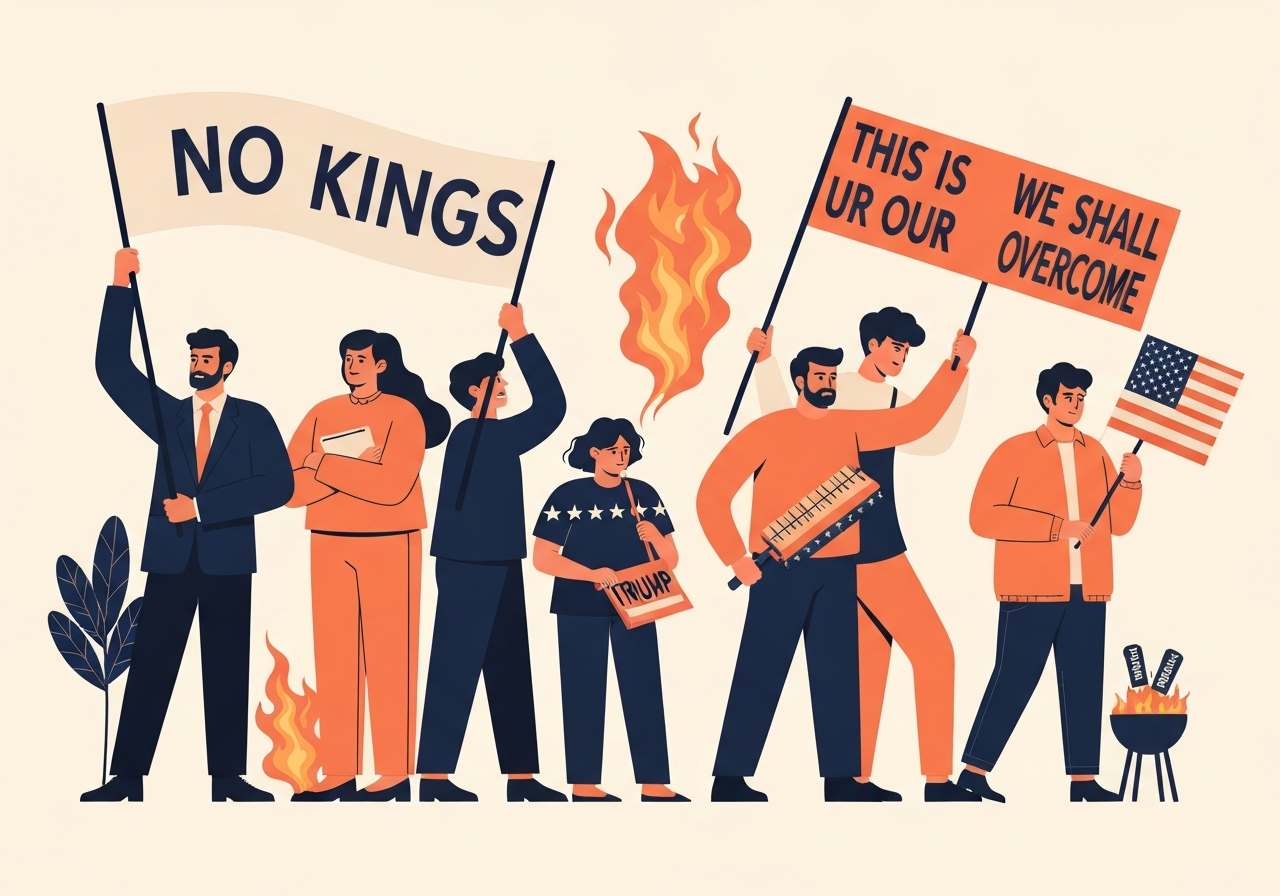
In Montclair and other well-to-do suburbs this weekend, thousands are joining No Kings demonstrations organized by Indivisible to oppose President Donald Trump and his allies. Local activists — many of them new to politics — are mobilizing ahead of a packed calendar that includes a special election in New Jersey’s 11th District on April 16. Organizers say roughly two-thirds of more than 3,000 planned events will be held outside urban cores, and they predict nationwide turnout could exceed 9 million. The surge in suburban activism is shaping local races and signaling broader changes in the electorate.
Key Takeaways
- Indivisible reports more than 3,000 No Kings demonstrations are planned, with approximately two-thirds occurring outside urban centers.
- Organizers estimate overall turnout could top 9 million nationwide for the weekend of protests.
- New Jersey’s special election in the 11th District is scheduled for April 16; the Democratic nominee is Analilia Mejia, endorsed by Sen. Bernie Sanders and Rep. Alexandria Ocasio-Cortez.
- Local activists such as Allison Posner (42, Maplewood) and Jeff Naiman (59, Summit) have shifted from occasional civic activity to sustained protest organizing.
- Polling context: AP VoteCast found Joe Biden won 54% of suburban voters in 2020 versus Donald Trump’s 44%; Gallup and Pew data show a longer-term suburban drift away from Republicans.
- Republican nominee Joe Hathaway supports several Trump-era policies while distinguishing his legislative priorities and urging Congress to reassert checks and balances.
Background
Affluent suburbs across the United States, once reliably moderate or Republican-leaning, began changing course during the Trump presidency. College-educated and more diverse suburban populations have moved toward Democrats in recent national contests, a trend evident in the 2018 midterms and 2020 presidential election. That shift has opened space for activists who previously confined civic life to school meetings and local clubs to adopt a more confrontational stance.
Indivisible, a grassroots group that helped catalyze prior protest waves, organized the latest No Kings events as a coordinated national response to what members describe as threats to democratic norms. The group’s plans emphasize suburban sites with competitive congressional contests — including Scottsdale, Arizona; Langhorne, Pennsylvania; East Cobb, Georgia; and New Jersey’s 11th District. Local chapters report strong sign-ups from people who say they would not have protested in the past.
Main Event
In northern New Jersey, volunteers are mobilizing for marches, traffic-overpass demonstrations and community outreach outside detention centers. Allison Posner, a freelance actor and mother of two from Maplewood, distributes diapers and food to immigrant families and brings her children to marches between family obligations. Her account echoes a wider pattern of suburban residents converting routine civic concern into public activism.
Analilia Mejia, the Democratic nominee in NJ-11 and a former political director for Senator Bernie Sanders, represents the progressive flank of the party in the district’s special election on April 16. Mejia supports abolishing ICE, backs Medicare for All, and has criticized Israel’s conduct in the Gaza war — positions that have energized many left-leaning voters while drawing attack ads and scrutiny from opponents.
Republican challenger Joe Hathaway, a Randolph Township councilman, is positioning himself as a district-first candidate who supports several Trump policies but also calls for stronger congressional leadership to check executive power. Hathaway initially declined to say whether he voted for Trump but later confirmed he voted for the president three times, emphasizing the district’s interests over party loyalty.
Indivisible co-founder Ezra Levin framed the weekend as a nationwide effort to make a public showing in suburbs that have become politically significant. Local organizers say turnout has been particularly robust in suburbs with high-profile or competitive races, and many expect the protests will translate into continued volunteer recruitment and voter engagement after the demonstrations end.
Analysis & Implications
The suburban mobilization could have immediate consequences for tight House margins and down-ballot contests in the president’s remaining two years. If the leftward shift in suburbs persists, Republicans may struggle to hold vulnerable districts that were once competitive. In the short term, energized progressive nominees like Mejia could pull party platforms further left and reshape primary dynamics.
Beyond electoral math, the phenomenon reflects a change in how political activism is distributed geographically. Suburbs no longer function as politically neutral hinterlands; they now host sustained organizing, service drives for immigrants, and coordinated protests. That diffusion of activism may force national organizations and candidates to reallocate resources and tailor messages to suburban audiences.
There are also risks for Democrats. Candidates who adopt uncompromising progressive platforms in swing districts may energize the base but alienate moderate suburban voters if messaging is not carefully calibrated. Conversely, Republicans tied visibly to Trump’s style of governance may face defections among college-educated suburbanites who prioritize institutional norms and pragmatic problem-solving.
Comparison & Data
| Measure | 2016 (Pew/AP) | 2020 (AP VoteCast) |
|---|---|---|
| Suburban presidential preference | Approximately even split | Biden 54% / Trump 44% |
| Planned No Kings events | — | 3,000+ (≈2/3 suburban) |
| Organizers’ estimated turnout | — | More than 9 million (organizers’ projection) |
These figures place the current protests within a multi-year trend: suburbs shifted from a roughly balanced or slightly Republican tilt in 2016 to a stronger Democratic performance in 2020, especially among college-educated and non-white voters. The Indivisible numbers describe organizers’ ambitions and planned footprint rather than verified final turnout, so their estimates should be treated as forecasts until counted or independently confirmed.
Reactions & Quotes
Local volunteers describe activism as an extension of family and community life rather than a separate identity. Many say the line between school-run schedules and protest logistics has blurred.
“This is our fight.”
Allison Posner, Maplewood resident and activist
Indivisible leadership framed the weekend as a deliberate nationwide scaling-up to reach voters outside city centers.
“We’re going to be everywhere.”
Ezra Levin, Indivisible co-founder
Analilia Mejia cast the contest as a defense of democratic norms and human rights, arguing that local concerns intersect with national policy choices.
“A ZIP code does not protect anyone from rising violent authoritarianism.”
Analilia Mejia, Democratic nominee, NJ-11
Unconfirmed
- The organizers’ projection that more than 9 million people will participate nationwide is an estimate and not independently verified as of this report.
- Long-term effects of a single weekend of protests on November’s congressional map are uncertain and contingent on sustained organizing and turnout.
- Claims made by partisans about motives or single incidents at local protests may be disputed; local authorities and fact-checkers had not confirmed every allegation at the time of reporting.
Bottom Line
The suburban political shift is tangible and operational: homeowners, parents and professionals who once eschewed protest are now organizing in large numbers, and their activity is concentrated around high-stakes races such as New Jersey’s April 16 special election in the 11th District. Whether this surge translates into durable partisan realignment will depend on turnout, candidate messaging and how national parties respond to suburban priorities in policy and tone.
In the near term, weekend demonstrations will serve as both a show of strength for opponents of the president and a recruitment tool for future campaigns. Observers should track post-protest volunteer retention, fundraising flows, and early voting patterns in competitive suburbs to assess whether the activism observed this weekend produces measurable electoral shifts.