
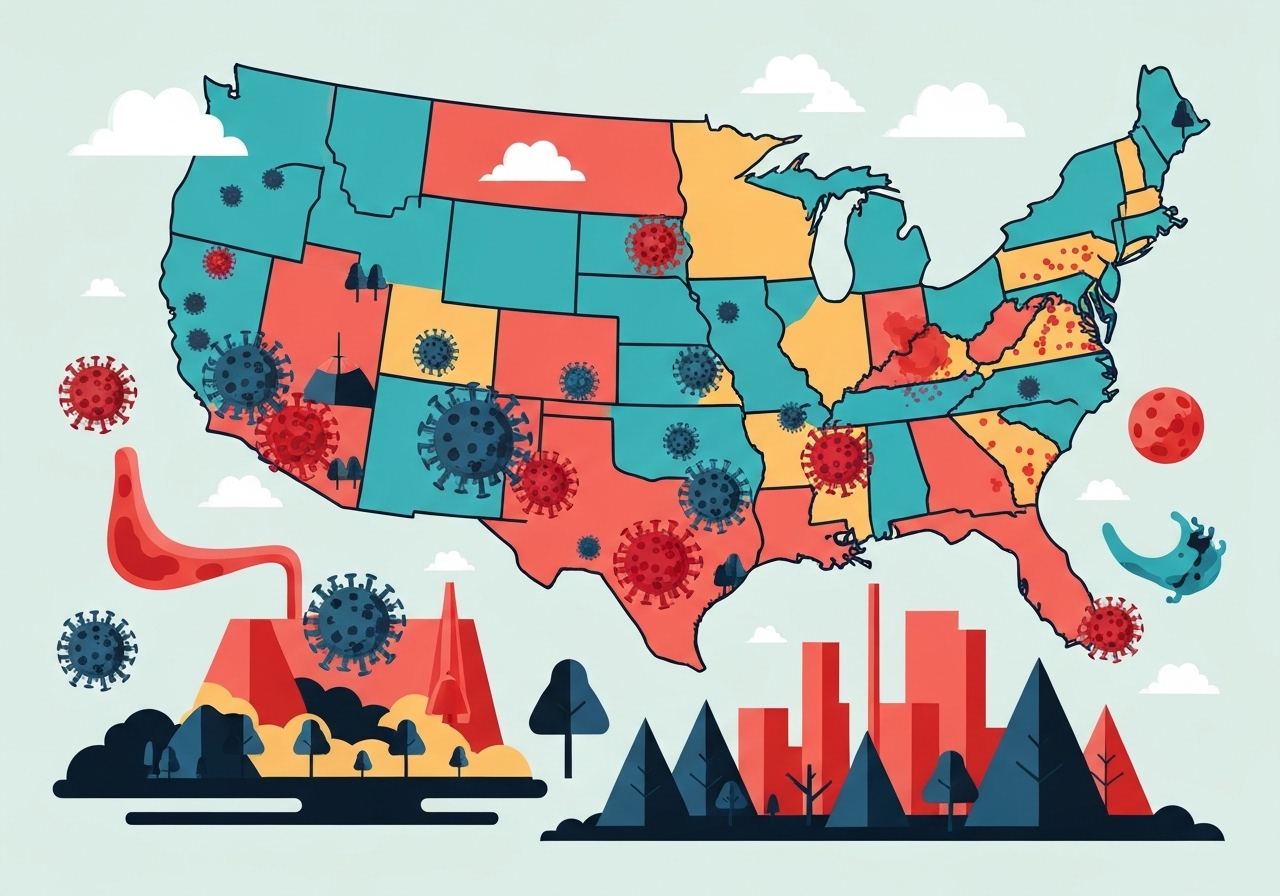
Health officials warn a fast-spreading influenza strain dubbed subclade K is driving a nationwide uptick in flu cases and hospital visits. The Centers for Disease Control and Prevention reported a 14.3% rise in the nation’s hospitalization rate as of Friday, and early samples show the new subclade accounts for about 90% of influenza A detections. New York, Louisiana and Colorado are among the hardest hit; other states report elevated visits. Public health agencies advise getting vaccinated and say flu and COVID-19 shots can safely be given at the same time.
Key Takeaways
- CDC reported a 14.3% increase in hospitalizations for influenza as of Friday, Dec. 19–20, 2025.
- Early laboratory sampling found roughly 90% of influenza A viruses were the subclade K variant.
- New York, Louisiana and Colorado are seeing the fastest spread; New Jersey and Rhode Island showed high rates in data dated Dec. 13, 2025.
- Additional states with elevated flu-related visits include Georgia, New Mexico, Idaho, Michigan, North Carolina, South Carolina, Massachusetts, Connecticut, Maryland and Washington, D.C.
- Experts report the current vaccine composition does not include the dominant influenza A subclade K, though vaccines may still reduce severity.
- Common symptoms: fever, chills, cough, sore throat, runny nose, muscle aches, headaches, fatigue and sometimes vomiting or diarrhea.
- Most people recover in days to weeks, but complications such as pneumonia can be life‑threatening, especially for older adults.
Background
Seasonal influenza typically circulates each autumn and winter in the United States, with activity peaking between December and February in many years. Vaccine strain selection occurs months in advance, which can leave a mismatch if a new variant becomes dominant after that decision. Public health authorities monitor viral samples to detect shifts in circulating strains and to guide messaging, antiviral recommendations and healthcare preparedness.
Influenza A subtypes have historically been associated with more severe outcomes among older adults and those with chronic conditions. This year’s sampling backlog and rapid spread of subclade K have raised concern because the subclade was not the primary target of the current vaccine formulation. State health departments use outpatient visit data, hospital admissions and laboratory confirmations to assess local activity; those indicators can rise quickly when a more transmissible variant emerges.
Main Event
Since mid-December, surveillance networks have recorded increased influenza-associated hospital visits nationwide. The CDC’s recent update documented a 14.3% jump in hospitalizations as of Friday, and testing sites report a higher share of influenza A detections identified as subclade K. The pattern is consistent across multiple regions, suggesting broad community transmission rather than isolated outbreaks.
New York, Louisiana and Colorado reported particularly sharp rises in influenza activity, with New Jersey and Rhode Island also showing elevated rates in data current through Dec. 13, 2025. Several other states—Georgia, New Mexico, Idaho, Michigan, North Carolina, South Carolina, Massachusetts, Connecticut, Maryland and the District of Columbia—have recorded increases in flu‑like illness visits, straining some emergency departments and urgent care clinics.
Public health messages have emphasized vaccination, antiviral access for high‑risk individuals, and typical infection-control measures: staying home when ill, hand hygiene and masking in high-risk settings. Health agencies reiterate that, despite the viral shift, the flu shot can lessen symptom severity and reduce the risk of complications.
Analysis & Implications
The dominance of subclade K within early influenza A samples (≈90%) suggests a strong selective sweep, meaning this variant has properties—transmissibility, immune escape, or both—that favor rapid spread. Because the current vaccine composition did not include this specific subclade, population-level protection against infection may be reduced. However, vaccines often retain partial protection that mitigates severe disease, hospitalizations and deaths.
Hospitals and public health systems may face higher demand through the remainder of the typical flu season, which government and academic models project to extend into February. A 14.3% rise in hospitalizations in a short window can translate to notable strain on inpatient capacity, especially where staffing shortages persist. Regions with simultaneous COVID-19 circulation could see compounded pressure on acute care services.
For older adults and people with chronic illnesses, the mismatch elevates risk: influenza A strains historically cause a larger share of severe outcomes in these groups. Antiviral medications, when prescribed early for those at high risk, remain an important clinical tool. Policymakers may also consider targeted messaging, expanded antiviral stockpiles, and surge planning for emergency departments and long‑term care facilities.
Comparison & Data
| Metric | Value / Notes |
|---|---|
| Hospitalization change | +14.3% (CDC, as of Friday) |
| Influenza A samples positive for subclade K | ~90% (early sampling) |
| States with highest recent activity | NY, LA, CO (most affected); NJ, RI (high as of Dec. 13) |
The table summarizes key surveillance figures reported in mid‑ to late‑December 2025. These values reflect rapidly evolving laboratory and clinical data and are useful for short‑term planning. Local trends can differ substantially; counties and hospitals should reference their state health department updates for granular figures.
Reactions & Quotes
“It is safe for people to receive the flu and COVID‑19 vaccines at the same visit,”
Centers for Disease Control and Prevention (official guidance)
The CDC reiterated co‑administration guidance as public demand for vaccination increases amid rising influenza activity. Officials say offering both vaccines together can improve uptake and streamline protective measures before peak season.
“Early laboratory data indicate subclade K is the predominant influenza A strain in recent samples, which affects vaccine match considerations,”
State public health laboratory / national surveillance report (news summary)
Public health laboratories supplying sequence data described the rapid predominance of subclade K in late‑season sampling. Analysts caution that late‑breaking variants can reduce vaccine effectiveness against infection while still affording some protection against severe outcomes.
Unconfirmed
- Whether the current vaccine offers zero protection against subclade K—available data indicate reduced match, but the degree of retained protection against severe outcomes is still being measured.
- Exact reasons for subclade K’s rapid rise (transmissibility vs. immune escape) remain under investigation pending additional laboratory and epidemiologic analyses.
Bottom Line
Subclade K’s rapid emergence in mid‑December 2025 correlates with a clear rise in influenza‑associated hospitalizations nationally. While the dominant subclade was not the primary target of this season’s vaccine formulation, public health authorities emphasize vaccination because it can still blunt severity and reduce complications, particularly for high‑risk populations.
Clinicians and health systems should prepare for increased patient volume through the typical peak months. Individuals should follow public health guidance: get vaccinated (including co‑administration with COVID‑19 shots if desired), seek early care and antivirals when eligible, and use standard infection‑control practices to limit spread.