
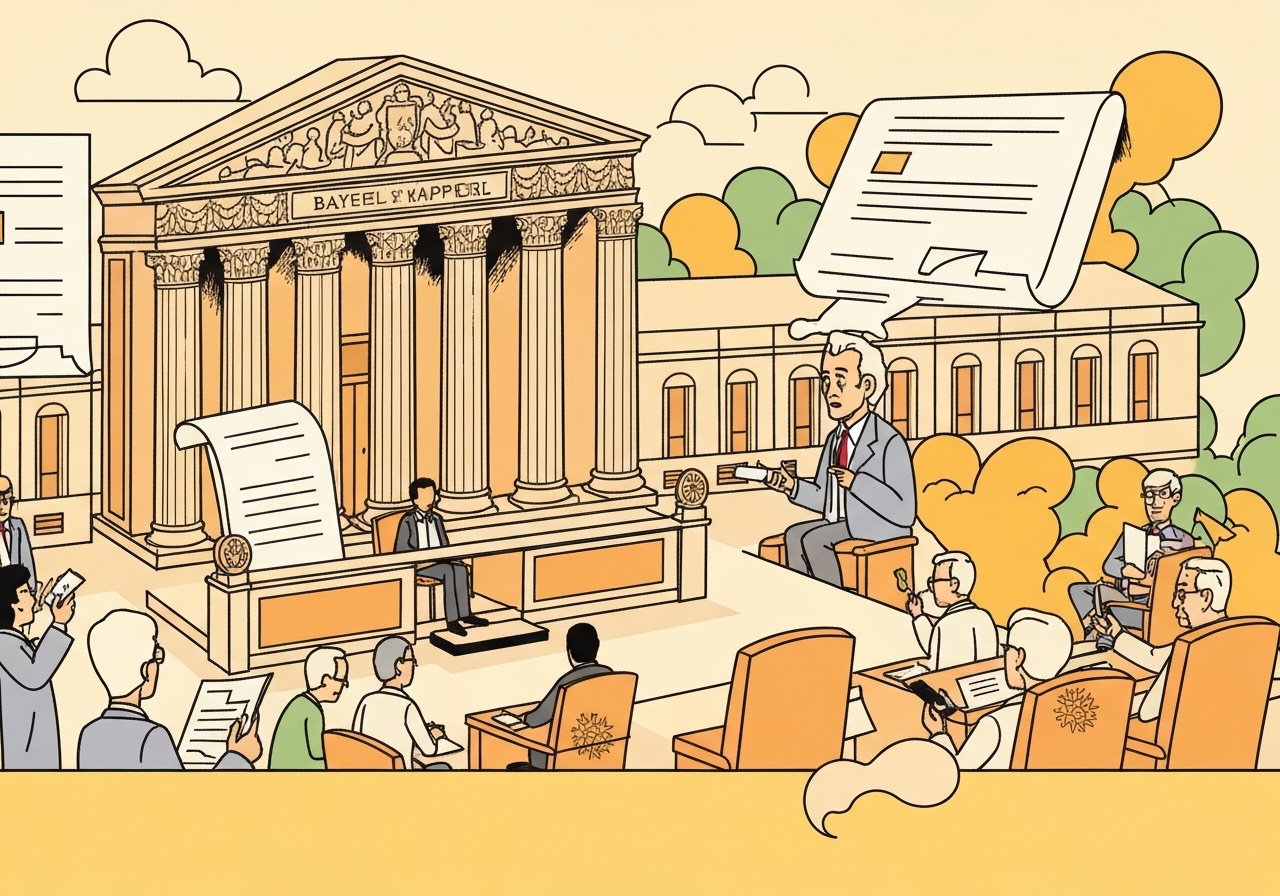
The Supreme Court on Friday agreed to consider an appeal from Bayer, the maker of the widely used Roundup weedkiller, over whether federal approval by the Environmental Protection Agency (EPA) preempts state-court failure-to-warn claims. The move lifts a dispute over whether EPA’s approval of glyphosate-based products without a cancer warning bars thousands of state lawsuits filed by people who say Roundup caused cancer. The case before the justices grows out of a Missouri trial that produced a $1.25 million jury award to a man who developed non-Hodgkin’s lymphoma after spraying Roundup in a St. Louis community garden. The decision to take the appeal follows conflicting rulings in lower courts and intervening political shifts in the U.S. executive branch.
Key Takeaways
- The Supreme Court agreed on Friday to hear Bayer’s appeal about whether EPA approval of Roundup removes state-law warnings claims; argument timing is not yet set.
- Bayer faces roughly 181,000 Roundup claims, has reserved about $16 billion to settle litigation and previously acquired Monsanto in 2018.
- A Missouri jury awarded $1.25 million to a plaintiff who developed non-Hodgkin’s lymphoma after using Roundup; a separate 2022 California case produced more than $86 million for one married couple.
- The EPA has stated glyphosate is “not likely to be carcinogenic to humans” when used as directed, while some studies have linked glyphosate to cancer; Bayer disputes those links.
- The Trump administration filed in support of Bayer, reversing the Biden administration’s earlier position and aligning with the company’s request for broader federal preemption.
- Bayer stopped selling glyphosate-based Roundup for the U.S. residential lawn and garden market but continues to sell agricultural glyphosate products; Georgia and North Dakota have enacted state laws limiting such suits.
Background
Glyphosate is the active ingredient in Roundup and other herbicides; it has been widely used in agriculture, especially with glyphosate-tolerant genetically modified seeds for crops like corn, soybeans and cotton. The EPA has reviewed glyphosate repeatedly and, in public statements, has concluded the chemical is not likely to be carcinogenic to humans when applied according to labeling. Still, a body of epidemiological studies and some international assessments have raised concerns about links to non-Hodgkin’s lymphoma, prompting extensive litigation.
The litigation traces to high-profile verdicts in state courts and years of consumers and farmworkers suing Monsanto, acquired by Bayer in 2018, alleging inadequate warnings. In 2022 the Supreme Court declined to take up a California case that produced significant damages for plaintiffs, but lower courts have since split on whether EPA review preempts state failure-to-warn claims. In 2024 the U.S. Court of Appeals for the 3rd Circuit ruled in Bayer’s favor on preemption grounds, increasing pressure for a definitive ruling from the high court.
Main Event
The case the Supreme Court agreed to review arose from Missouri, where a jury awarded $1.25 million to a man who developed non-Hodgkin’s lymphoma after regularly spraying Roundup in a community garden in St. Louis. Bayer asked the high court to decide whether EPA approval of Roundup’s labeling and risk assessment forecloses state tort claims that the company failed to warn users of cancer risks.
Bayer has argued that enforcement of state warning laws against a product that received federal approval would create inconsistent obligations and undermine the federal regulatory scheme. The company has also sought legislative solutions in several states and lobbied for statutes that would limit or bar these kinds of lawsuits; Georgia and North Dakota have enacted laws that restrict Roundup claims.
Opponents, including environmental and public-health groups, say Bayer is attempting to shield itself from jury decisions after losing repeatedly in state courts. They argue that federal oversight by EPA does not erase state-law remedies for injuries and that plaintiffs should retain access to state courts to litigate whether warnings were adequate.
Analysis & Implications
A Supreme Court ruling for Bayer could significantly narrow the scope for state-level failure-to-warn suits nationwide by endorsing federal preemption when a product has gone through EPA review. That outcome would reduce litigation risk for Bayer and similar manufacturers, but it would also curtail a major avenue for injured individuals to seek redress under state tort law. Insurers, corporate counsel and victims’ advocacy groups will watch closely for how broadly the justices frame any preemption doctrine.
Conversely, if the Court rejects Bayer’s argument, state-court suits will remain a major commercial and regulatory pressure point. Bayer has already set aside about $16 billion to resolve claims and has settled many suits; a loss could expand further settlements or push more cases to trial. The agricultural market could also see consequences: Bayer has cautioned that persistent litigation might force it to consider withdrawing glyphosate-based products from U.S. agricultural markets, which could affect planting practices and soil-conservation approaches tied to reduced tillage.
The political dimension complicates the legal landscape. The federal government’s stance can shift with administrations; the Trump administration filed in support of Bayer, reversing the Biden administration’s previous position. The Court’s decision thus carries not only legal precedent but also broader policy implications about the boundary between federal regulation and state tort remedies.
Comparison & Data
| Metric | Value | Context |
|---|---|---|
| Total Roundup claims | ~181,000 | Primarily residential users |
| Bayer reserves | $16 billion | Funds set aside to settle litigation |
| Notable jury awards | $1.25M (Missouri), $86M+ (California, 2022) | Examples of state-court verdicts for plaintiffs |
| Regulatory rulings | EPA: not likely carcinogenic | EPA position on glyphosate when used as directed |
The table summarizes the core numerical touchpoints driving the dispute: a large inventory of claims (about 181,000), substantial financial reserves by Bayer ($16 billion), and several high-profile plaintiff verdicts that have shaped settlement pressure. These figures frame both Bayer’s legal strategy and the stakes for plaintiffs and regulators.
Reactions & Quotes
“It is time for the U.S. legal system to establish that companies should not be punished under state laws for complying with federal warning label requirements.”
Bill Anderson, CEO of Bayer (company statement)
Context: Bayer framed the Supreme Court petition as an effort to create uniformity across federal and state law and to prevent inconsistent obligations for regulated products.
“It’s a sad day in America when our highest court agrees to consider depriving thousands of Roundup users suffering from cancer of their day in court.”
Lori Ann Burd, Environmental Health Director, Center for Biological Diversity
Context: Environmental and public-health advocates caution that preemption would limit injured parties’ access to state courts and remove an accountability path for harm they attribute to Roundup.
“The split among lower courts and differing administrative positions make this a suitable case for the Supreme Court to clarify federal preemption in pesticide regulation.”
Legal scholar commenting on litigation strategy
Context: Observers say the Court’s intervention aims to resolve divergent appellate rulings and create a clear standard for when federal approvals displace state tort claims.
Unconfirmed
- Exact argument schedule: the Court has not set a date; reports say it could be argued in spring or at the start of the next term, but that timing is not finalized.
- Impact scope: how broadly the justices might apply preemption (limited to EPA-regulated pesticide labeling or broader) remains unknown until briefs and oral argument clarify the issues.
Bottom Line
The Supreme Court’s decision to hear Bayer’s appeal places a pivotal national question before the justices: whether federal regulatory approval by EPA can bar state-law failure-to-warn claims over glyphosate-based products. A ruling for Bayer would substantially reduce litigation exposure for manufacturers that have federal approvals, while a ruling against Bayer would preserve state tort remedies and keep jury verdicts as a force in the accountability and settlement process.
Beyond legal doctrine, the case has practical consequences for public health, agricultural practice and corporate risk management. Observers should watch forthcoming briefing schedules, the scope of the legal questions the Court accepts, and how the justices frame their reasoning—those elements will determine whether this decision reshapes the boundary between federal pesticide regulation and state tort law.
Sources
- Associated Press — News outlet reporting on the Supreme Court decision and case background.
- U.S. Environmental Protection Agency (EPA) — Official agency statements and evaluations on glyphosate and pesticide registration.
- Bayer Press Center — Official company statements and press releases regarding litigation and product policy.
- Center for Biological Diversity — Environmental nonprofit that has commented on Roundup litigation and public-health concerns.