
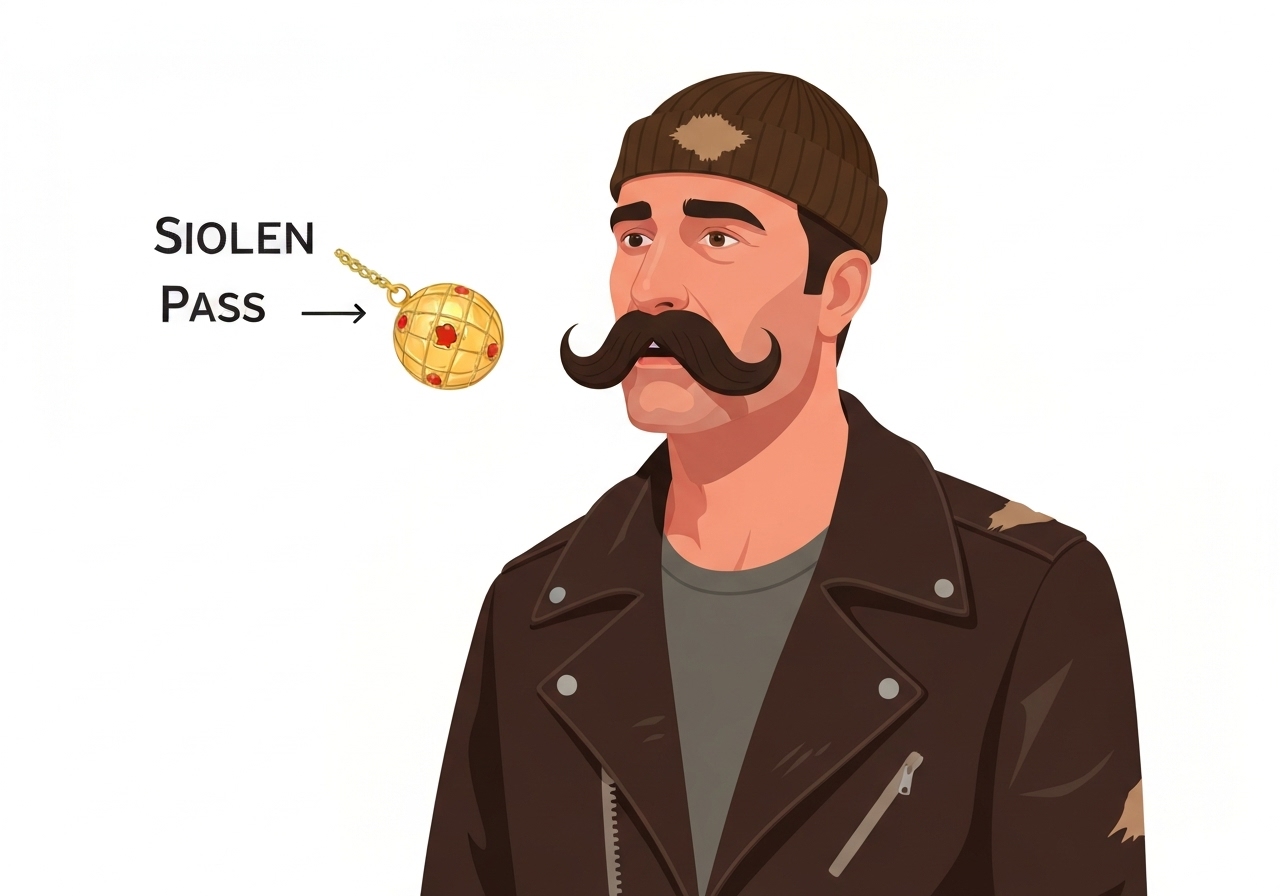
In Auckland last week, a 32-year-old man allegedly stole an 18‑karat gold Fabergé egg pendant from a jewelry shop and swallowed it inside the store, police said. Officers arrested him at the scene and charged him with theft; after a medical assessment he was monitored while officers waited for the pendant to be expelled. Six days later the jewel‑encrusted locket—about the size of a large grape—was recovered and placed into police custody. Authorities said no medical intervention was required and the man is due to appear in court on Monday.
Key takeaways
- The incident occurred in Auckland, New Zealand; the suspect is a 32‑year‑old man arrested at the scene.
- The pendant is an 18‑karat gold Fabergé egg with green guilloché enamel, set with 60 white diamonds and 15 blue sapphires, and two black diamonds for the octopus eyes.
- The item carried a price tag of 33,585 New Zealand dollars (about $19,400) when recovered by police.
- Police monitored the man continuously after a medical check; the pendant was recovered naturally six days after ingestion.
- Authorities released a photograph of the recovered pendant with its original chain and price tag; it remains in police custody.
- The man was charged with theft and is expected to appear in court on the next scheduled Monday appearance.
Background
Fabergé eggs are historically luxury objects linked to the House of Fabergé in Russia; modern makers and jewelers produce items inspired by that tradition that command high retail prices. The pendant in this case was a decorative, movie‑themed homage—reportedly referencing the 1983 James Bond film Octopussy—and combined precious metals with dozens of gems to reach its retail valuation. Jewelry thefts, from smash‑and‑grab raids to opportunistic shopliftings, are a persistent problem for retailers worldwide, and some suspects adopt dramatic or dangerous methods to conceal stolen goods.
New Zealand police and retail operators generally follow protocols intended to minimize health risks and avoid escalation when a suspect has ingested contraband. Medical teams typically assess for immediate danger; when there is no acute distress, law enforcement may opt to observe and wait for spontaneous passage, with continuous monitoring and medical oversight. The decision balances the risks of surgical or endoscopic intervention against the hazards of retained foreign objects, especially when the swallowed item is relatively small and the subject is clinically stable.
Main event
According to police accounts, the man entered a jewelry store in Auckland and picked up the pendant before swallowing it. Staff called police, who arrived quickly and detained the suspect without reported force. After taking the man for a medical assessment to rule out immediate complications, officers returned him to police custody under observation rather than seek immediate endoscopic removal.
Throughout the six days that followed, an officer was assigned to monitor the detainee around the clock while medical staff remained on standby. On the sixth day the pendant was recovered naturally; officers photographed the item, which retained its yellow gold chain and original price tag. Police said the pendant appeared roughly the size of a large grape when recovered.
The man faces a theft charge and is scheduled to appear in court on Monday. Police provided the public with limited identifying information and did not release the suspect’s name in the initial statement; the item was retained as evidence pending any legal proceedings and inquiries by the store and insurer.
Analysis & implications
At a practical level this case highlights law enforcement and medical decision‑making when contraband is ingested. Immediate removal via endoscopy carries its own risks—anesthesia, procedural complications and potential trauma—so when a patient is stable and the object is relatively small, observation is an accepted approach. That appears to have guided the response here, with continuous monitoring and readiness to intervene if the man’s condition changed.
For retailers and insurers, the incident underscores the vulnerability of high‑value small items on open display. Even with staff present, an opportunistic act can result in loss and a complicated recovery process that affects evidence handling and claims. The retained price tag and chain in the recovered pendant may simplify provenance and valuation for the shop and any insurer pursuing restitution.
Legally, swallowing a stolen object does not eliminate criminal liability; courts typically treat concealment—whether inside clothing or the body—as an aggravating element in theft cases. The suspect is expected to face the standard criminal process in New Zealand, where penalties vary by value and circumstances but can include fines and imprisonment for higher‑value or repeat offenses.
Comparison & data
| Attribute | Fabergé pendant (this case) |
|---|---|
| Material | 18‑karat yellow gold |
| Gemstones | 60 white diamonds, 15 blue sapphires, 2 black diamonds (eyes) |
| Retail price (tag) | 33,585 NZD (~$19,400) |
| Estimated size | Approximately the size of a large grape |
| Time to recovery | 6 days (natural passage) |
The table summarizes the confirmed, documented characteristics of the recovered pendant and the timeline for recovery. Compared with other jewelry theft recoveries, this case is unusual because the item was retrieved intact through natural passage rather than through police recovery or recovery from a suspect’s belongings.
Reactions & quotes
No medical intervention was required, and the pendant passed naturally.
New Zealand Police (official statement)
The egg remained in police custody after recovery and was photographed with its original chain and price tag.
New Zealand Police (official statement)
The incident prompted local discussion about shop security and the unpredictable risks retail staff can face when confronting suspected theft.
Community observers / shop associates (paraphrased)
Unconfirmed
- Whether the suspect acted alone or had accomplices remains unverified by police at this time.
- The suspect’s motive—opportunistic theft, intentional concealment for resale, or another reason—has not been established publicly.
- The internal condition of the pendant after passage (possible damage or loss of gemstones) is not yet fully documented in official releases.
Bottom line
The episode is an uncommon intersection of criminal behavior, retail vulnerability and medical‑legal judgment: a high‑value pendant was allegedly stolen and ingested, monitored medically, and recovered intact after six days without surgical intervention. Police retained the item as evidence and have charged a 32‑year‑old man with theft; his court appearance is scheduled for Monday.
Beyond the immediate legal outcome, the incident raises questions for jewelers and retailers about display security, for clinicians about managing ingested foreign objects, and for insurers handling a recovery that blends health, evidence and valuation issues. Observers and stakeholders will likely watch the court proceedings and any follow‑up statements from police or the store for further detail.