
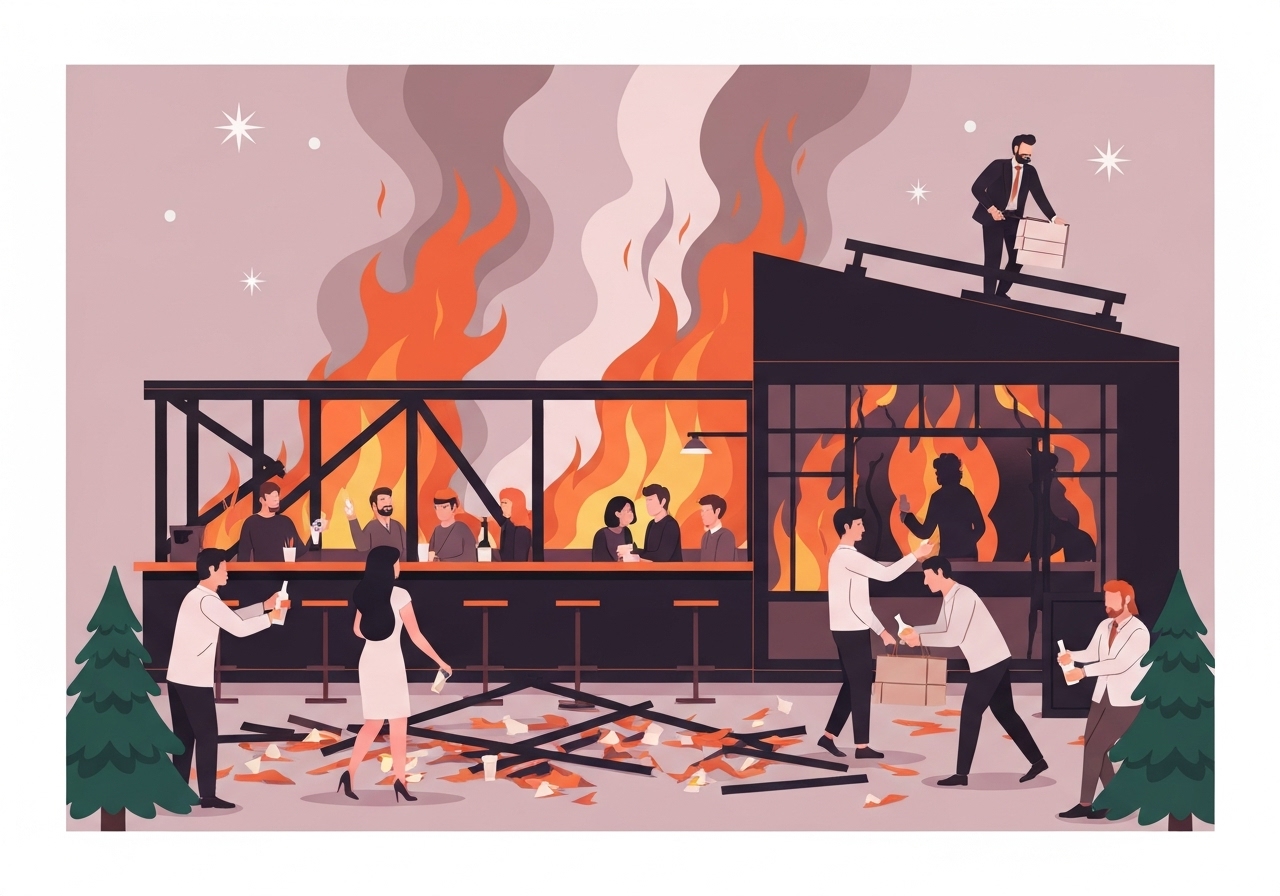
Swiss prosecutors in the canton of Valais opened a criminal investigation on 3 January 2026 into the managers of Le Constellation, a bar in the Crans‑Montana ski resort, after a New Year’s Eve blaze killed at least 40 people and injured 119. Authorities have accused the two managers of homicide by negligence, causing bodily harm by negligence and arson by negligence, and are probing capacity limits, escape routes and recent work on the premises. Many victims remain unidentified and numerous survivors are receiving treatment for severe burns in local and cross‑border hospitals. Officials say the inquiry will also examine how pyrotechnics or sparklers may have led to a rapid, widespread conflagration.
Key takeaways
- Fatalities: At least 40 people died in the Le Constellation fire during New Year’s Eve celebrations in Crans‑Montana, Valais, on 31 December 2025–1 January 2026.
- Injuries: Authorities report 119 people injured, several with serious burns requiring transfer to specialised burn units in Switzerland and neighbouring countries.
- Criminal probe: Valais prosecutors have opened an investigation into the bar managers on 3 January 2026 for homicide by negligence, causing bodily harm by negligence and arson by negligence.
- Suspects: Local reporting indicates the managers are a French man and woman; the woman was inside the venue and sustained burns to her arm, while the man was reportedly away at the time.
- Preliminary cause: Prosecutors say sparklers coming too close to the ceiling are a likely ignition source, leading to a fast‑spreading fire with estimated temperatures of 500–600°C.
- Identification: Officials were still identifying many of the deceased two days after the blaze; the Italian ambassador said some identifications could be completed by Sunday afternoon.
- Public concern: Investigations will review capacity, emergency exits and materials used in recent renovations as potential factors in the high casualty count.
Background
Crans‑Montana is an alpine resort in the canton of Valais known for luxury tourism and year‑end celebrations that attract domestic and international visitors. Le Constellation, the bar where the fire broke out, was hosting New Year’s Eve festivities when the blaze began; local reports say the venue had hosted similar events in previous years. Swiss building and fire safety rules govern public venues, but enforcement and inspection frequency vary by canton and by the size and classification of the premises.
Nightclub and bar fires can become lethal when combustible renovation materials, low ceilings, or blocked escape routes enable a rapid spread of heat and smoke. In this case prosecutors have said they will scrutinise entrance counts, the state of emergency exits and any recent refurbishment work that altered interior finishes or coverings. Families of victims, local authorities and national officials have mobilised emergency resources for victim identification and medical care.
Main event
The fire began during a New Year’s Eve gathering at Le Constellation and moved through the space with unusual speed, according to statements from Valais prosecutors. Officials have said sparklers or similar pyrotechnics appeared to contact the ceiling, igniting materials that allowed flames to expand quickly. Firefighters arrived to confront extreme temperatures that investigators estimate reached 500–600°C, conditions that can cause structural failure and make rescue operations far more hazardous.
Police and prosecutors detained and questioned a number of people connected to the venue. The two managers of the bar have been identified as central to the investigation; local media reported they operate other establishments in the area. One manager, a woman, sustained burns to her arm and was treated at hospital, while the other was reported to be absent from the bar when the blaze started.
Emergency services worked through the night and into subsequent days to rescue survivors and recover victims. Hospitals in Valais and neighbouring regions admitted burn patients; authorities arranged cross‑border transfers for specialised care where needed. The slow work of identifying the dead continued two days after the fire, with diplomats assisting in notifications for foreign nationals among the victims.
Analysis & implications
Legally, the charges under investigation—homicide by negligence, causing bodily harm by negligence and arson by negligence—carry significant penalties if prosecutors can show a causal link between managerial decisions or lapses and the fatalities. The probe will focus on whether safety rules were followed, whether capacity limits were respected, and whether renovation materials met non‑combustibility standards. Establishing negligence requires evidence on what the managers knew or should have known about those risks.
Beyond criminal liability, the incident is likely to trigger regulatory and operational responses at local and national levels. Cantonal authorities may tighten inspections for venues that host large events, and municipalities that depend on tourism could face scrutiny of permitting practices. Operators of similar venues may pre‑emptively review procedures for pyrotechnics and internal finishes to reduce liability and restore public confidence.
There are also broader social and cross‑border consequences: many victims were young, and the tragic toll will reverberate through families and communities in Switzerland and neighbouring countries. The need for specialist burn care and forensic identification highlights gaps in mass‑casualty readiness; policymakers may accelerate investment in regional trauma and identification capacity following this event.
Comparison & data
| Metric | Value |
|---|---|
| Confirmed dead | 40 |
| Injured | 119 |
| Estimated peak temperature | 500–600 °C |
| Date of incident | 31 Dec 2025–1 Jan 2026 |
| Likely ignition source (preliminary) | Sparklers near ceiling |
The table summarises the key numerical facts publicised by authorities as of 3 January 2026. Those figures form the baseline for legal inquiries, medical coordination and future policy discussion; investigators will seek to corroborate preliminary technical estimates such as peak temperature and ignition mechanism with forensic evidence.
Reactions & quotes
“It was an enormous tragedy. We are deeply sorry that this happened and our priority is medical care and identification of the victims,”
Beat Jans, Swiss justice minister
Justice minister Beat Jans spoke at the cordoned‑off scene, emphasising immediate priorities of care and identification while acknowledging the scale of the loss.
“Sparklers close to the ceiling appear to have ignited materials and produced a very rapid, wide‑ranging blaze,”
Beatrice Pilloud, chief prosecutor of Valais
Chief prosecutor Beatrice Pilloud framed the sparklers‑to‑ceiling scenario as the working hypothesis and said investigators would examine entry counts, exits and renovation materials.
“This may be one of the worst tragedies our country has experienced in recent memory,”
Guy Parmelin, Swiss president
President Parmelin called for a measured national response while offering condolences; diplomatic channels were also engaged to help identify foreign victims and notify families.
Unconfirmed
- Reports that the bar had been inspected “three times in 10 years” were published by local press and remain to be verified in official inspection records.
- While prosecutors cite sparklers near the ceiling as the likely ignition source, forensic work to conclusively determine the origin and sequence of events is ongoing.
- Local media have reported the managers are French nationals who run other venues in the area; these details are under verification as part of the inquiry.
Bottom line
The Crans‑Montana fire is the focus of a criminal probe that may lead to serious charges if investigators can establish managerial negligence contributed to the high death toll. In the near term, authorities are prioritising medical treatment for survivors, victim identification and collection of forensic evidence to reconstruct the fire’s timeline.
Longer term, the incident is likely to prompt stricter oversight of venues that host large, celebratory events, renewed attention to interior finish regulations and pyrotechnic controls, and policy discussions on emergency preparedness for mass‑casualty incidents. The families and communities affected face a lengthy period of recovery and legal process ahead.