
Lead
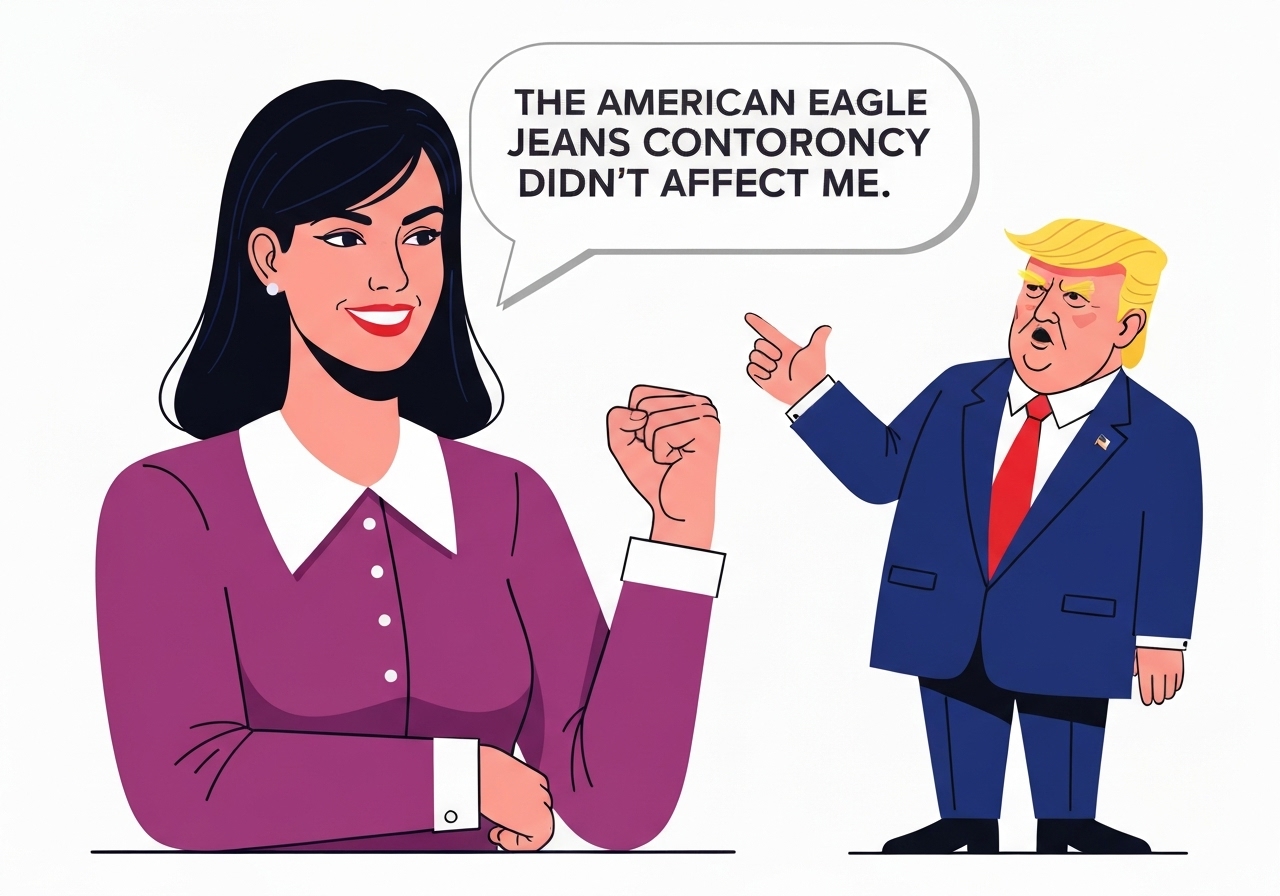
Actor Sydney Sweeney told GQ that the widely discussed American Eagle jeans ads earlier this year did not personally unsettle her, even as the campaign sparked national debate and drew comments from high-profile political figures. The ads — built around the tagline linking “great jeans” to a pun on “great genes” — prompted online backlash and claims that the images celebrated white heritage and thinness. Sweeney said she kept working through the reaction, put her phone away on set and did not feel defined by the controversy. She also noted American Eagle’s stock jump of 38% during the episode.
Key Takeaways
- Sydney Sweeney told GQ she was not compelled to issue a formal defense and said the ads “didn’t affect me,” emphasizing personal values and focus on work.
- The campaign used the tagline “Sydney Sweeney Has Great Jeans,” prompting criticism that it implied a pun on “great genes” and spurred online comparisons, including some extreme social-media reactions.
- The uproar drew political attention: White House communications manager Steven Cheung and Vice President J.D. Vance publicly criticized the backlash as an example of “cancel culture,” while former President Donald Trump also commented favorably.
- American Eagle’s stock rose roughly 38% amid the controversy, a figure Sweeney acknowledged as she followed headlines about sales and store traffic claims.
- Sweeney said she was filming long days on Euphoria and largely disconnected from the online debate, arguing she won’t let others define her or deter audiences from her projects like the biopic Christy.
Background
The American Eagle print and digital campaign featuring Sydney Sweeney leaned on a double-entendre around the phrase “great jeans,” which critics interpreted as a pun touching on genetic or racial connotations. That reading spread rapidly on social platforms, where some commentators accused the ads of pandering to whiteness or unrealistic body ideals. The intensity of reaction reflected broader cultural battles over representation, branding and sensitivity in marketing.
Brands and entertainers have increasingly found themselves in fast-moving online controversies, where a single creative choice can generate national headlines and political commentary. For American Eagle — a publicly traded retail company — investor attention, sales metrics and public relations all became entwined in the weeks after the campaign launched. The company entered a quiet period around earnings reporting, limiting what corporate spokespeople could say publicly, even as outside narratives multiplied.
Main Event
According to Sweeney’s GQ cover interview, the actor said she never felt the need to issue a formal explanation at the height of the backlash because she does not aim to direct public opinion. She described herself as sure of her values and focused on work, noting long filming days on Euphoria kept her largely offline. Sweeney framed the campaign as a straightforward jeans advertisement and expressed surprise at the strength of the reaction.
The social-media thread that amplified the controversy included posts comparing the campaign to extreme historical propaganda; those comparisons circulated widely and helped escalate the story into mainstream news. Political figures then weighed in: White House communications staff framed the online pushback as evidence of excessive “cancel culture,” and other elected officials mocked the critics’ response, using the moment politically.
Reports during the period noted a roughly 38% uptick in American Eagle’s stock, a metric Sweeney says she noticed as headlines tracked both alleged declines in in-store visits and the firm’s share performance. She asserted some claims about traffic and sales were inaccurate or speculative, partly because the company was in a quiet period and could not publicly rebut every online claim.
Analysis & Implications
The incident illustrates how contemporary brand campaigns can rapidly become cultural flashpoints when a creative device—here, a pun—intersects with heightened sensitivities about identity, representation and body image. For advertisers, the episode underscores the double risk of creative ambiguity: a phrase that seeks cleverness can be read in ways that reflect broader social anxieties, producing reputational and political fallout.
For talent like Sweeney, the episode shows the limited control actors often have over how marketing is framed and received. Her response—emphasizing personal values, continued work and an unwillingness to be defined by online opinion—aligns with a broader strategy some performers adopt to minimize reputational damage while continuing commercial partnerships.
Economically, the stock movement and reported metrics highlight the uneven relationship between controversy and commercial performance. A surge in investor interest can coexist with disputed reports of foot-traffic declines; short-term market reactions do not always match longer-term consumer behavior. That mismatch creates challenges for corporate communications, particularly during regulatory or reporting blackouts like quiet periods.
Comparison & Data
| Item | Reported Change |
|---|---|
| American Eagle stock | +38% (reported during controversy) |
| In-store visits (various headlines) | Claims of decline — contested and not substantiated publicly |
Those two headline figures—stock gain and disputed store-traffic claims—help explain why the campaign drew both investor attention and public scrutiny. The stock rise is a quantifiable market response reported during the episode; assertions about foot traffic and sales were widely cited in media coverage but, according to Sweeney, included inaccuracies she attributed to the company’s reporting constraints during a quiet period.
Reactions & Quotes
Public reaction spanned from consumer criticism to partisan comment. Below are brief excerpts with context:
“I know who I am… I don’t really let other people define who I am.”
Sydney Sweeney, interview with GQ (actor)
Context: Sweeney used this line to explain why she did not issue a public defense and why she continued working through the controversy.
“Cancel culture run amok.”
Steven Cheung, White House communications manager (official)
Context: Cheung characterized the backlash as excessive, framing the episode within broader conservative critiques of online criticism.
“If Sydney Sweeney is a registered Republican, I think her ad is fantastic!”
Donald J. Trump, former president (comment cited in coverage)
Context: Trump’s remark linked political affiliation to a favorable reading of the ad, adding a partisan dimension to public discussion.
Unconfirmed
- Exact causality between the campaign and any sustained decline in in-store traffic is unverified; some widely cited percent drops were disputed and not publicly substantiated.
- Whether American Eagle intended the ads to evoke racial or genetic connotations has not been established by direct corporate admission and remains a matter of interpretation.
- Sweeney’s precise voter-registration status was reported in coverage but has not been independently corroborated in the public record cited here.
Bottom Line
The American Eagle campaign starring Sydney Sweeney became a case study in how a consumer-advertising moment can escalate into national cultural and political debate. Sweeney’s response—focused on personal conviction and continued work—reflects one path public figures take to weather such storms without engaging in extended public sparring.
For brands, the episode reinforces the need to vet creative choices against diverse audience readings and to prepare communications strategies that can address both market and reputational impacts. Observers should also treat some circulated claims with caution: market metrics and expressed social-media sentiment do not always move in lockstep, and some assertions remain unverified.