
Lead
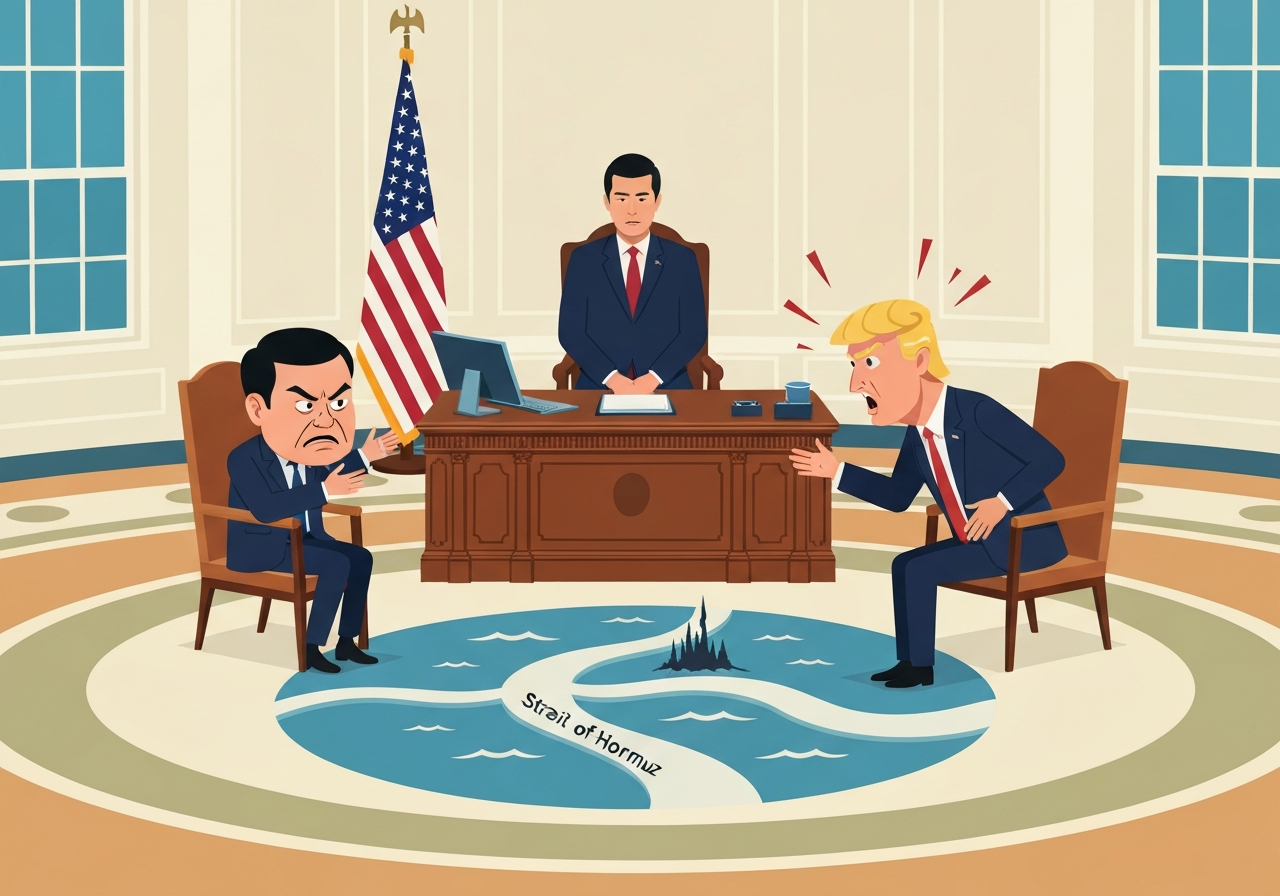
Japanese Prime Minister Sanae Takaichi met with U.S. President Donald Trump at the White House on Thursday as Washington pressed allies to help secure the Strait of Hormuz amid the war in Iran. The trip to China that Trump planned was delayed, turning the meeting into a focal point for U.S. requests that Japan assist in protecting a crucial oil and gas route. Tokyo has publicly denied any formal request from Washington for Japanese warships, even as Trump has publicly complained that allies rebuffed his appeals. The encounter was widely expected to be tense given competing priorities on Middle East security and Indo-Pacific stability.
Key Takeaways
- Meeting location and timing: The talks took place at the White House on Thursday as Trump postponed a planned China visit owing to the conflict in Iran.
- U.S. request: Trump urged allies, including Japan, to help guard the Strait of Hormuz, a vital shipping lane for oil and gas, but Tokyo says it received no formal request for warships.
- Constitutional limits: Japan’s post-World War II constitution bars the use of force except for self-defense; deploying forces abroad to join combat operations would require a rare political shift.
- Existing Japanese presence: Japan has maintained a small naval presence in the region for anti-piracy missions for at least a decade, and could contribute tasks like mine-clearing.
- High diplomatic stakes: Kurt Campbell called the meeting unusually consequential for U.S.-Japan relations and said Washington is expected to press Tokyo intensely.
- Regional trade and security: Takaichi sought to keep the agenda focused on trade, critical minerals, energy cooperation and China-related security concerns in the Indo-Pacific.
- Taiwan and troop shifts: Tokyo is concerned that U.S. troop movements to the Middle East weaken deterrence against growing Chinese pressure around Taiwan.
Background
The Strait of Hormuz is a choke point for global energy flows; any disruption sends ripple effects through oil and gas markets and strategic planning among allied states. After recent attacks and escalations tied to the war in Iran, the Trump administration called on partners to help secure the waterway — a request that has been controversial because it potentially pulls nations into direct security operations in the Middle East. Japan, reliant on Middle Eastern energy supplies, has historically limited its military role abroad under Article 9 of its constitution, which restricts the use of force to self-defense and frames its forces as the Self-Defense Force (SDF).
Sanae Takaichi, who became prime minister following in the political footsteps of Shinzo Abe, represents a conservative, pro-Taiwan strand of Japanese politics and has emphasized bolstering Japan’s security posture. That domestic posture complicates any decision to participate in U.S.-led operations outside Japan’s immediate defense perimeter. At the same time, Tokyo is navigating a strategic triangle: deep security dependence on the United States, an economic relationship with China, and the vulnerability posed by a potential Chinese move against Taiwan.
Main Event
The White House meeting unfolded against a backdrop of public pressure from President Trump, who has voiced frustration that allies declined to join an effort to secure the Strait. The U.S. leader initially framed the request as urgent, then at times downplayed the need for allied help after public rebukes. Japanese officials before departure insisted there was no formal American demand for Japanese warships, even as U.S. advisers signaled they expected Tokyo to do more.
Inside the talks, Japanese priorities reportedly included trade ties, cooperation on critical minerals and energy, and reassurance about U.S. commitments in the Indo-Pacific. Takaichi has signaled she wants to emerge from the meeting seen as a partner on Middle East concerns while also securing greater U.S. attention to Japan’s priorities, such as deterrence against China and Taiwan-related security.
U.S. and Japanese security officials have explored narrower forms of support that fall short of direct combat deployments — for example, mine-clearing or logistics assistance — which some experts say would be politically and legally easier for Tokyo. Yet advisers cautioned that any move toward collective self-defense in an active Middle Eastern campaign would confront a very high domestic political bar in Japan.
Analysis & Implications
Short-term, Tokyo faces a trade-off between responding to allied calls on global security and avoiding a constitutional and political rupture at home. Providing limited, non-combat naval support could help preserve alliance cohesion while minimizing legal and political exposure in Japan. But even modest contributions risk domestic backlash among voters and lawmakers wary of broader operational commitments.
Strategically, Japan’s choices carry implications for deterrence in East Asia. The redeployment of some U.S. forces from Japan to the Middle East reduces a near-term check on Chinese military activity, particularly around Taiwan, and Tokyo is pressing Washington for assurances. If the U.S. becomes more engaged in the Middle East for a prolonged period, Japan may accelerate its own defense modernization and regional partnerships to hedge against diminished U.S. presence.
Economically, any disruption to the Strait of Hormuz threatens energy supplies and could drive up fuel prices, which would directly affect Japan’s import-dependent economy. This creates an incentive for Tokyo to seek practical measures — such as increased intelligence-sharing, logistics, or mine-countermeasure capabilities — that protect supply routes without triggering a constitutional confrontation.
Comparison & Data
| Issue | Japan (current) | U.S. request / expectation |
|---|---|---|
| Legal constraint | Article 9 limits use of force; SDF framed as self-defense | Support for securing shipping lanes; options vary from non-combat to combat roles |
| Operational precedent | Small naval deployments for anti-piracy in the region for at least a decade | Rapid, ad hoc coalition operations and logistics in crises |
| Domestic politics | High bar for invoking collective self-defense for new theaters | Urgent political pressure from the U.S. executive branch |
The table summarizes how Japan’s legal and political posture contrasts with U.S. expectations. Historical anti-piracy missions demonstrate Tokyo’s willingness to contribute maritime assets on limited, legally framed mandates; however, committing forces to an active wartime mission in the Middle East would be a far larger step.
Reactions & Quotes
The diplomatic community and analysts offered immediate readings after the meeting, noting both the strain and the potential for negotiated compromises on contribution types.
“I’ve never seen a U.S.-Japan meeting with stakes this high,”
Kurt Campbell, chair, The Asia Group (former U.S. deputy national security official)
Campbell emphasized that Takaichi would try to frame any cooperation as partnership-building to win broader U.S. attention on Indo-Pacific matters, including Taiwan.
“We do not need the help of anyone,”
Donald Trump (social post, paraphrased)
Trump’s public comments alternated between urging assistance and asserting U.S. predominance, complicating alliance messaging and making Tokyo’s response politically sensitive.
Unconfirmed
- Whether the U.S. issued a formal, written request for Japanese warships remains disputed; Tokyo has denied receiving such a formal demand.
- It is unclear if Japan will publicly invoke collective self-defense to participate in Middle East operations; that decision would require significant parliamentary and political consensus.
- Any precise timeline for additional U.S. troop movements back to the Indo-Pacific to reassure Japan has not been publicly committed by the White House.
Bottom Line
The White House meeting put a spotlight on the delicate balance Tokyo must strike between alliance solidarity and constitutional, political limits on military engagement. Japan can contribute in ways that mitigate legal risks — for example, mine-countermeasures, logistics or intelligence-sharing — but sending warships into an active wartime theater would be politically fraught and legally novel.
Longer term, the episode underscores shifting alliance burdens: extended U.S. focus in the Middle East could prompt Japan to accelerate defense reforms and deepen regional partnerships to sustain deterrence in East Asia. For now, expect Tokyo to seek narrow, legally defensible cooperation that preserves strategic ties with Washington while protecting domestic political consensus.
Sources
- Associated Press (news organization) — original reporting on the White House meeting and diplomatic context.
- The Asia Group (analysis/think tank) — commentary and background from Kurt Campbell and security analysts.
- Prime Minister’s Office of Japan (official government) — statements on Japan’s policies and SDF legal framework.