
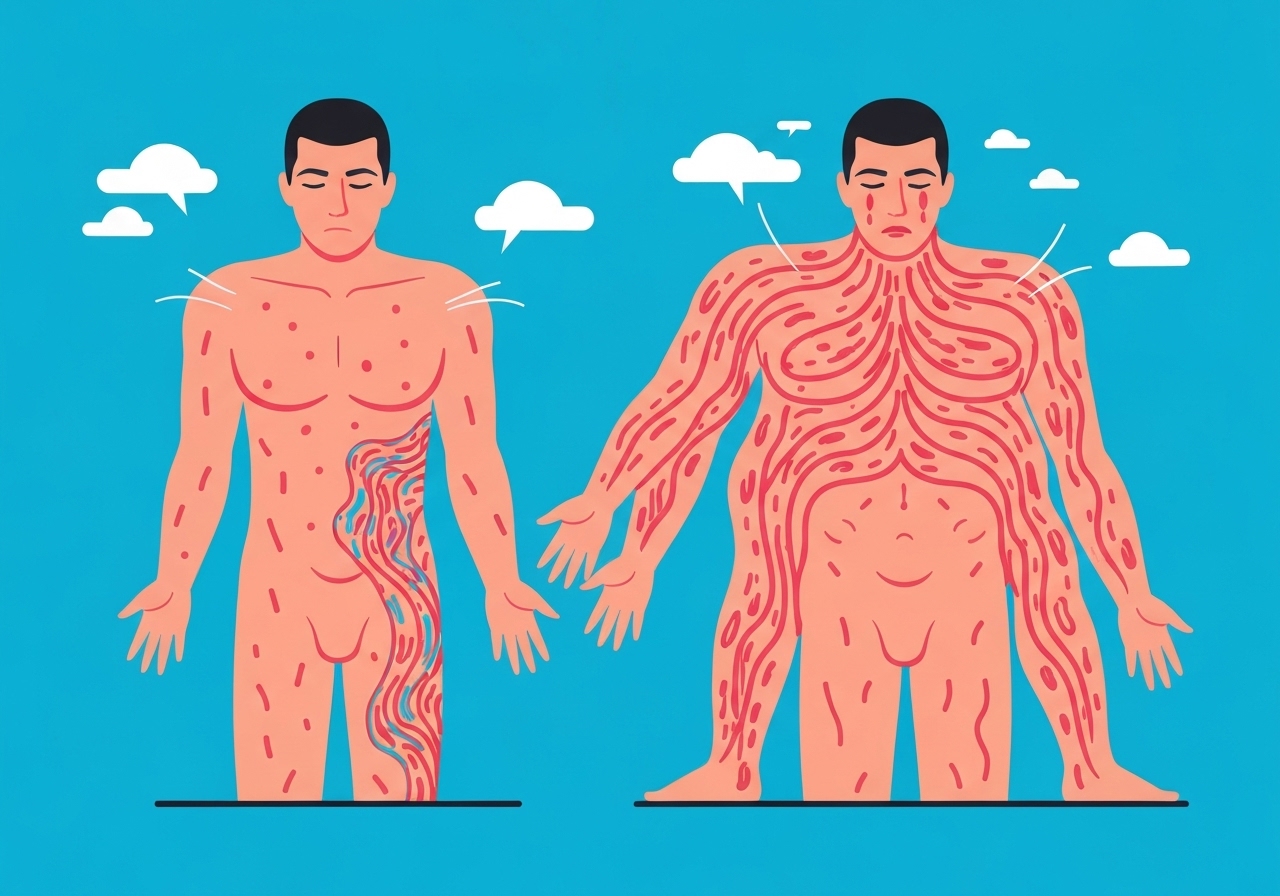
Scientists at Northwestern Medicine and the University of California, San Francisco report that indoor tanning produces widespread DNA damage across almost the entire skin surface and is associated with a roughly threefold rise in melanoma risk. The team combined epidemiological analysis of 32,315 dermatology patients with single-cell DNA sequencing of melanocytes to trace how tanning-bed UV exposures change mutation patterns. Their findings show higher melanoma incidence among tanning-bed users and unexpectedly large mutation burdens in areas of skin rarely exposed to sunlight. The study concludes that tanning beds pose a clear and measurable cancer risk and calls into question claims that artificial tanning is a safer substitute for natural sun exposure.
Key Takeaways
- Researchers reviewed records for 32,315 dermatology patients; 7,474 reported tanning-bed use and 2,932 had detailed exposure histories used for the epidemiological analysis.
- Melanoma was diagnosed in 5.1% of indoor tanners versus 2.1% of non-users, yielding a 2.85-fold adjusted increase in melanoma risk after controlling for age, sex, sunburn history and family history.
- Single-cell sequencing examined 182 individual melanocytes from three donor groups; melanocytes from long-term indoor tanners carried nearly twice the number of mutations as controls.
- Mutation patterns were concentrated not only on sun-exposed sites but also on body areas with low cumulative sun exposure (lower back, buttocks), aligning with distinctive melanoma presentations in tanning-bed users.
- Tanning beds entered the U.S. market in the 1970s; by the mid-2010s the sector approached a US$3 billion annual industry and, in 2013, an estimated 7.8 million women and 1.9 million men used sunbeds yearly.
- The World Health Organization classifies tanning beds as Group 1 carcinogens (sufficient evidence of carcinogenicity in humans).
Background
Indoor tanning devices have been commercially available in the United States since the 1970s and became widely used for cosmetic tanning over ensuing decades. By the mid-2010s the market had matured into a multibillion-dollar industry, with substantial use among adolescents and young adults: surveys cited in the study note up to 40% of teenage girls and roughly 20% of 18–29-year-olds reported using tanning beds in the prior 12 months. Regulatory responses have been uneven: the FDA attempted tighter rules in 2015, and many U.S. states now restrict minors, while countries such as Australia (2015) and Brazil (2009) have implemented stronger national bans or limits.
Prior epidemiological research linked indoor tanning to higher skin-cancer incidence, but mechanisms tying specific mutational changes in skin cells to tanning-bed exposure were less well characterized. Ultraviolet (UV) radiation is known to produce DNA damage; the novelty of the current work lies in pairing large-scale patient data with single-cell genomic profiling of melanocytes—the pigment-producing cells from which melanoma originates. That combination allowed investigators to evaluate both population-level risk and the cellular mutational landscape attributable to artificial UV sources.
Main Event
The research team first assembled an epidemiological cohort from 32,315 patients seen at Northwestern University Dermatology. Among those, 7,474 reported a history of tanning-bed use; detailed exposure data were available for 2,932 users who comprised the case cohort. A control cohort of 2,925 patients without a tanning-bed history was randomly selected from the remaining 24,841 non-users for comparison. Melanoma diagnoses were extracted from medical records and analyzed after adjusting for confounders.
In this medical-record analysis, melanoma prevalence was 5.1% among indoor tanners compared with 2.1% in non-users. After statistical adjustment for age, sex, sunburn history and family history of skin cancer, tanning-bed use was associated with a 2.85-fold increase in melanoma risk. Notably, tanning-bed users developed tumors more frequently on sites that usually receive low lifetime sun exposure, such as the lower back and buttocks.
To probe cellular mechanisms, the team performed single-cell DNA sequencing of melanocytes from three groups: 11 long-term indoor tanners, nine matched never-users, and six cadaver skin controls. Across 182 sequenced melanocytes, cells from indoor tanners harbored almost twice the number of mutations seen in controls, with a higher fraction of mutations previously linked to melanoma development. The mutation burden appeared broadly distributed across the skin rather than localized to chronically sun-exposed patches.
The investigators emphasized that even histologically normal skin from tanning-bed users—skin without visible moles—showed precursor mutations that increase melanoma susceptibility. Clinically, the pattern resembled familial melanoma presentations, where multiple primary tumors arise on sites with relatively low cumulative sun exposure despite the absence of inherited high-risk variants in many tanning-bed patients.
Analysis & Implications
The combination of epidemiological association and single-cell mutational evidence strengthens causal inference: tanning-bed UV exposures are not simply correlated with higher melanoma rates but appear to create characteristic DNA damage across wide areas of skin. That widespread mutational footprint helps explain why tumors in users occur at less sun-exposed sites and why young users can develop multiple primaries—patterns similar to genetically predisposed cases but arising from environmental insult.
Public-health implications are substantial. A near-threefold adjusted increase in melanoma risk translates into meaningful additional cases given baseline incidence; melanoma already accounts for roughly 11,000 U.S. deaths per year. The findings undercut marketing claims that tanning beds are a safe way to prepare for sun exposure or that their UV spectrum is meaningfully less harmful than natural sunlight.
Regulatory and prevention strategies may need to be revisited. Many jurisdictions already prohibit or restrict minors’ use; these data provide biological and epidemiological grounds for broader limits, enhanced consumer warnings, and possibly tighter controls on device UV outputs or sales. For clinicians, the study suggests increasing suspicion for melanoma in younger patients with tanning histories and considering wider skin surveillance beyond chronically sun-exposed zones.
Comparison & Data
| Measure | Indoor tanners | Non-users |
|---|---|---|
| Melanoma diagnosed | 5.1% | 2.1% |
| Adjusted melanoma risk | 2.85-fold higher with tanning-bed use | |
| Melanocytes sequenced | 182 cells (from 26 donors) | |
| Relative mutation burden | ~2× controls | baseline |
These figures synthesize the paper’s central quantitative findings: the clinical cohort analysis documents the population-level increased melanoma prevalence and adjusted risk, while single-cell sequencing quantifies the mutational enrichment in melanocytes from tanning-bed users. Numbers above are drawn directly from the research cohort sizes and reported percentages; they illustrate both the epidemiological signal and the cellular-level changes that underpin it.
Reactions & Quotes
“In tanning bed users, we saw those same dangerous mutations across almost the entire skin surface.”
Dr. Pedram Gerami, Northwestern University (study first author)
This remark summarizes the study’s central cellular finding: mutations commonly implicated in melanoma were not confined to sun-exposed patches but were widespread in users’ skin. The authors present this as a mechanistic bridge between device exposure and clinical tumor patterns.
“Tanning bed usage raises the mutation burden and risk of melanoma particularly in skin cells that receive low cumulative sun damage.”
Study authors, Science Advances paper
The research team’s conclusion highlights why tanning-bed–associated melanomas can appear in body sites with little natural UV exposure, producing tumor patterns that differ from typical sun-driven melanoma.
Unconfirmed
- Claims that tanning salons outnumber McDonald’s outlets in Florida and specific prevalence figures by location require direct citation of the survey source and are summarized here as reported in secondary coverage.
- Statements about the relative political power of industry lobbies in specific countries are context-dependent and were reported in the coverage; the strength and timing of lobbying influence on policy change merit separate verification.
- The degree to which consumer-warning labels similar to cigarette packaging would change behavior is speculative and not evaluated in this study.
Bottom Line
This combined epidemiological and single-cell genomic study provides robust evidence that tanning-bed use substantially increases melanoma risk (adjusted 2.85-fold) and causes a broad mutational burden in melanocytes across much of the skin surface. Those cellular changes map to clinical patterns—multiple primaries and tumors on low-sun-exposure sites—seen in many young users without familial predisposition.
From a public health perspective, the findings strengthen the case for stricter regulation, clearer consumer warnings and targeted clinical surveillance for people with tanning-bed histories. For individuals, the data make a strong argument to avoid indoor tanning altogether: artificial UV exposure leaves a measurable, cancer-linked mutational legacy in otherwise normal-appearing skin.
Sources
- New Atlas (media report summarizing the study)
- Northwestern University (official university coverage/press office)
- Science Advances (peer-reviewed journal — original research paper)
- World Health Organization (WHO) (international health authority; Group 1 carcinogen classification)