
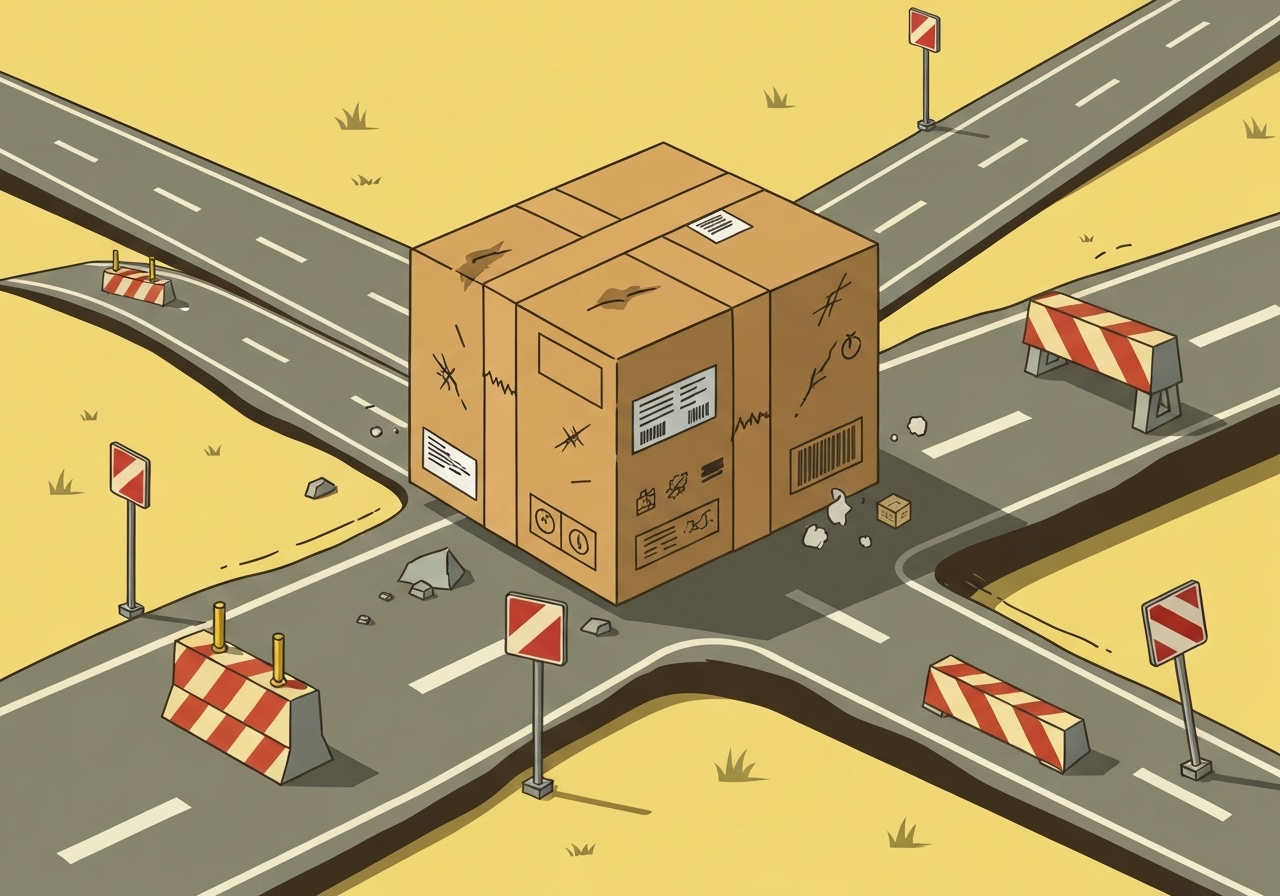
— Tariff measures introduced since the start of President Trump’s second term have altered trade flows and investment decisions worldwide, and that process looks set to continue through 2026. The International Monetary Fund now flags the tariff shock as a factor in slowing projected global growth to 3.1% next year, down from its earlier 3.3% forecast. Firms and governments report higher costs, more red tape and strategic reshoring or diversification of supply chains, while exemptions and workarounds have softened some immediate damage. The next high-profile test will be a planned meeting between President Trump and China’s President Xi in April, where trade barriers, technology access and supply security are expected to dominate.
Key takeaways
- The IMF expects world GDP growth to slow to 3.1% in 2026, versus a 3.3% forecast a year earlier.
- UNCTAD estimates global trade value rose about 7% in the last year to over $35 trillion despite tariff frictions.
- US inflation in November stood at roughly 2.7%; economists estimate tariffs have added about 0.3–0.5 percentage points to that figure.
- Between July and September the US economy registered a 4.3% annualised expansion, the strongest two-year pace reported.
- China’s leadership says the economy may reach a $20 trillion size in 2026, even as bilateral goods trade with the US fell for a third straight year in 2025.
- Goldman Sachs projects Brent crude may fall about 8% to roughly $56 a barrel in 2026 based on supply expectations.
- US manufacturing employment remains near 12.7 million, marginally below earlier levels despite tariffs aimed at boosting domestic production.
Background
Tariff policy became a central element of US economic strategy after the start of President Trump’s second term, with duties placed on a wide range of imports to encourage reshoring and protect domestic producers. Other economies responded unevenly: many limited formal retaliation, while China mounted selective countermeasures that helped prompt adjustments in US policy. Exemptions, carve-outs and administrative waivers have been a prominent feature of the US measures, creating both relief for some importers and uncertainty about future rules.
The broader context includes lingering pandemic-era supply disruptions, a push among governments to secure critical inputs such as rare earths and semiconductors, and a surge in investment in technologies like artificial intelligence. Those forces interact with trade policy: companies reassess where they make goods, how they hold inventories and which markets they prioritise. Multilateral institutions and trade bodies have flagged the cumulative cost of such frictions to efficiency and long-run growth.
Main event
Since the tariffs were introduced, five rounds of US–China talks have taken place but many duties and trade limits remain in place. Officials from both sides say dialogue continues, with particular focus on tariffs, access to high-end chips, and sourcing of strategic inputs. China’s leadership marked the new year by forecasting GDP will reach roughly $20 trillion in 2026 and emphasised a willingness to cooperate internationally, while avoiding detailed public concessions on trade measures.
Businesses have reacted in varied ways. Some multinational manufacturers, including automakers such as Hyundai, have expanded US production to capture market advantages and avoid duties. Others have redirected exports to Europe and alternative markets; data show China increased shipments to Europe even as US–China goods trade declined for a third consecutive year in 2025. Shipping routes were also affected: attacks in the Red Sea prompted many carriers to reroute around southern Africa, adding time and cost until a limited resumption of trans-Suez traffic late in the year.
At the macro level, headline inflation and consumer spending dynamics remain central. The US consumer remains resilient, supporting growth even as tariffs lift certain costs. Central banks in different regions face divergent conditions: eurozone inflation is around 2.1% while UK inflation is nearer 3.2%, complicating monetary policy choices. Meanwhile, a pending US Supreme Court case over the legality of tariffs could change the legal standing of some measures, creating a source of near-term uncertainty.
Analysis & implications
Tariffs have a multi-channel effect: they raise import prices for firms and consumers, alter relative costs across countries, and create persistent uncertainty that can reduce investment. The IMF and other forecasters now see lower potential growth because trade frictions worsen allocative efficiency and risk long-run productivity losses. Even when exemptions and lower interest rates mute the immediate hit, the structural consequences—shifts in supply chains, duplicated capacity, and slower technology diffusion—accumulate over time.
For the US, tariffs are intended to spur re-industrialisation and onshore critical production. So far the evidence is mixed: some manufacturing investment has been incentivised, but payrolls in the sector remain just under 12.7 million jobs, and it is unclear how durable new facilities will be if tariff policy changes. Consumers have kept spending, and large private investment in AI and other sectors has buoyed growth, but the net gain in tradable-sector employment has been modest.
Globally, firms have sought workarounds that blunt tariff effects—supply re‑routing, tariff engineering, and use of exemptions—making the real-world impact patchy and hard to predict. That complexity creates winners and losers across countries: some smaller exporters have benefited from diversion of trade flows, while economies exposed to intermediate‑goods imports face greater cost pressure. If tariffs persist, expect more regionalisation of supply chains, renewed investment in nearshoring, and increased emphasis on trade agreements outside the US–China axis.
Comparison & data
| Indicator | Most recent value |
|---|---|
| IMF global growth forecast for 2026 | 3.1% |
| Global trade value (annual) | >$35 trillion (+7%) |
| US share of world economy | ~26% |
| US manufacturing employment | ~12.7 million |
| US inflation (Nov) | ~2.7% |
| Eurozone inflation | ~2.1% |
| UK inflation | ~3.2% |
| Goldman Sachs Brent 2026 projection | ~$56/bbl (-8%) |
The table summarises the central figures discussed earlier: slower projected global growth, resilient trade value despite frictions, and mixed inflation signals across advanced economies. These numbers show how headline resilience can mask deeper reallocation and uncertainty that weigh on investment decisions.
Reactions & quotes
“This growth is too slow to meet the aspirations of people around the world for better lives,”
Kristalina Georgieva, IMF Managing Director (official)
Georgieva emphasised that although the immediate downturn is not as dire as once feared, the pace of expansion remains inadequate for many countries’ development objectives.
“We certainly avoided a trade disaster,”
Maurice Obstfeld, Peterson Institute/Former IMF Chief Economist (think tank/academic)
Obstfeld pointed to muted retaliation and rapid policy adjustments—particularly between the US and China—as factors that prevented a deeper global trade collapse.
“This is a very, very resilient economy,”
Aditya Bhave, Bank of America (financial institution)
Bhave used the phrase to describe US consumer-driven growth, while noting tariffs likely added a modest upward pressure to inflation so far.
Unconfirmed
- The exact legal outcome and timing of the US Supreme Court decision on the tariffs remain unresolved and could materially change policy implementation.
- The full, long-run inflationary impact of tariffs is uncertain because exemptions, currency moves and monetary policy responses can offset or amplify effects.
- Whether the April summit between Presidents Trump and Xi will produce durable tariff rollbacks or only short-term management of frictions is unknown.
Bottom line
Tariff measures introduced since the start of the current US administration have reconfigured global trade patterns and investment incentives but have not produced an immediate, system‑wide collapse of trade. Exemptions, firm-level workarounds and macroeconomic offsets such as lower interest rates and a softer dollar have eased short-term disruption. Nonetheless, the cumulative effect of tariffs is a slower path for global growth and greater uncertainty for firms planning capital projects, which helps explain the IMF’s downgraded 3.1% forecast for 2026.
Looking ahead, the April meeting between the US and China and a pending US Supreme Court ruling are pivotal near-term events. If tariffs remain entrenched, expect further regionalisation of supply chains, more bilateral trade deals and uneven distributional effects across countries and industries. Policymakers and businesses should plan for a world where trade frictions are a medium-term structural feature rather than a short-lived shock.
Sources
- BBC News — international news reporting and original coverage of US–China trade talks (news)
- International Monetary Fund (IMF) — world economic outlook and official growth forecasts (official institution)
- UN Conference on Trade and Development (UNCTAD) — global trade statistics and analysis (UN agency)
- Peterson Institute for International Economics — expert commentary and research on trade policy (think tank)
- Goldman Sachs — commodity price and macro forecasts (financial institution)
- Maersk — shipping company statements on Red Sea transits (company)