
Lead
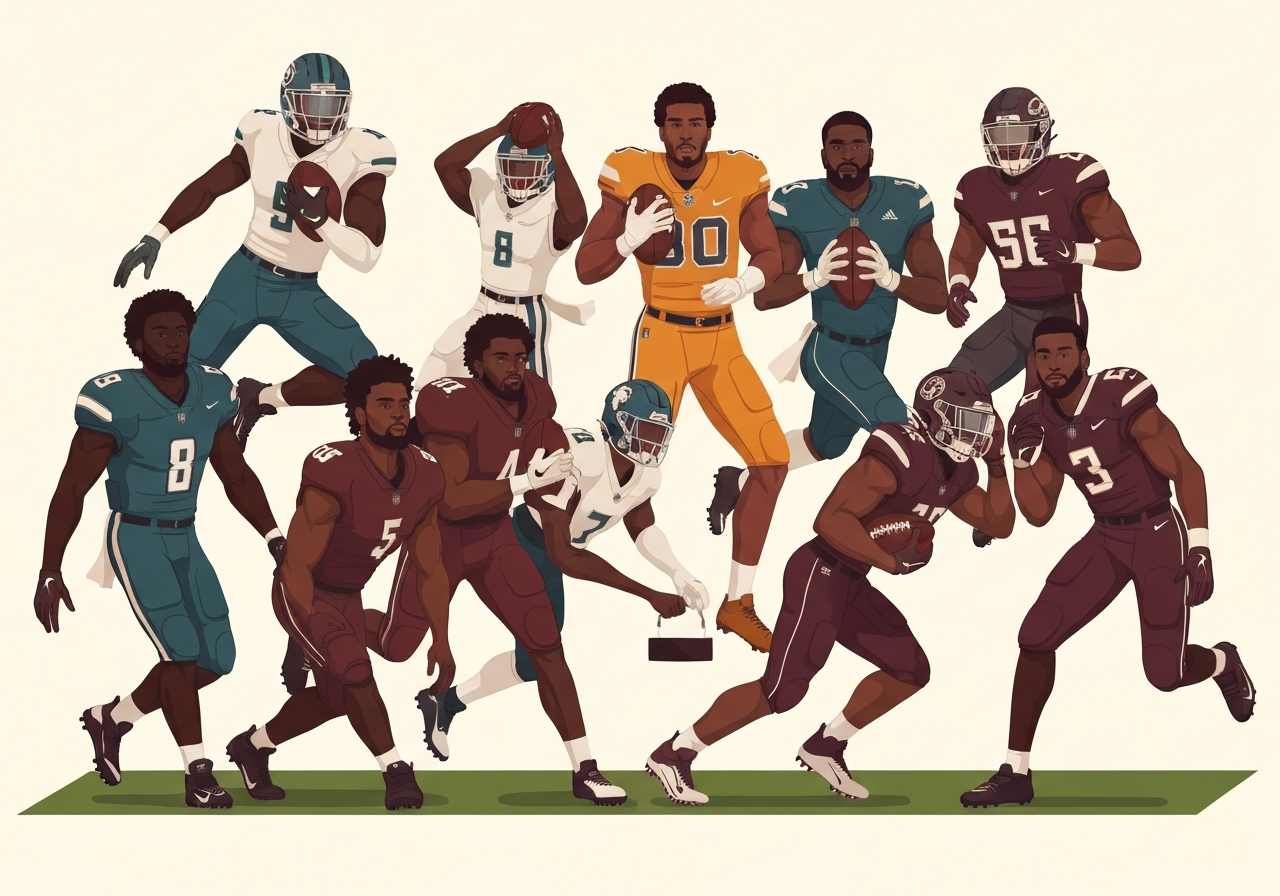
The 2026 NFL Scouting Combine in Indianapolis (Mar. 5) gathered 272 top college prospects for measurement and testing, and while high-profile names like Jeremiyah Love and Sonny Styles reinforced their standing, a group of lesser-known players markedly improved their NFL IQ draft scores. Using NFL IQ’s pre- and post-combine metrics, analysts identified ten under-the-radar prospects whose athletic testing and drill work produced notable jumps in draft evaluation. Those increases ranged from modest boosts to double-digit gains and have prompted fresh attention from scouts and mock drafters. The changes do not guarantee draft positions but materially altered how some teams may view these players ahead of April’s draft.
Key Takeaways
- 272 prospects attended the 2026 NFL Scouting Combine; NFL IQ compared pre- and post-combine draft scores for participants.
- UCF EDGE Lawrence rose from a 67 pre-combine draft score to 73 after posting a 4.52 40-yard dash, 40″ vertical and 10’10” broad jump; athleticism score: 86.
- Arkansas RB Washington jumped 14 points (57 to 71) after running a 4.33 40 and earning an athleticism score of 92, best among running backs.
- Texas Tech LB Rodriguez improved from 71 to 79, leading linebackers in shuttle (4.19s) and three-cone (6.90s) with a 40 of 4.57; athleticism: 86.
- North Dakota State WR posted an 86 overall from 78, recording a 4.34 40, 41.5″ vertical and 11’1″ broad; athleticism: 99.
- LSU WR Thomas jumped from 55 to 69 with a 4.28 40, the largest single draft-score gain among the group.
- Cincinnati WR Caldwell and the NDSU receiver both hit athleticism scores of 99; Caldwell’s 4.31 40, 42″ vertical and 11’2″ broad helped lift him from 72 to 79.
Background
The NFL Scouting Combine serves as the preeminent centralized testing venue where invited prospects undergo standardized athletic tests, positional drills and medical checks. NFL IQ mirrored how club departments evaluate talent by providing pre- and post-combine draft scores across three dimensions: athleticism, production and a composite overall draft score. Historically, some prospects have transformed their draft outlook through standout testing, while others have had existing evaluations reinforced; this year produced a mixture of both outcomes. Daniel Jeremiah and other draft analysts publish iterative Top 50 lists prior to and following the combine, and a number of the prospects highlighted here were absent from Jeremiah’s Top 50 2.0 list published Feb. 23.
Combine measurements are not a substitute for game tape but serve as common data points for teams to compare prospects with disparate competition levels and systems. NFL IQ’s scoring bands classify performance into Elite (90–99), Good (75–89), Average (60–74) and Below Average (50–59), allowing scouts to quantify how a player’s measurable traits compare to positional peers. For lower-profile prospects—those without sustained national exposure or from smaller programs—the combine offers a chance to reduce uncertainty and improve draft positioning. Teams weigh these measurements differently by scheme, positional need and risk tolerance, so a jump in athleticism will carry varying significance across clubs.
Main Event
UCF EDGE Lawrence arrived with a mid-range 67 draft score and boosted it to 73 after an impressive testing battery. His 4.52 40-yard dash was the third-fastest among edge rushers at the combine, and his 40″ vertical and 10’10” broad jump signaled explosive lower-body power; NFL analyst Lance Zierlein described him as an “NFL-caliber edge rusher,” and Daniel Jeremiah added him to the post-combine Top 50 at No. 43.
Arkansas RB Washington produced the largest single position jump among running backs, climbing from 57 to 71 after a 4.33 40 and an athleticism score of 92—the highest among running backs at Indianapolis. Those numbers elevated a prospect who had not appeared in some pre-combine three-round mock drafts into clearer Day 2 conversation for teams that value speed and special-teams upside.
At linebacker, Texas Tech’s Rodriguez turned heads by topping the positional leaderboards in shuttle (4.19s) and three-cone (6.90s), while running a 4.57 40. He moved from a 71 pre-combine score to a 79 post-combine mark and was later slotted No. 45 in Daniel Jeremiah’s Top 50 3.0, reflecting new attention from evaluators.
Wide receivers from North Dakota State and Cincinnati also rose. NDSU’s receiver went from 78 to 86 and earned a perfect 99 athleticism score after a 4.34 40, 41.5″ vertical and 11’1″ broad jump. Cincinnati’s Caldwell improved from 72 to 79, matching a 99 athleticism score on a 4.31 40, 42″ vertical and 11’2″ broad; at 6’5″, his length combined with explosive testing boosted his profile.
Other notable movers included Stanford TE (66 to 75), praised for a 6’6″, 267-pound blocking frame; LSU WR Thomas (55 to 69) whose 4.28 40 ranked third overall; Kansas OT Cruz (64 to 71) who posted a 4.94 40 and top vertical/broad numbers among tackles; Stephen F. Austin CB (72 to 79) who led corners in athleticism at 88; and Kentucky DT Gusta (65 to 72), the lone defensive tackle with an Elite athleticism score of 91 thanks in part to a 4.88 40.
Analysis & Implications
A measurable boost at the combine can shorten evaluation timelines for clubs weighing tape concerns against physical upside. For small-school prospects or mid-tier players, elite athletic scores reduce variance in projections by confirming traits—speed, explosiveness, change-of-direction—teams cannot glean solely from game film. NFL IQ’s post-combine draft-score shifts suggest scouts may be more willing to allocate higher-day picks to these players, particularly when athleticism blends with position-specific drills.
However, the translation from testing to on-field performance remains the central question. A wide receiver with a 4.28 40 demonstrates speed but still must show route nuance, catch consistency and separation against NFL-caliber defensive backs. Similarly, an offensive tackle who tests well must prove sustained pass sets and run-blocking technique against power rushers; athleticism is necessary but not sufficient. Teams will balance the improved quantitative profile with qualitative scouting reports, medical evaluations and interviews before making upward moves on boards.
Positional value also influences the market effect of combine gains. Edge rushers, pass catchers and offensive tackles often trade more freely for measurable traits because of their scarcity, while interior defensive tackles or blocking tight ends may see smaller draft capital changes despite athletic gains. The prospects highlighted here who moved into Day 2 conversations—Lawrence, Washington, Rodriguez and a pair of receivers—illustrate where athleticism can yield the largest perceived return on draft capital among teams with specific scheme fits.
Comparison & Data
| Player | School | Pos | Pre | Post | Jump | 40yd | Vert | Broad |
|---|---|---|---|---|---|---|---|---|
| Lawrence | UCF | EDGE | 67 | 73 | +6 | 4.52s | 40″ | 10’10” |
| Washington | Arkansas | RB | 57 | 71 | +14 | 4.33s | — | — |
| Rodriguez | Texas Tech | LB | 71 | 79 | +8 | 4.57s | — | — |
| NDSU WR | North Dakota St. | WR | 78 | 86 | +8 | 4.34s | 41.5″ | 11’1″ |
| Stanford TE | Stanford | TE | 66 | 75 | +9 | — | — | — |
| Thomas | LSU | WR | 55 | 69 | +14 | 4.28s | — | — |
| Cruz | Kansas | OT | 64 | 71 | +7 | 4.94s | 35.5″ | 9’8″ |
| SFA CB | Stephen F. Austin | CB | 72 | 79 | +7 | 4.41s | 42″ | 11’0″ |
| Gusta | Kentucky | DT | 65 | 72 | +7 | 4.88s | — | — |
| Caldwell | Cincinnati | WR | 72 | 79 | +7 | 4.31s | 42″ | 11’2″ |
The table above aggregates pre- and post-combine draft scores and key athletic marks for the ten prospects. These numbers illustrate that while several players posted mid-single-digit increases, a few achieved double-digit uplifts—most notably Arkansas RB Washington and LSU WR Thomas. Teams will use such rows of data alongside position-drill grades and medical reports to refine board placements heading into the draft.
Reactions & Quotes
Analysts and scouts reacted quickly after the combine, placing several of these prospects into updated mock drafts and rating lists.
“His testing profile screams NFL edge traits; he looks like a Day 2 candidate now.”
Lance Zierlein (NFL analyst)
Zierlein’s comment followed Lawrence’s top-tier edge athletic marks, underscoring how athletic testing changed evaluators’ lens on his pro readiness.
“That showing should put him squarely in Day 2 conversation.”
Chad Reuter (NFL analyst)
Reuter wrote this about Lawrence after Indianapolis, reflecting a broader re-ranking that pulled several previously unranked or lower-profile players into updated Top 50 lists.
“Speed and return experience add to his value as a likely Day 3 pick.”
Chad Reuter (NFL analyst)
Reuter’s note on LSU’s Thomas highlights how special-teams history plus testing can create a clearer path to draft day opportunities.
Unconfirmed
- Any specific draft-round movement for the listed players remains projection-based and is not finalized; team boards can still change through April evaluations.
- Long-term NFL performance implications of combine results are uncertain; testing confirms traits but does not prove pro-level consistency.
- Reported mock-draft placements are analyst snapshots and may not reflect private team valuations or pre-draft trades.
Bottom Line
The 2026 combine produced measurable gains for a set of under-the-radar prospects, with NFL IQ documenting clear draft-score uplifts for ten players across multiple positions. For several of these prospects—particularly those posting Elite athleticism scores—the combine reduced uncertainty enough to push them into Day 2 or higher consideration with some analysts. That said, on-field technique, medical checks and team-specific fits will ultimately determine draft outcomes; combine testing is a potent but not standalone input.
As teams finalize boards ahead of April’s draft, expect more granular cross-checking of these prospects against private interviews and pro-day work. For readers tracking draft movement, the key takeaway is that strong athletic testing can open doors, especially for small-school or lower-profile players, but sustained draft elevation requires converging positive signals across multiple evaluation domains.
Sources
- NFL.com – NFL IQ: Ten under-the-radar prospects who boosted their draft scores at combine (media)
- NFL Scouting Combine central (official event/league)
- Daniel Jeremiah Top 50 iterations (analyst listings, NFL media)