
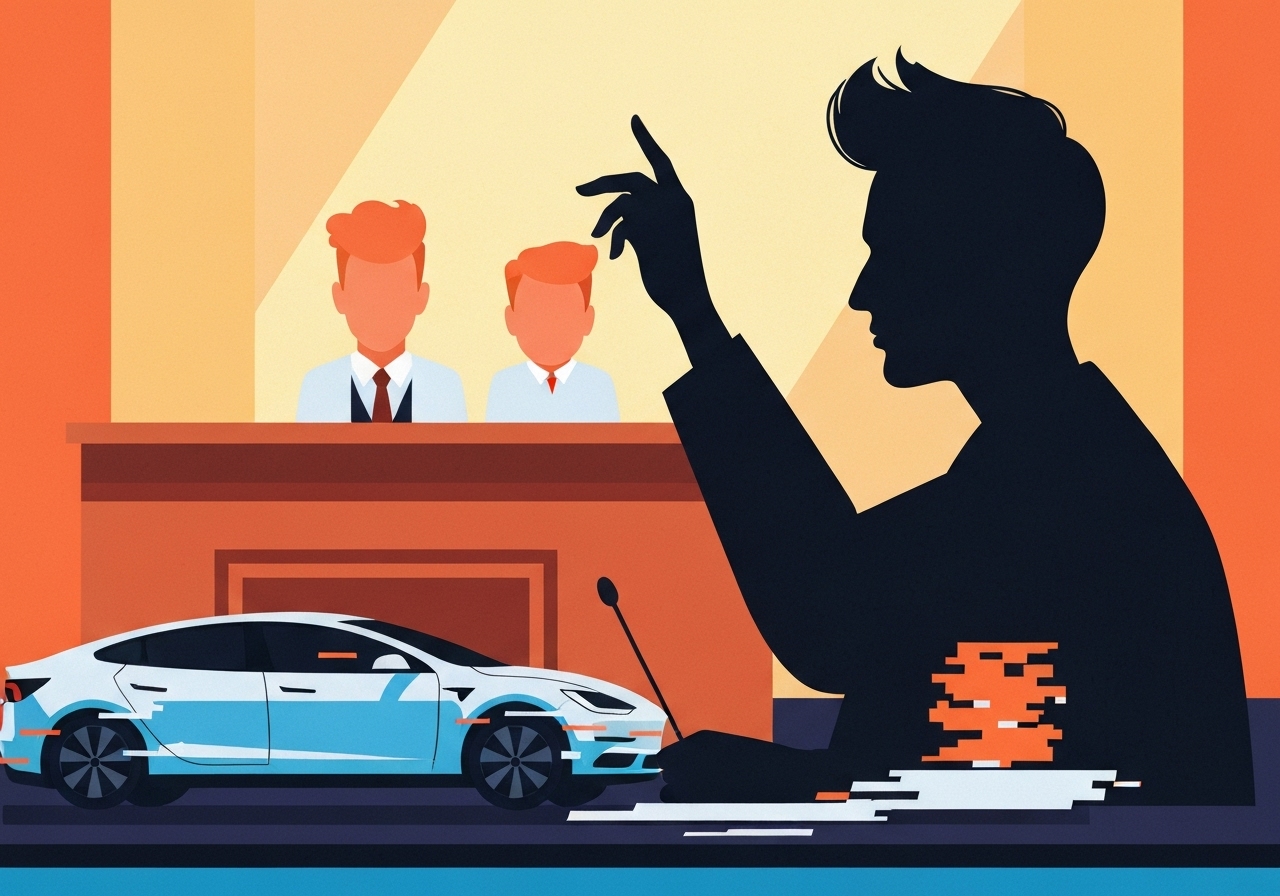
In a ruling made public on Dec. 16, 2025, a California administrative law judge found that Tesla’s promotion of its Autopilot and Full Self-Driving systems was deceptive and misleading. The California Department of Motor Vehicles (DMV) had accused the automaker of false advertising in 2022; the judge recommended 30-day suspensions of Tesla’s licenses to sell and to manufacture vehicles in the state. The DMV said it will give Tesla 90 days to remove or revise language deemed deceptive before imposing a 30-day sales-license suspension, while the agency is staying the manufacturing suspension to avoid disrupting factory operations.
Key Takeaways
- The administrative law judge ruled on Dec. 16, 2025, that Tesla engaged in deceptive marketing around Autopilot and Full Self-Driving (FSD).
- The California DMV originally lodged false-advertising accusations against Tesla in 2022, citing claims that suggested vehicles could operate autonomously.
- The judge recommended 30-day suspensions for both the company’s sales and manufacturing licenses in California; the DMV will stay the manufacturing suspension to prevent immediate factory interruptions.
- The DMV has given Tesla a 90-day window to clarify or remove language the agency deems deceptive before enforcing a 30-day suspension of the sales license.
- Tesla has since relabeled its premium driver-assistance option as Full Self-Driving (Supervised), a change noted in agency filings.
- Tesla did not immediately respond to requests for comment; the companys stock closed at a record on Dec. 16, 2025 amid investor enthusiasm for the firm’s robotaxi plans.
Background
In 2022 the California DMV opened an administrative complaint arguing that Tesla’s marketing for Autopilot and Full Self-Driving implied capabilities the vehicles did not have — namely, full autonomy — while the company’s systems still required a driver to remain attentive and ready to intervene. That filing followed years of regulatory and safety scrutiny over how automakers describe advanced driver-assistance features. California has been a focal point for oversight because of Tesla’s large manufacturing footprint and significant retail presence in the state.
Administrative law proceedings are the DMV’s chosen route for adjudicating state-level licensing issues, and they can recommend penalties including suspensions. Regulators say the goal is corrective: to stop messaging that could lead drivers to over-rely on driver-assistance features. Automakers, safety advocates and some lawmakers have debated how best to balance innovation incentives with clear consumer guidance as semi-automated systems proliferate.
Main Event
The judge’s decision follows the DMV’s 2022 assertion that Tesla’s Autopilot and Full Self-Driving marketing suggested vehicles were capable of autonomous operation even though drivers were required to monitor and intervene. The administrative order recommends two 30-day suspensions — one for retail sales and one for manufacturing — contingent on whether Tesla removes or revises language the DMV deems misleading.
At a press conference, DMV Director Steve Gordon said the agency will pause the manufacturing-license suspension to avoid halting factory output, while moving forward with a 90-day process to require Tesla to amend its marketing. If Tesla fails to make the required changes within that window, the DMV intends to implement a 30-day suspension of the company’s sales license in California.
Tesla has adjusted product labeling in recent years, renaming its premium driver-assistance package to Full Self-Driving (Supervised). The company did not provide an immediate comment to reporters after the ruling was made public. Meanwhile, the stock market reaction on Dec. 16, 2025, saw Tesla shares close at a record high amid investor optimism about future robotaxi commercialization — a development analysts say is separate from the regulatory action on advertising claims.
Analysis & Implications
The ruling underscores growing regulatory intolerance for promotional language that overstates the capabilities of driver-assistance technologies. For consumers, the practical aim is clearer marketing that reduces the risk of misuse or overconfidence in systems that still require human oversight. For Tesla, the immediate commercial risk is limited by the DMV’s decision to stay the manufacturing suspension, but a sales-license suspension would still affect retail operations and could harm sales momentum in California if enforced.
Legally, the DMV’s finding sets a notable precedent for state-level oversight of vehicle marketing. Other states and federal agencies are watching how California resolves advertising disputes involving advanced driving systems; a final enforcement action could encourage similar scrutiny elsewhere or invite multi-state coordination. Tesla can appeal administrative findings, which would delay final enforcement and could move the dispute into a prolonged legal review.
Economically, any temporary disruption to Tesla’s ability to sell vehicles in California would have localized but real effects: California is among the largest U.S. auto markets and home to a significant share of Tesla buyers. The company’s stock performance on Dec. 16 suggests investors focused more on long-term product announcements (e.g., robotaxis) than on short-term regulatory hurdles, but sustained regulatory pressure would likely influence investor sentiment over time.
Comparison & Data
| Year | Action / Finding | Potential Penalty |
|---|---|---|
| 2022 | California DMV filed false-advertising accusations against Tesla | Administrative hearing |
| 2025 (Dec. 16) | Administrative law judge found Tesla’s marketing deceptive | Recommended 30-day suspensions of sales and manufacturing licenses |
| 2025 (post-ruling) | DMV will allow 90 days to correct language; manufacturing suspension stayed | 30-day sales-license suspension if changes not made |
The table summarizes the formal timeline from the agency complaint in 2022 through the administrative ruling and the DMV’s announced enforcement approach. The key near-term metric to watch is the 90-day compliance window the DMV has given Tesla; whether Tesla amends marketing language to the DMV’s satisfaction will determine whether the recommended sales suspension is activated.
Reactions & Quotes
“We will give Tesla 90 days to clarify or remove deceptive or confusing language about Autopilot and Full Self-Driving before implementing a 30-day suspension of the sales license.”
Steve Gordon, California DMV (press conference)
“The DMV concluded Tesla’s Autopilot and Full Self-Driving marketing suggested vehicles could operate autonomously, even though drivers must remain attentive and ready to steer or brake at any time.”
California DMV (2022 administrative complaint)
“The agency has stayed the manufacturing-license suspension to ensure there is no interruption to factory operations while the compliance period runs.”
California DMV (press statement)
Unconfirmed
- Whether the judge’s recommended suspensions will survive appeals and administrative review remains unresolved until final agency action or court rulings.
- The timeline and specific wording changes the DMV will accept as sufficient to avoid a sales-license suspension are not yet public.
- The extent to which Tesla’s record-high stock close on Dec. 16, 2025 was driven solely by robotaxi expectations versus broader market dynamics is not established.
Bottom Line
The administrative ruling marks a significant regulatory rebuke of Tesla’s historical messaging around Autopilot and Full Self-Driving, emphasizing the expectation that consumer-facing claims must match the actual operational limits of driver-assistance systems. The DMV has adopted a measured enforcement posture — imposing a compliance window and staying a manufacturing suspension — which reduces immediate operational disruption but preserves leverage to compel marketing changes.
For Tesla, the most consequential near-term requirement is to revise promotional language to satisfy the DMV within 90 days or face a 30-day sales-license suspension in California. For regulators and the industry, the case highlights growing scrutiny on how advanced driving systems are described to the public and may influence both corporate communications and policy approaches nationwide.
Sources
- CNBC — news report summarizing the administrative ruling and DMV statements.
- California Department of Motor Vehicles (DMV) — official/regulatory announcements and press materials (agency site).