
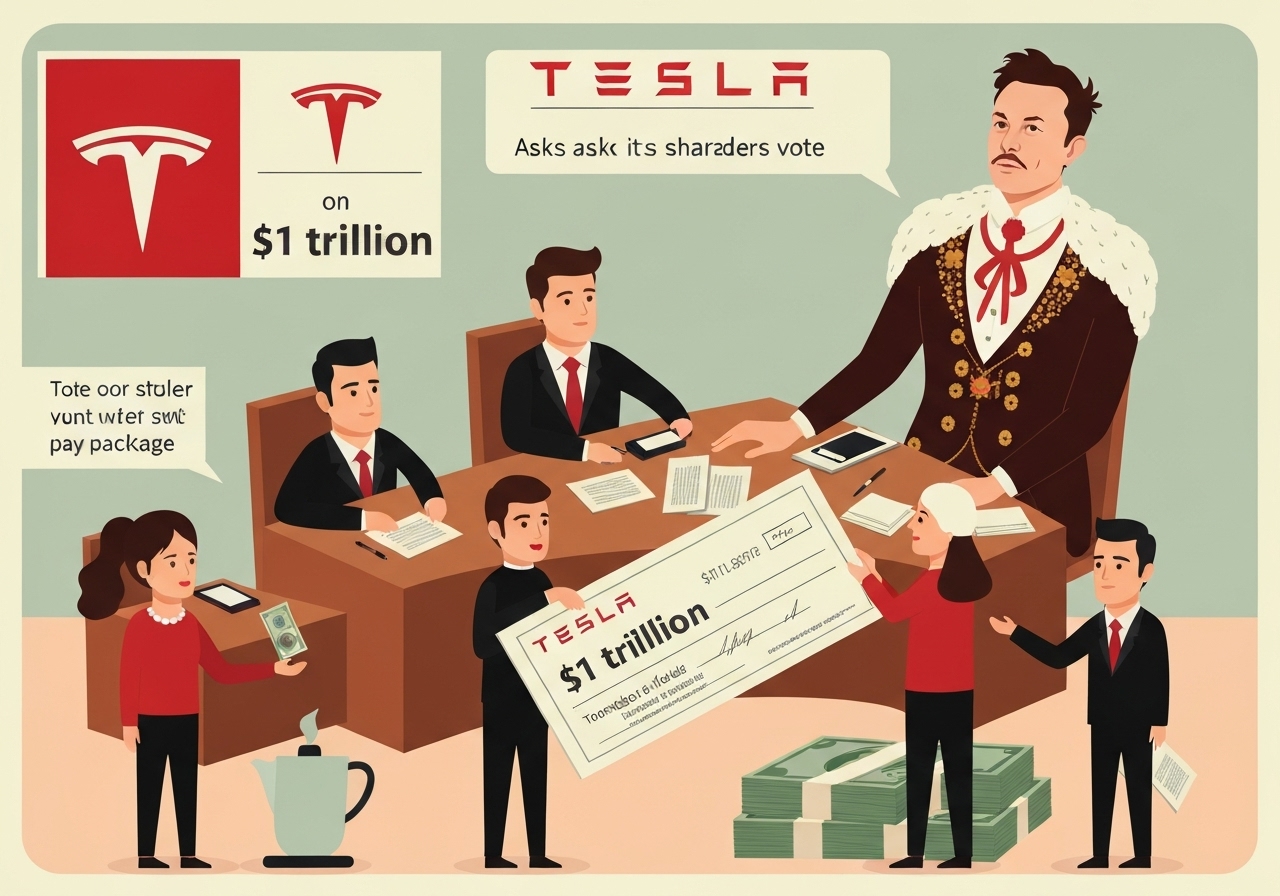
— Tesla’s board has asked shareholders to approve a new long-term pay package for CEO Elon Musk that could be worth up to $1 trillion over 10 years if the company meets a series of aggressive financial, production and market-value targets.
Key Takeaways
- The board proposes about 423 million shares as the award; those shares are valued at roughly $143 billion today.
- To vest in full, Tesla must hit a market capitalization target of $8.5 trillion within 10 years — about eight times current value.
- Operational milestones include delivering 20 million vehicles and producing 1 million autonomous “robotaxis” and 1 million Optimus humanoid robots.
- The plan would give Musk increased voting power if approved.
- The proposal follows prior legal disputes over Musk’s compensation, including a 2018 package challenged by investors and ordered revoked by a Delaware judge in December.
- Tesla granted Musk additional shares worth around $29 billion in August.
- Tesla’s sales fell 1% in 2024, quarterly profit dropped from nearly $1.4 billion to $409 million, and revenue decreased in the most recent quarter.
- Analysts say the package aims to retain Musk through the next phase of autonomous and robotics growth.
Verified Facts
According to a regulatory filing published on Sept. 5, 2025, Tesla’s board is seeking shareholder approval to award roughly 423 million shares to Elon Musk under a new long-term incentive plan. At the time of the filing the award’s notional value was about $143 billion based on current share prices.
The package ties full award vesting to both market-value and operational benchmarks. The market-capitalization hurdle is $8.5 trillion to be reached within a 10-year window. If that level is achieved and other targets are met, the stock granted to Musk would be worth more than $1 trillion at that valuation.
Operational targets specified in the filing include delivering 20 million vehicles in a single year, producing 1 million autonomous “robotaxis,” and manufacturing 1 million Optimus humanoid robots. The filing also notes adjustments to Musk’s voting rights under the proposed structure.
The filing follows past litigation over executive pay. Investors sued over a 2018 award that was later ordered revoked by a Delaware judge in December. Separately, Tesla disclosed in August that it granted Musk additional shares amounting to about $29 billion.
Context & Impact
Hitting an $8.5 trillion market cap would require roughly eightfold growth from current levels, a stretch that many market observers view as ambitious. The operational goals — particularly mass production of robotaxis and humanoid robots — would require dramatic scaling of manufacturing and software capabilities.
Tesla reported a 1% drop in vehicle sales in 2024, the first annual sales decline in 12 years. In the most recent quarterly results the company said profits fell from nearly $1.4 billion to $409 million while revenue also declined, signaling near-term headwinds even as some investors have driven the stock higher over longer windows.
Some analysts see the package primarily as a retention tool. Wedbush analyst Dan Ives described the move as positioning Tesla for a transition toward autonomous mobility and robotics and as “a critical next step to keep Musk as CEO at least until 2030.”
Official Statements
“Tesla does not currently have a long-term CEO performance award in place to retain and incentivize Elon to focus his energies on Tesla and lead us through this pivotal moment in our history. It’s time to change that,”
Tesla board letter to shareholders (filing)
Unconfirmed
- Whether all listed operational milestones can be achieved within the 10-year timeframe.
- How the market would value the awarded shares if growth is uneven or milestones are partially met.
- Potential shareholder resistance to expanded voting power for Musk.
Bottom Line
The proposal represents one of the largest executive compensation packages ever tied to extreme growth assumptions. It underscores the board’s intent to lock in Musk’s leadership through a period Tesla frames as transformational — but it also raises questions about feasibility, governance and shareholder appetite for pay tied to exceptionally ambitious targets.