
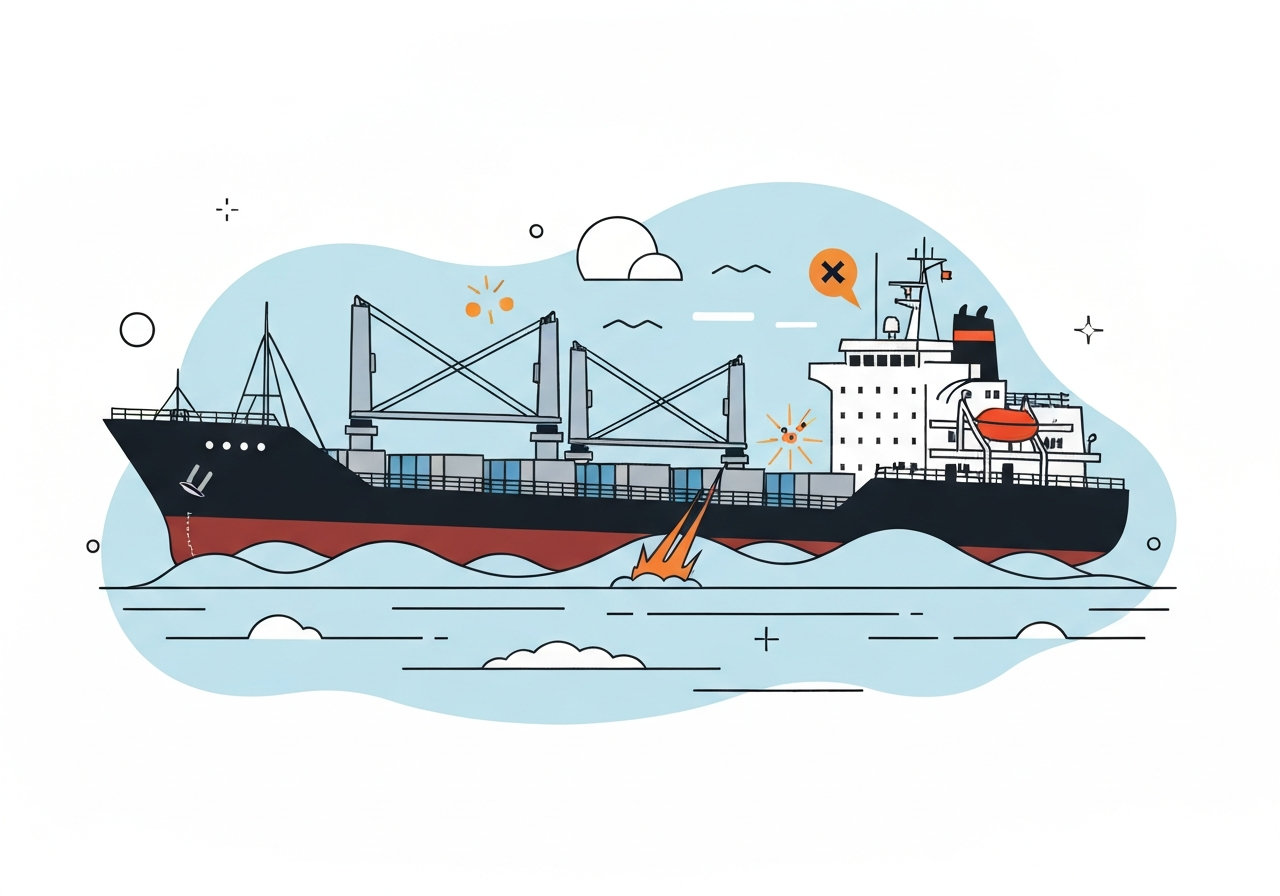
Lead: On March 11, 2026, the Thai-flagged bulk carrier Mayuree Naree was struck while transiting the Strait of Hormuz shortly after departing the United Arab Emirates. The 30,000 deadweight-ton vessel, owned by Precious Shipping Pcl, suffered an attack that forced crew to abandon ship. Oman’s navy rescued 20 crew members and brought them ashore in Khasab, while three people remain unaccounted for. Authorities have launched an investigation; no definitive attribution has been released.
Key Takeaways
- The incident occurred on March 11, 2026, in the Strait of Hormuz, a vital international shipping lane.
- Mayuree Naree is a 30,000 deadweight-ton bulk carrier owned by Precious Shipping Pcl.
- Oman’s navy recovered 20 crew members from a lifeboat and brought them to Khasab.
- Three crew members remain missing after the attack and evacuation.
- The vessel had departed the United Arab Emirates shortly before being struck.
- Immediate responsibility for the attack has not been publicly claimed or confirmed.
- Authorities from Thailand, Oman and maritime agencies are coordinating inquiries and crew welfare checks.
Background
The Strait of Hormuz is one of the world’s most strategically important chokepoints, handling a significant portion of global seaborne energy shipments and commercial cargo. Its narrow geography makes vessels transiting the waterway particularly exposed to hostile actions and accidents. In recent years, regional tensions have periodically disrupted traffic through the strait, prompting higher alert levels among naval forces and insurers. Shipping companies and governments alike track incidents there closely because events can trigger rapid market and diplomatic reactions.
Bulk carriers such as Mayuree Naree routinely move dry commodities on fixed schedules between Gulf ports and global markets; a strike on a 30,000 dwt vessel represents both an immediate human emergency and a potential commercial disruption. Precious Shipping Pcl, the shipowner, operates a fleet focused on dry bulk trade and is registered in Thailand. Coastal states bordering the strait maintain naval patrols and search-and-rescue capacity, but the area remains politically sensitive, involving multiple regional and extra-regional stakeholders.
Main Event
According to official counts, the Mayuree Naree was hit on March 11 while transiting the Strait of Hormuz shortly after departing a port in the United Arab Emirates. Crew members abandoned the vessel in a lifeboat following the strike; Oman’s naval units intercepted the lifeboat and evacuated 20 sailors to Khasab for medical evaluation. The Thai navy spokesman Paraj Ratanajaipan confirmed the rescue and the ship’s ownership in public remarks.
The three missing crew members are the focus of ongoing search efforts. Local authorities in Oman coordinated the initial rescue and transferred the rescued crew to shore, where they received medical attention and consular contact. Shipping traffic in the immediate vicinity was reported to continue under escort or with heightened caution as authorities assessed hazards and secured the scene. No shipboard fire or large-scale pollution has been reported at this stage.
Thai officials and the ship operator have been notified and are engaged in follow-up with Omani authorities to determine cause, extent of damage, and status of the missing personnel. Investigators will inspect the vessel when conditions permit and examine electronic logs, crew statements and any available imagery or sensor data. Maritime authorities have not released a public attribution of responsibility for the strike as of the latest updates.
Analysis & Implications
Humanitarian and operational priorities will drive immediate decision-making: accounting for the missing, treating the rescued, and securing the damaged vessel. The human toll—three unaccounted for and 20 rescued—underscores the persistent danger to merchant mariners in contested or high-risk sea lanes. For shipowners and insurers, the incident is likely to prompt fresh assessments of war-risk coverage and voyage planning for transits through the Gulf.
On the diplomatic front, the strike could increase pressure on regional and extra-regional navies to step up patrols and information-sharing. States whose nationals were aboard will press for a thorough investigation and may seek assurances on crew safety and compensation. Energy and commodity markets could react if traffic slowdowns or insurance premiums rise, though a single bulk-carrier incident typically causes localized disruptions unless part of a wider escalation.
Commercial operators may reroute some voyages to avoid the strait when feasible, raising voyage times and costs. Cumulative incidents in the corridor affect freight rates and scheduling reliability for dry bulk and energy cargoes. Long-term responses could include accelerated investment in remote monitoring, convoy arrangements and bilateral agreements on emergency response, but those measures require coordination and sustained political will.
Comparison & Data
| Item | Reported Value |
|---|---|
| Vessel name | Mayuree Naree |
| Vessel type | Bulk carrier |
| Deadweight tonnage (dwt) | 30,000 |
| Owner | Precious Shipping Pcl |
| Crew rescued | 20 |
| Crew missing | 3 |
| Location | Strait of Hormuz |
| Date | March 11, 2026 |
The table above collates the verified numerical and identifying facts released by authorities. These figures form the basis for search-and-rescue priorities and initial insurance loss estimates. Analysts will compare this event against recent regional incidents to gauge whether patterns of targeting or risk are emerging.
Reactions & Quotes
“Twenty crew members were rescued and brought ashore in Khasab,”
Thai navy spokesman Paraj Ratanajaipan (statement)
“Omani naval units recovered crew from a lifeboat and transferred them to Khasab for care,”
Oman naval authorities (official account)
“An investigation is underway to determine cause and to locate the missing crew,”
Maritime authorities coordinating the response
Unconfirmed
- Attribution: No verified claim of responsibility or confirmed identification of an attacker has been released.
- Cause details: The precise weapon or mechanism that struck the vessel has not been publicly disclosed.
- Missing crew status: The condition and exact whereabouts of the three missing crew remain unconfirmed pending search updates.
Bottom Line
The strike on Mayuree Naree highlights ongoing vulnerability of commercial shipping in the Strait of Hormuz and the persistent risk to seafarers. Immediate priorities are search-and-rescue for the missing, medical care for survivors, and a full investigation to establish cause and liability. Governments and operators will be watching whether this event marks an isolated incident or part of a trend requiring broader maritime security measures.
For markets and shippers, the most tangible near-term impacts will be insurance adjustments, potential rerouting and cautious scheduling through the region. Diplomatically, affected states will press for transparent investigations and protective measures; how regional actors respond could determine whether this incident leads to temporary disruption or wider geopolitical consequences.
Sources
- Bloomberg — news report summarizing official statements and rescue details.