
Lead
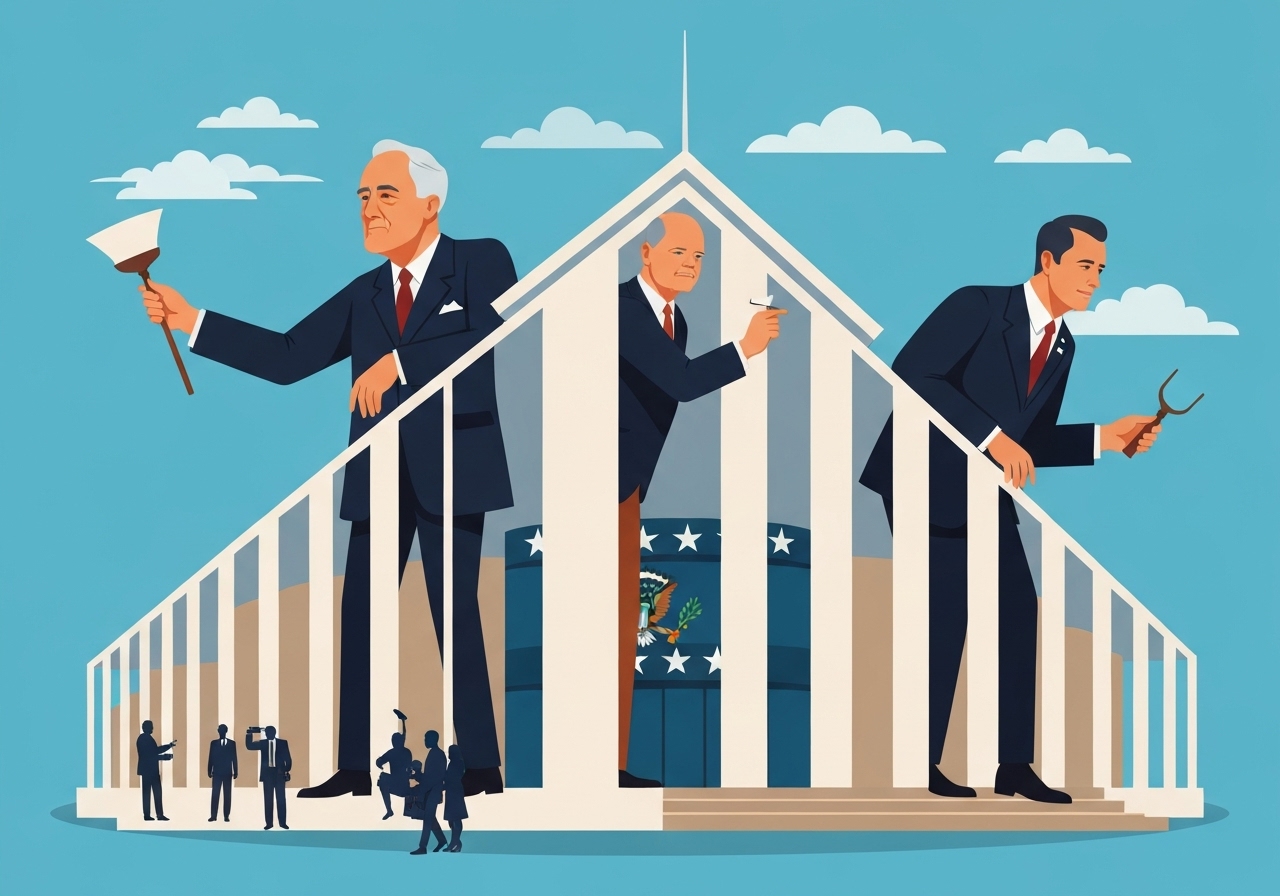
On Thursday, December 18, 2025, the performing arts complex on the Potomac was officially restyled as The Donald J. Trump and the John F. Kennedy Memorial Center for the Performing Arts, and by Friday crews were installing new signage. Lawmakers immediately raised legal questions, saying a formal name change may require Congressional action. Though the building is widely associated with President John F. Kennedy, the idea and legal framework for a national cultural center were advanced across three administrations: Dwight D. Eisenhower, John F. Kennedy and Lyndon B. Johnson. The dispute over the new name has touched on history, law and the role of national cultural institutions in public life.
Key Takeaways
- On December 18–19, 2025, the Kennedy Center’s signage was altered to read The Donald J. Trump and the John F. Kennedy Memorial Center for the Performing Arts, prompting immediate public and political reaction.
- President Dwight D. Eisenhower first proposed a National Cultural Center in 1955 and a congressional act authorizing construction followed in 1958.
- A high-profile Kennedy-era fundraiser in November 1962 featured figures such as Leonard Bernstein, Marian Anderson and a 7-year-old Yo-Yo Ma; Kennedy framed the project as civic and diplomatic cultural investment.
- The center opened in 1971 and Congress designated it a “living memorial” to John F. Kennedy after his 1963 assassination.
- Critics note Lyndon B. Johnson’s Great Society policies reframed arts policy toward broader public access and programming beyond elite presentation.
- Some members of Congress told reporters the institution’s name cannot be legally altered without Congressional approval, raising questions about the administrative process used for the recent change.
- Observers compare the present controversy to past renamings—such as Ronald Reagan Washington National Airport in 1998—where public usage and memory eventually normalized the new name for many people.
Background
In 1955 President Dwight D. Eisenhower convened a commission to envision a national hub for the arts in Washington, D.C., describing it as an “artistic mecca.” Congress enacted authorization roughly three years later, tasking the center with presenting music, opera, drama, dance and poetry from the United States and abroad and requiring public programming, including education and outreach for children and older adults. The statutory compact combined federal support with private fundraising to build and operate a major cultural facility on the Potomac.
The project gained political and cultural momentum in the early 1960s. A November 1962 benefit during the Kennedy administration showcased leading performers and young talents; conductor Leonard Bernstein used his introduction to praise immigrant artists, and President Kennedy linked arts support to democratic values and free expression. After Kennedy’s assassination in 1963, Congress designated the completed center a “living memorial” to the president, cementing the association between Kennedy’s public advocacy for the arts and the institution on the river.
Main Event
On December 18, 2025, new exterior signage bearing both Donald J. Trump’s and John F. Kennedy’s names was unveiled and crews began replacing letters the following morning. The change occurred amid statements by some lawmakers asserting that a formal renaming requires explicit Congressional authorization, not only administrative action by the center. Officials at the venue carried out the physical update while debates about the legality and symbolism played out in public statements and on social media.
The renaming has reignited long-standing tensions in the center’s identity: a monumental, gilded complex often read as a “palace of the arts,” and a public-facing institution with free performances and outreach intended to broaden access. Philip Kennicott, an art and architecture critic, has argued that Kennedy provided intellectual impetus while Lyndon Johnson emphasized popular access—an evolution that shaped programming and civic expectations.
Staff and patrons offered mixed reactions on-site: some visitors expressed dismay or confusion; others said they welcomed recognition of living donors or figures they admire. Meanwhile, legal analysts and congressional aides began parsing the legislative history that defined the center’s federal relationship, and press offices on Capitol Hill signaled possible oversight or review if formal action on the name is proposed.
Analysis & Implications
The renaming intersects with three overlapping issues: statutory naming authority, the politics of memorialization, and cultural policy. Legally, whether the board or an executive office can alter the federally authorized name depends on the original enabling statutes and any restrictions Congress placed on naming rights. If Congress did reserve naming authority, lawmakers could need to introduce and pass enabling legislation to make the change permanent in law.
Symbolically, attaching Donald J. Trump’s name to a building widely seen as a living memorial to John F. Kennedy reframes public memory and raises questions about how nations curate civic spaces. The Kennedy Center’s origins in Cold War cultural diplomacy — treating the arts as a demonstration of democratic freedom — mean that changes to its nomenclature carry diplomatic as well as domestic signals, because the venue hosts international tours and visiting artists.
From a cultural-policy standpoint, observers worry that politicized renaming could affect fundraising, programming decisions, and the perception of institutional neutrality. At the same time, the center’s history shows an enduring tension: an edifice of grandeur that has also pursued broad public access and educational work. How those programming priorities are preserved or shifted will matter to funders, artists and audiences alike.
Comparison & Data
| Year | Milestone |
|---|---|
| 1955 | Eisenhower proposes a National Cultural Center |
| 1958 | Congress passes authorization to build the center |
| 1962 | Kennedy-era fundraiser featuring Bernstein and others |
| 1963 | Kennedy assassination; Congress later designates center a “living memorial” |
| 1971 | Center opens to the public |
| 1998 | Washington National Airport renamed for Ronald Reagan (comparative example) |
| 2025 | Signage updated to include Donald J. Trump with Kennedy |
The timeline shows a multi-decade institutional history: conceived in the 1950s, energized in the early 1960s, opened in 1971 and subject to naming controversies decades later. Comparing the center’s trajectory to other federal or municipal renamings helps explain how public acceptance often evolves over years, even generations.
Reactions & Quotes
“As a great democratic society, we have a special responsibility to the arts,”
John F. Kennedy, 1962 fundraiser (archival)
Context: Kennedy used the 1962 event to argue that support for the arts is central to democratic life and to cultural diplomacy during the Cold War.
“Johnson… makes it much more about a kind of popular access and participation at all levels,”
Philip Kennicott, art and architecture critic, The Washington Post
Context: Kennicott has noted that Lyndon B. Johnson’s approach linked arts policy to wider social programs, expanding public access beyond elite audiences.
“The name can’t be changed legally without Congressional approval,”
Several members of Congress (statements to the press)
Context: Multiple lawmakers told reporters they believe statutory or congressional steps are required for an official renaming, triggering possible legislative review.
Unconfirmed
- Whether the center’s board followed all internal governance steps for a permanent renaming remains unclear based on publicly available statements.
- There has been no public release of a formal legislative filing or signed statute on December 18–19, 2025 that legally alters the institution’s name; such a document would clarify Congressional intent if it exists.
Bottom Line
The recent signage change exposes both the layered history that built the Kennedy Center and the present-day politics of naming high-profile public institutions. The venue traces to Eisenhower’s 1955 commission, gained a memorable public profile during Kennedy’s presidency and saw policy shifts under Johnson that broadened access—making it both a commemorative monument and a working civic arts center.
What happens next depends on legal and political choices: Congress could move to ratify, alter or reverse the change; the center’s board could clarify the procedural basis for the update; and public usage over years will shape whether the dual name becomes accepted in common parlance. For now, the incident is a reminder that the names we give public places carry legal weight, historical memory and cultural consequences.