
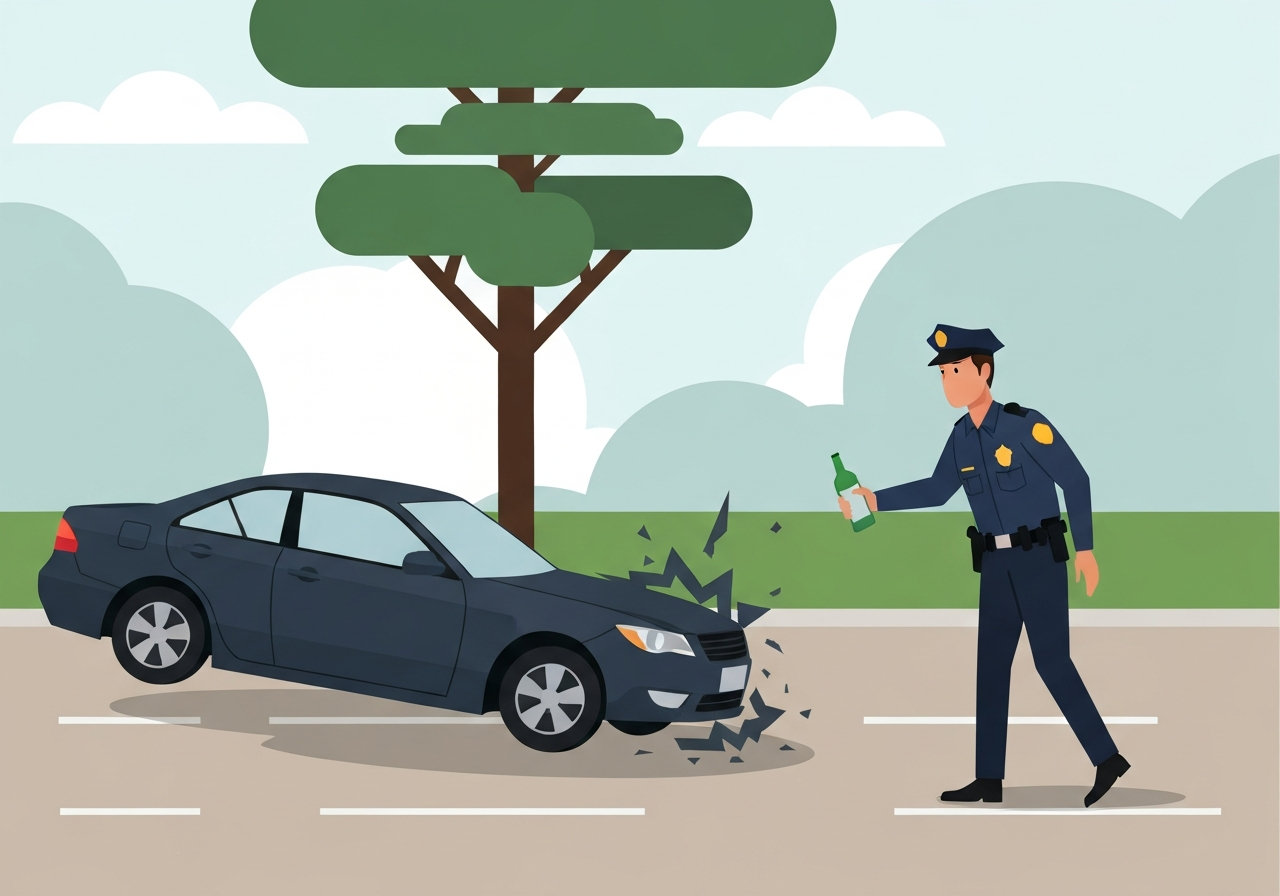
Tiger Woods was arrested on suspicion of driving under the influence on Friday after his Land Rover clipped a truck and rolled onto its side on Jupiter Island, Florida, just before 2 p.m. Authorities say the 50-year-old was able to exit the vehicle uninjured and agreed to a breath test that found no alcohol, but he refused a urine test and was taken into custody. Martin County Sheriff John Budensiek said investigators observed signs of impairment and suspect Woods had taken some type of medication or drug. Under Florida law Woods faced an eight-hour hold in jail before he could post bond.
- Crash time and location: The collision occurred just before 2 p.m. on a two-lane residential road on Jupiter Island, Florida.
- Vehicle and mechanics: Woods was driving a Land Rover that clipped the rear of a pressure-cleaning truck’s trailer while attempting to pass, then rolled onto its driver side.
- Arrest details: Martin County Sheriff identified signs of impairment, Woods agreed to a breathalyzer that showed no alcohol and declined a urine test; he was arrested on suspicion of DUI and held separately in county jail.
- Prior incidents: This is Woods’ second DUI arrest not linked to alcohol; a 2017 episode involved prescription pain medication and resulted in a guilty plea to reckless driving.
- Health and career context: Woods, 50, has had multiple back surgeries, a ruptured Achilles in March 2025 and returned to competitive and exhibition play while weighing participation in the April 9 Masters.
- Legal procedure: Florida law requires an eight-hour detention before posting bail in certain arrests, a rule the sheriff said would be applied without exception.
Background
Tiger Woods has been a commanding figure in professional golf for more than two decades, collecting 82 PGA Tour titles and returning from multiple surgeries to win the 2019 Masters. His long recovery history includes repeated back operations, a serious 2021 rollover crash in Los Angeles that produced major leg and ankle injuries, and most recently a ruptured Achilles in March 2025 that sidelined him for the 2025 season. Woods also remains active in golf governance as chair of the PGA Tour’s Future Competition Committee and has played in exhibition formats such as the TGL indoor league.
Public scrutiny of Woods’ driving incidents intensified after his 2017 arrest, when authorities said he had taken an adverse mix of prescription medication and fell asleep behind the wheel; he pleaded guilty to reckless driving. The 2021 crash amplified concerns about post-surgery fitness to drive and compete, as doctors at the time said amputation had been considered. Ahead of the 2026 Masters, Woods had been assessing whether he could play; Friday’s crash and arrest complicate both his playing plans and potential roles in upcoming events like the 2027 Ryder Cup captaincy discussions.
Main Event
According to Martin County Sheriff John Budensiek, Woods was driving on a two-lane road with a posted 30 mph limit when he attempted to pass a pressure-cleaning truck. Investigators said the Land Rover glanced the back end of the truck’s trailer while passing and then rolled onto its driver side. The sheriff’s office reported that Woods crawled out of the passenger side and did not sustain injuries that required hospital transport.
Budensiek told reporters that officers observed signs consistent with impairment and that investigators suspect Woods had taken medication or another drug. Woods consented to a breathalyzer, which registered no alcohol, and declined a urine test, the sheriff said. Because the urine test was refused, the sheriff noted that investigators would not be able to obtain definitive laboratory confirmation of the substance involved from that sample.
The sheriff’s office also emphasized that the arrest and detention procedures would be applied equally regardless of the individual’s profile. Budensiek said Woods was being held separately from the general jail population for safety reasons and that the county would follow statutory booking and detention steps, including the eight-hour hold required before bail could be posted in certain cases under Florida law.
Analysis & Implications
Legally, Woods faces a complex set of questions. A breath test showing no alcohol narrows the immediate focus to impairing prescription or illicit drugs, but refusal of a urine test complicates evidence gathering. Prosecutors typically rely on a combination of officer observations, field sobriety tests, toxicology results and witness statements; without a urine sample, the timeline and clarity of impairment become harder to establish.
From a career perspective, the arrest arrives at a sensitive moment. Woods had been weighing whether to compete at the Masters starting April 9 and was scheduled to appear in Augusta on April 5 for a course unveiling. An arrest and any subsequent legal proceedings could remove him from participation and influence future selection for leadership roles such as U.S. Ryder Cup captaincy in 2027.
The incident will also have reputational and commercial consequences. Sponsors and tournament organizers often assess both legal outcomes and medical fitness before confirming appearances. Even absent criminal convictions, repeated driving incidents and medical complications can alter public perception and contractual decisions by partners.
Comparison & Data
| Year | Event | Outcome |
|---|---|---|
| 2017 | Found asleep in car, prescription medication involved | Pleaded guilty to reckless driving |
| 2021 | High-speed LA rollover crash | Major leg injuries; lengthy recovery |
| 2026 | Jupiter Island crash; DUI suspicion | Arrested after breath test showed no alcohol; urine test refused |
The table contextualizes three high-profile incidents that intersect driving and Woods’ health history. Each event prompted legal, medical and public scrutiny; the 2017 case led to a criminal plea, the 2021 crash produced severe physical injuries and lengthy rehabilitation, and the 2026 arrest raises new legal questions and potential implications for immediate competition plans.
Reactions & Quotes
Local officials, national figures and golf industry sources reacted quickly after the arrest was announced. The sheriff framed the case as an application of law, while national figures expressed concern for Woods as a person and athlete.
He did exemplify signs of an impairment and we believe he had taken some type of medication or drug.
Martin County Sheriff John Budensiek (official statement)
The sheriff’s remark was delivered while describing the arrest procedures and the decision by investigators to offer but not secure a urine test. The sheriff also stressed that Woods would be held separately in custody for his protection while the county followed statutory detention rules.
I feel so badly. He’s got some difficulty. Very close friend of mine. He’s an amazing person.
Former President Donald Trump (on arrival in Miami)
Trump’s brief comment came while he was traveling to an investment summit and referenced a personal connection; it conveyed sympathy without addressing legal specifics. Representatives for Woods and his management did not immediately provide substantive comment to reporters.
Unconfirmed
- Exact vehicle speed at the time of the passing maneuver has not been established by investigators and remains unconfirmed.
- No laboratory toxicology report has been released, so the specific medication or substance suspected by authorities is unconfirmed.
- Details about whether any additional charges will be filed beyond the DUI suspicion are not yet available.
Bottom Line
The arrest of Tiger Woods on suspicion of DUI after a single-vehicle rollover on Jupiter Island is a legally and publicly significant development that intersects his long recovery history and his near-term competitive calendar. Key facts established at the scene include the time and location of the crash, the absence of alcohol on a breath test, and his refusal of a urine test, all of which shape how prosecutors and defense counsel will approach the case.
For observers of golf and public life, the incident raises questions about athlete health, public safety and how past medical history intersects with driving risk. The next steps to watch are whether prosecutors obtain blood or other toxicology evidence, any formal charges filed, and how sponsors and tournament organizers respond to potential absence from the Masters and other events.
Sources
- NPR (news report)
- Associated Press (news agency photo and reporting)
- PGA Tour (official records and player history)