
Lead
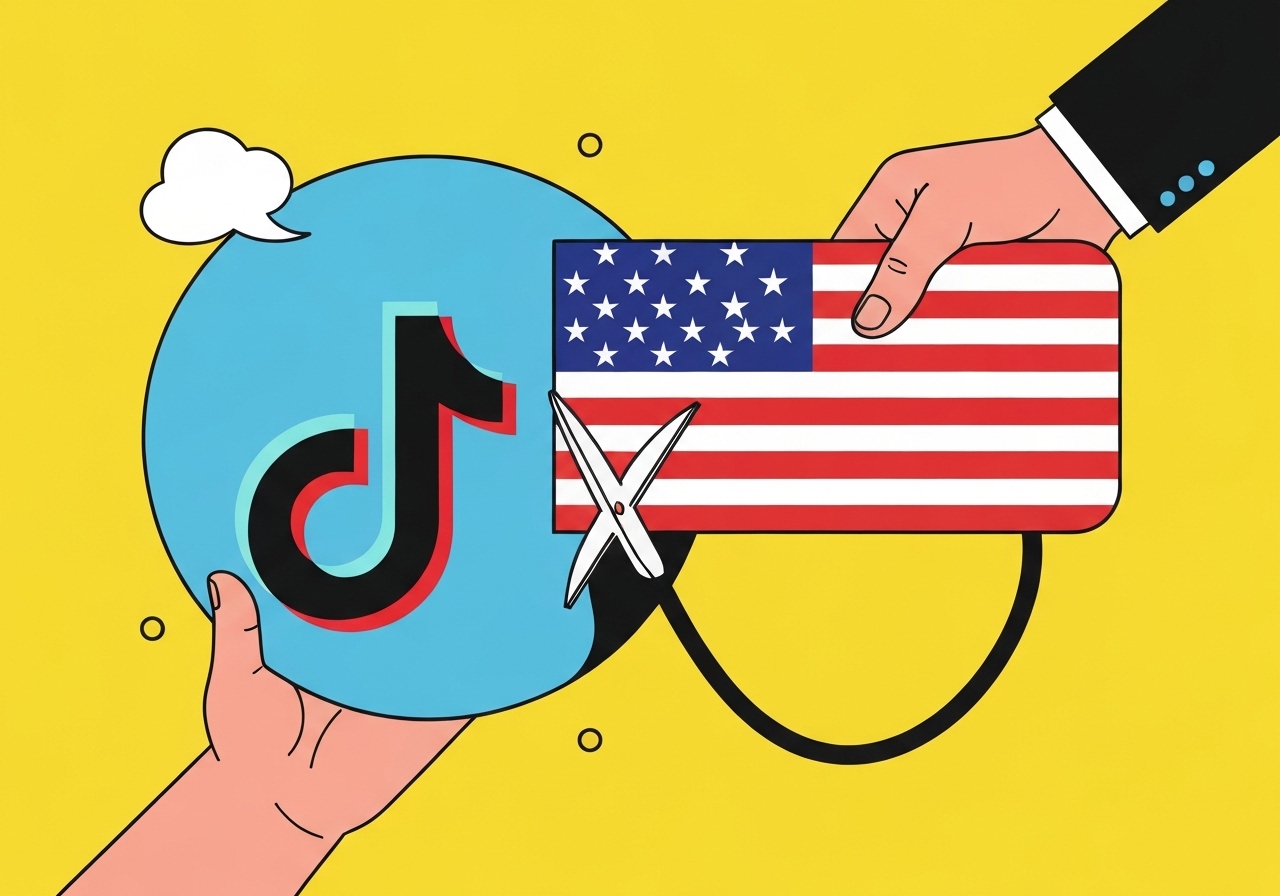
ByteDance announced on Jan. 22, 2026 that it has reached an agreement with a consortium of non‑Chinese investors to form a new U.S. TikTok, resolving a six‑year legal battle that threatened the app’s presence in the United States. The investor group — including Oracle, MGX (an Emirati firm), Silver Lake and the personal investment vehicle of Michael Dell — will control more than 80 percent of the new entity. Adam Presser, TikTok’s former head of operations, is named chief executive of the U.S. company. The move aims to address persistent U.S. national security concerns and avert a forced exit after a 14‑hour blackout and repeated legislative and regulatory threats.
Key Takeaways
- ByteDance agreed on Jan. 22, 2026 to sell a controlling stake in a newly formed U.S. TikTok to a group of non‑Chinese investors, who will own more than 80 percent of the venture.
- The investor group includes Oracle, MGX (Emirati), Silver Lake and Michael Dell’s personal investment entity; Adam Presser will serve as CEO of the U.S. company.
- The deal follows a six‑year dispute that involved university bans, military restrictions, a House majority pressing for action and interventions by Presidents Trump and Biden.
- TikTok has more than 200 million users in the United States, a user base at the center of security and political debates.
- The agreement is presented as a remedy to U.S. national security concerns about potential data access or influence by Beijing and as a way to avoid a possible nationwide ban.
- The platform experienced a 14‑hour blackout in the U.S. during the dispute, illustrating operational risks if separation had not been achieved.
- Key legal and regulatory terms of the separation, including data‑access protocols and board controls, were negotiated over more than a year but remain subject to regulatory review.
Background
The controversy over TikTok dates to 2019 when U.S. officials began raising alarms about ByteDance’s ownership and the possibility that the Chinese government could access American user data or influence content. Over the following years the app became a flashpoint in broader U.S.‑China tensions over technology and industrial leadership, attracting scrutiny from lawmakers across the political spectrum. Institutions including several universities and branches of the U.S. military restricted TikTok on government devices; the House of Representatives debated measures that would have forced a sale or ban; and the company was repeatedly subject to executive and legislative pressure.
The dispute intensified into a legal odyssey that included multiple court battles and political interventions. Influencers, creators and small businesses mobilized to protect their follower bases and revenue streams, staging petitions and public appeals. At times the platform faced abrupt operational interruptions, including a 14‑hour blackout in the United States that underscored the stakes for users and creators. Negotiations to produce a U.S.‑based corporate structure stretched over more than a year as ByteDance, investors and U.S. interlocutors sought a package of ownership, governance and data protections acceptable to regulators and lawmakers.
Main Event
On Jan. 22, 2026, TikTok disclosed that ByteDance had reached an agreement with a group of non‑Chinese investors to form a separate U.S. company that will operate the app domestically. The investor group was described as including Oracle, MGX, Silver Lake and the personal investment entity of Michael Dell; collectively they will hold in excess of 80 percent of the new venture. TikTok said Adam Presser, formerly its head of operations, will lead the American operation as chief executive, signaling continuity in platform management even as ownership shifts.
TikTok’s chief executive Shou Chew framed the transaction internally as “great news,” saying it should let U.S. users continue to engage with the platform’s creative community. Company statements emphasize continuity for creators, advertisers and the algorithmic feed that drives engagement, while asserting that separation will address the central national security questions raised by U.S. officials. The agreement was reached after more than a year of talks intended to insulate the U.S. service from direct control by ByteDance or Chinese authorities.
The deal was negotiated against a backdrop of sustained political pressure. Since 2019, lawmakers and presidents have debated or pursued measures to restrict TikTok; the platform’s future in the U.S. has been uncertain for years. The company’s legal exposure and operational vulnerability — illustrated by prior threats and a 14‑hour outage — were key drivers for a structural fix that would allow TikTok to remain on American devices and in app stores.
Despite the headline terms, several operational and governance details were left unspecified in the announcement. The companies involved said additional contractual protections and oversight mechanisms would be part of the arrangement, and that the transaction remains subject to regulatory reviews and the completion of implementation steps negotiated among the parties.
Analysis & Implications
Politically, the deal neutralizes one of the most visible tech disputes between the U.S. and China in recent years. By transferring controlling stakes to non‑Chinese investors, the structure is designed to remove the most direct line of concern for U.S. officials: that Beijing could compel ByteDance to hand over data or exert covert editorial influence. If regulators accept the implementation terms, the transaction may reduce the incentive for further legislative bans, though it does not eliminate scrutiny of foreign technology more broadly.
From an economic perspective, allowing TikTok to remain in the market preserves a major advertising and creator ecosystem that represents substantial commercial value. The platform’s more than 200 million U.S. users generate significant ad dollars and creator income; a forced exit would have disrupted those revenue streams and likely redistributed market share to competitors. The investor group’s majority control also creates a pathway for deeper U.S. investment in the platform’s infrastructure and content moderation operations.
Technically and operationally, the critical questions center on data governance: who will hold user data, where it will be stored, and what access rights ByteDance might retain. The announced deal signals that those topics were part of negotiations, but the durability of protections will depend on binding contractual terms, oversight by regulators, and the ability of U.S. actors to enforce controls over systems and personnel. If technical and legal safeguards are robust, the arrangement could become a model for how to accommodate foreign‑born platforms under national security constraints.
Comparison & Data
| Item | Metric / Detail |
|---|---|
| U.S. users | More than 200 million |
| Ownership of new U.S. entity | Non‑Chinese investors >80% combined |
| Notable investors | Oracle, MGX (Emirati), Silver Lake, Michael Dell’s entity |
| Major interruption cited | 14‑hour U.S. blackout during dispute |
The table summarizes core numerical and factual touchpoints cited by the parties. Those figures underscore why the platform drew intense attention: a user base exceeding 200 million in the U.S. represents a major digital audience, and an ownership reallocation above 80 percent is intended to change control dynamics. Observers will watch whether the transaction’s operational safeguards match the numerical shift in ownership when regulatory filings and contract terms are published.
Reactions & Quotes
TikTok leadership presented the deal as a means to preserve the platform’s creative community while addressing U.S. concerns. Prior to public release, the company circulated an internal memo framing the outcome as positive for users and creators.
“This is great news — our U.S. users can continue to discover, create, and thrive as part of TikTok’s vibrant global community.”
Shou Chew, TikTok CEO (internal memo)
Some lawmakers remained cautious, noting that ownership changes do not automatically resolve deeper oversight questions. Republican and Democratic critics have emphasized the need for enforceable safeguards and transparency about data controls and governance mechanisms.
“A change of ownership must be matched by clear, enforceable safeguards to protect Americans’ data and the integrity of our information ecosystem.”
U.S. lawmaker (statement)
Industry investors highlighted continuity for creators and advertisers, stressing that operational leadership and product availability were priorities. The named investors characterized the move as a long‑term business opportunity contingent on regulatory approval.
“We see a path forward that preserves the platform’s vibrancy while addressing legitimate security concerns.”
Representative of investor consortium (press comment)
Unconfirmed
- The precise percentage ownership held by each investor in the consortium has not been publicly disclosed at the time of the announcement.
- Final, binding technical details on user‑data storage locations, encryption keys, and third‑party audit provisions have not been published and remain subject to regulatory review.
- Whether the new structure will fully satisfy all pending or potential U.S. legal challenges is uncertain until regulators and courts assess the finalized agreements.
Bottom Line
The agreement to form a U.S.‑based TikTok majority‑owned by non‑Chinese investors represents a pragmatic resolution to a prolonged political and legal standoff. If implemented with concrete, enforceable data and governance safeguards, it can preserve the platform’s large U.S. user base and commerce while reducing the immediate national security rationale for a ban. However, ownership shifts alone do not guarantee long‑term stability: the deal’s durability will depend on the specificity and enforceability of operational controls, regulatory scrutiny, and the willingness of U.S. institutions to monitor compliance.
In the near term, users, advertisers and creators can expect operational continuity and reassurances from the company and its new backers. Policymakers and privacy advocates will continue to press for transparency and legally binding protections; their response will determine whether this arrangement becomes a template for handling other foreign‑linked platforms or remains a one‑off political accommodation.
Sources
- The New York Times — (News report)
- TikTok Newsroom — (Company statement / official)
- Oracle Press Releases — (Company statement / official)