
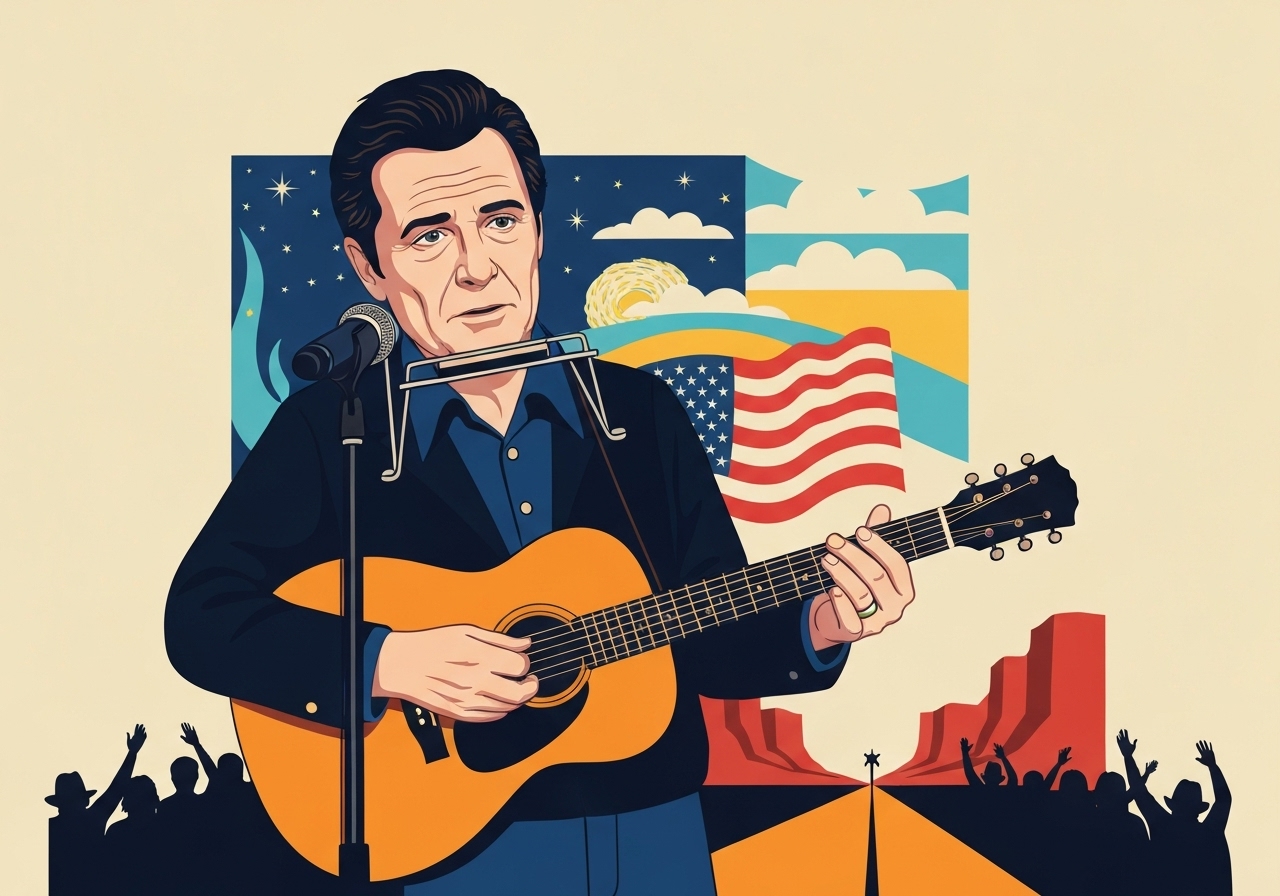
NASHVILLE — Todd Snider, a gifted Americana and alt‑country singer‑songwriter known for wry, conversational storytelling and a decades‑long presence in the roots scene, has died at 59. His record label announced on Saturday via social channels that Snider died Friday after complications from a hospital stay that began with a pneumonia diagnosis in Hendersonville, Tennessee. The notice praised his gift for turning sharp observation into memorable lines and described his work as both heartbreaking and humorous. The news follows a turbulent month: a canceled tour after a violent incident in the Salt Lake City area and subsequent medical and legal complications reported by local outlets.
Key Takeaways
- Todd Snider, aged 59, died Friday; his label posted the announcement publicly on Saturday.
- He was hospitalized in Hendersonville, Tennessee, with pneumonia; his condition became more complicated and he was transferred for additional care.
- A planned fall tour to support October’s album, High, Lonesome and Then Some, was canceled after an earlier reported assault in the Salt Lake City area.
- Salt Lake City police reported later that Snider was arrested after refusing to leave a hospital and returning to threaten staff, according to the Salt Lake Tribune.
- Snider’s best‑known recorded work appeared on independent and major labels; his early albums were released on Jimmy Buffett’s Margaritaville label.
- Critics and peers often described him as a “stoner troubadour” and a comic observer; he drew mentorship from figures such as John Prine, Guy Clark and Kris Kristofferson.
- His songs have been covered by artists including Jerry Jeff Walker, Billy Joe Shaver and Tom Jones; he co‑wrote with Loretta Lynn on her 2016 Full Circle album.
Background
Todd Snider was born and raised in Oregon and developed his musical craft in San Marcos, Texas, before relocating to Nashville, where he became a fixture in the East Nashville scene. Over roughly three decades he blended folk, rock and country — writing conversational, character‑driven songs that mixed political observation, barroom humor and tender narration. He emerged on the national radar in the mid‑1990s with two albums on Jimmy Buffett’s Margaritaville label, then later released some of his most acclaimed work on independent imprints connected to John Prine.
Snider’s songwriting lineage is noteworthy: he modeled his craft on songwriting giants he admired and at times counted as mentors, including Kris Kristofferson, Guy Clark and John Prine. That lineage helped define both his audience and his peers’ respect; reviewers often framed him as a link in a lineage of literate American songwriters. Beyond records, Snider cultivated a devoted live following and an East Nashville identity that many fans described as emblematic of the neighborhood’s creative community.
Main Event
The immediate sequence leading to Snider’s death began in late October and early November with disruptions to a scheduled tour supporting his October release, High, Lonesome and Then Some. Management announced the tour’s cancellation on Nov. 3 after reporting that Snider was the victim of an assault in the Salt Lake City area. Promoters and band members subsequently shelved dates while his health and legal matters were addressed.
Following the cancellation, Snider was taken to a hospital in Hendersonville, Tennessee, where he was diagnosed with pneumonia. According to the family and the label’s statement, his condition deteriorated and he required transfer to another facility for higher levels of care. The label’s public note on Saturday described his daily commitment to writing and his devotion to the songwriting craft as integral to his life and identity.
Local reporting by the Salt Lake Tribune added complexity to the public record: it said Salt Lake City police later arrested Snider after he initially refused to leave a hospital, then allegedly returned and threatened staffers. That account is part of ongoing, fragmented coverage of the incidents surrounding the canceled tour and hospital stays. As of the label announcement, medical authorities and family statements focused on pneumonia and medical complications as the proximate health issues preceding his death.
Analysis & Implications
Snider’s death closes a chapter on a songwriter whose career straddled independent credibility and mainstream recognition. He maintained a cult audience while also attracting the attention of established figures like Jimmy Buffett and, later, John Prine’s Oh Boy label — associations that amplified his reach without diluting his idiosyncratic voice. For the Americana and alt‑country community, his passing removes a figure often cited for both humor and moral clarity in songcraft.
The circumstances around the canceled tour and the reported Salt Lake City incidents complicate the narrative that will follow him. When artists confront health crises after episodes of public disturbance, coverage tends to bifurcate between celebration of the art and scrutiny of personal upheaval. For promoters, venues and fellow musicians, Snider’s death after a hectic fall highlights risks small‑to‑midlevel touring artists face: physical vulnerability, episodic violence, and the thin safety net for touring musicians’ health emergencies.
Commercially, Snider’s catalog may see renewed streaming and sales interest — a common pattern after an artist’s death — affecting rights holders, labels and estate planning. More broadly, his trajectory underscores how Americana as a market category both resists and rewards authenticity: Snider’s career growth was incremental and relationship‑driven rather than engineered for mass radio, a model increasingly rare in the streaming era.
Comparison & Data
| Album / Release | Label / Context | Notable Song(s) |
|---|---|---|
| Songs for the Daily Planet | Early release on Margaritaville (Jimmy Buffett’s label) | “I Can’t Complain” |
| Step Right Up | Second Margaritaville release | “Beer Run” |
| East Nashville Skyline | Independent release celebrated in early 2000s | “Alright Guy” |
| High, Lonesome and Then Some | Most recent album (released October) | Album‑level promotion and fall tour planned |
The table highlights record milestones and enduring songs rather than exhaustive discography. Snider’s strongest critical recognition clustered in the early‑to‑mid 2000s when his Oh Boy‑era releases brought him sustained attention among critics and peers. Commercial metrics for Americana artists are uneven; streaming and catalog sales typically spike after high‑profile events, which industry observers expect here as catalog interest concentrates.
Reactions & Quotes
Label and family statements framed Snider as a tireless writer and a singular voice in American songwriting, while local reporting supplied additional, contested details about recent incidents. Below are representative public responses, summarized and quoted sparingly from posted statements and reporting.
“Always finding the humor in this crazy ride on Planet Earth — someone who could distill everything down to its essence with words and song.”
Record label social statement (public announcement)
The label’s message emphasized Snider’s daily writing practice and his place among songwriting figures he admired. The statement was published on the label’s social accounts and circulated by family and friends.
“He had been diagnosed with pneumonia in Hendersonville and his condition grew more complicated before he was transferred for additional care.”
Family statement (public release)
Family communications focused on medical facts and on steering public attention toward his music and life rather than speculative details about the Salt Lake incident or legal matters.
“Salt Lake City police later arrested Snider when he at first refused to leave a hospital and later returned and threatened staffers.”
Salt Lake Tribune reporting (local news)
Local reporting introduced contested events that preceded the canceled tour; law‑enforcement and hospital records will determine how those accounts are reconciled with statements from management and family.
Unconfirmed
- The exact medical cause of death beyond the noted pneumonia complications has not been publicly released by medical authorities.
- Details surrounding the reported Salt Lake City assault and the sequence that led to police involvement remain underreported and contain discrepancies between management, family statements and local reporting.
- Any long‑term medical conditions that may have contributed to the decline were not disclosed publicly as of the label announcement.
Bottom Line
Todd Snider’s passing marks the loss of a distinct voice in American roots music — one that combined brittle humor, human sympathy and a working writer’s discipline. He leaves behind a catalog that resonated with peers and a live reputation tied closely to East Nashville’s community of songwriters and performers. Industry observers expect a short‑term increase in catalog consumption and renewed critical attention to the albums many fans regard as his best work.
Beyond market effects, Snider’s death prompts questions about the supports available to touring musicians when health crises occur, and about how public narratives form around artists who experience both creative acclaim and recent personal turmoil. For audiences, colleagues and students of songwriting, his songs remain primary evidence of his craft — and the next phase will likely center on estate stewardship, memorial performances and efforts to preserve his musical legacy.
Sources
- NPR (national news report)
- The Salt Lake Tribune (local news reporting on the Salt Lake City incidents)
- Oh Boy Records (independent label / historical catalog reference)